
Solutions
LED screens for schools and assembly halls
Assembly hall, lobby, gym and facade — screens a school procures through public tenders with the domestic-manufacturer preference.
Most of our screens went to schools and universities: gymnasiums 130, 132, 133, 153, the Shokan Ualikhanov school, Almaty International School, KIS, Nur-Mubarak, Yasawi and Zhubanov universities.
We are in the domestic manufacturer registry (KTP): for a school that means price preferences in procurement.
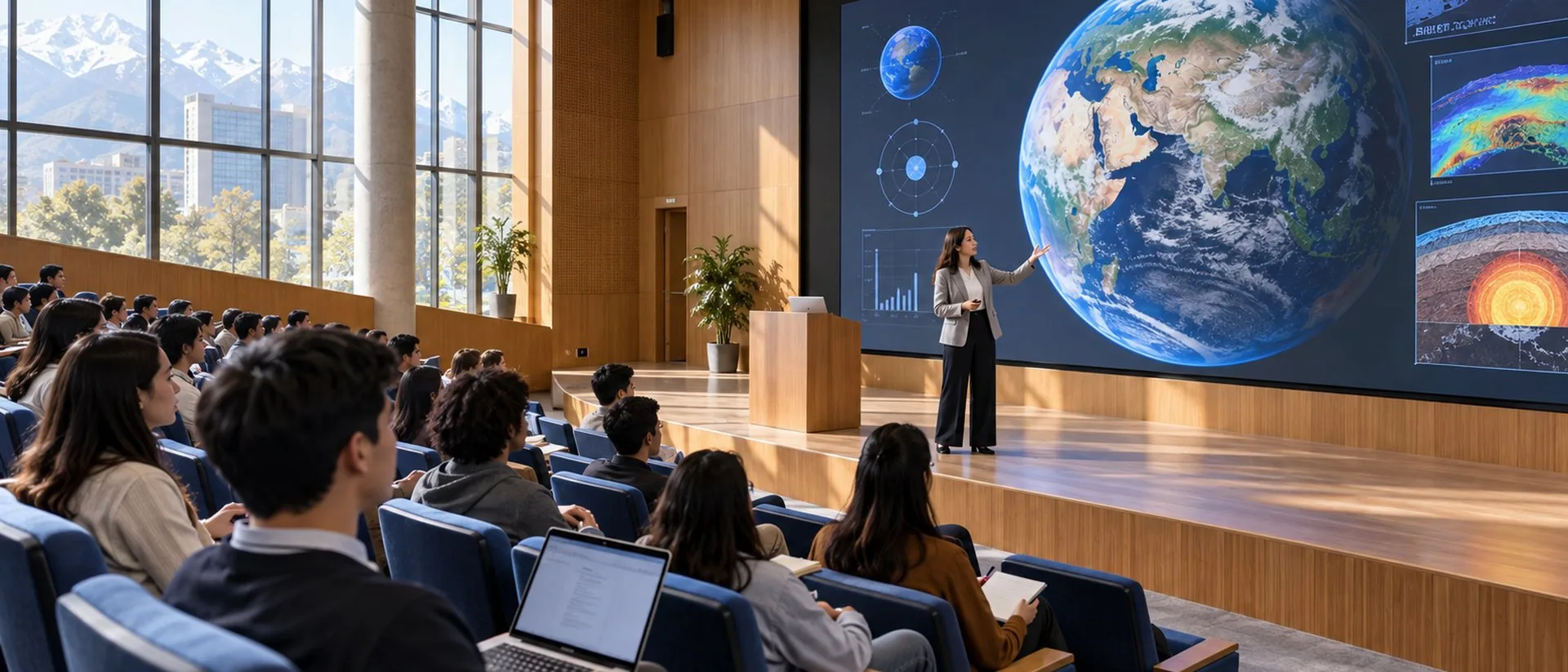
The scene visualisation is generated; the project photos below are real.
What matters here
- 1
KTP registry
Procurement preferences, tender documents.
- 2
Assembly hall P2.5–P4
P4 is the usual choice: stage, assemblies, broadcasts.
- 3
Staff training
Schedule and bell-triggered start.
Which screens fit
Projects with such screens
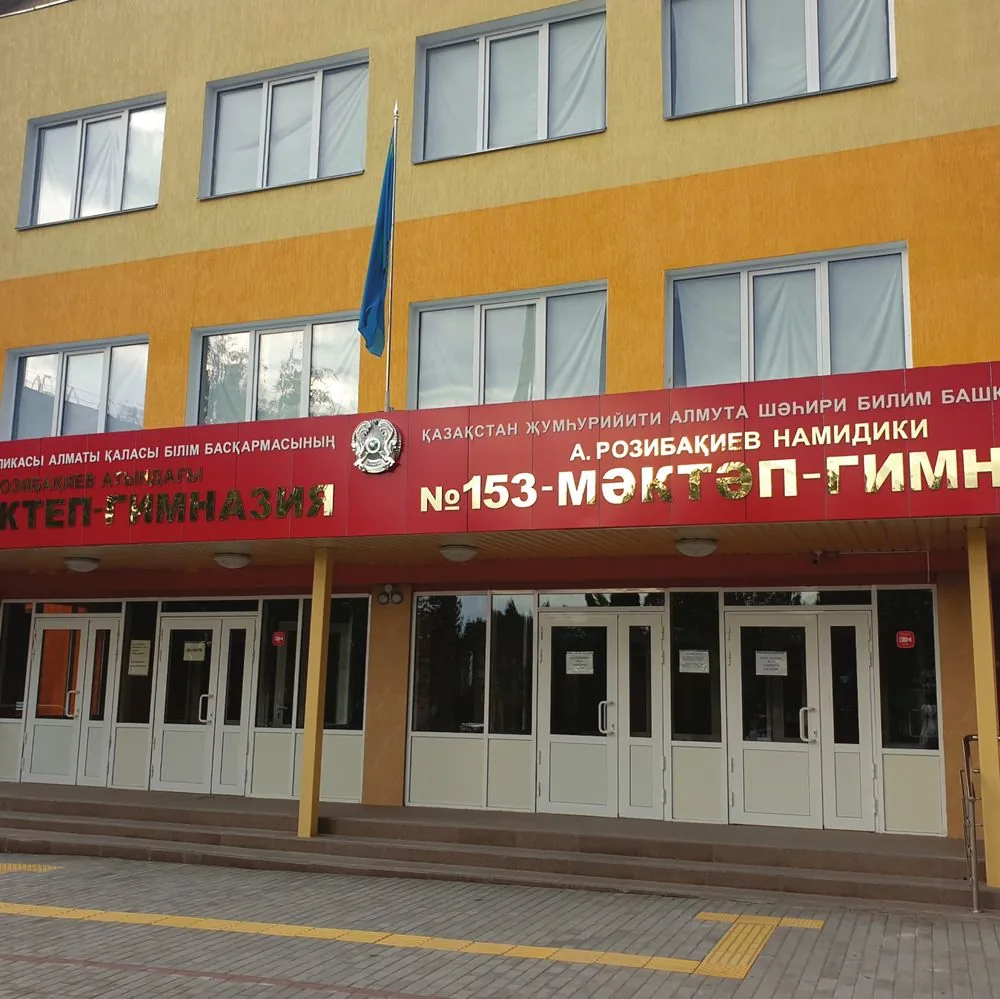
Almaty · February 2021
LED screen for School-Gymnasium No. 153 named after A. Rozybakiev
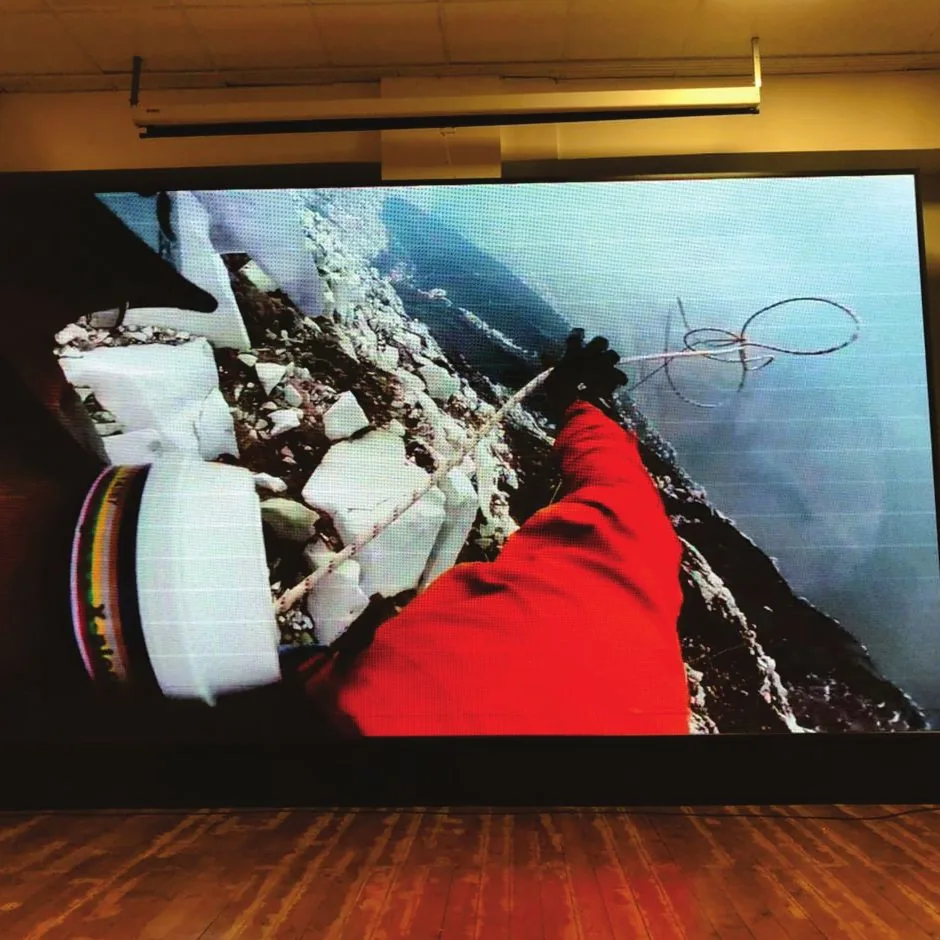
Almaty · August 2021
LED screen at Gymnasium No. 130 named after I. Zhansugurov
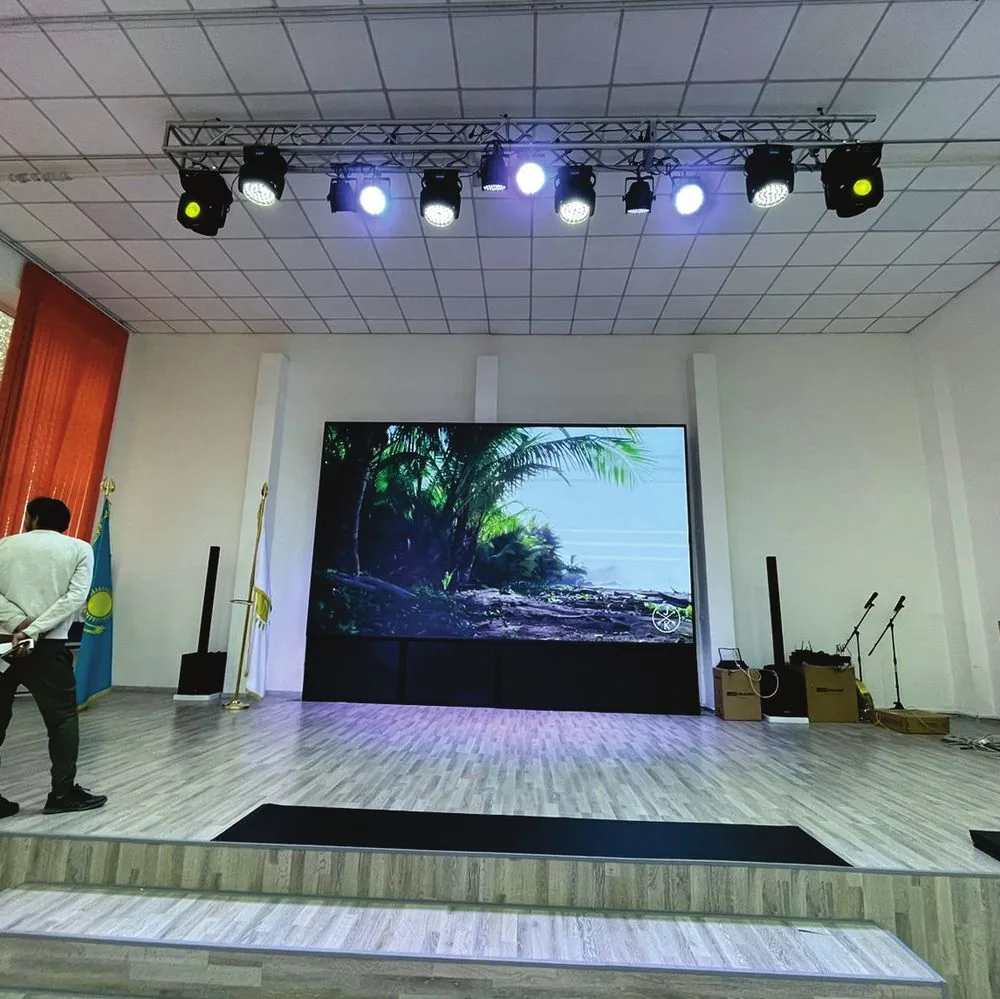
Almaty · November 2021
LED screen at Gymnasium No. 132
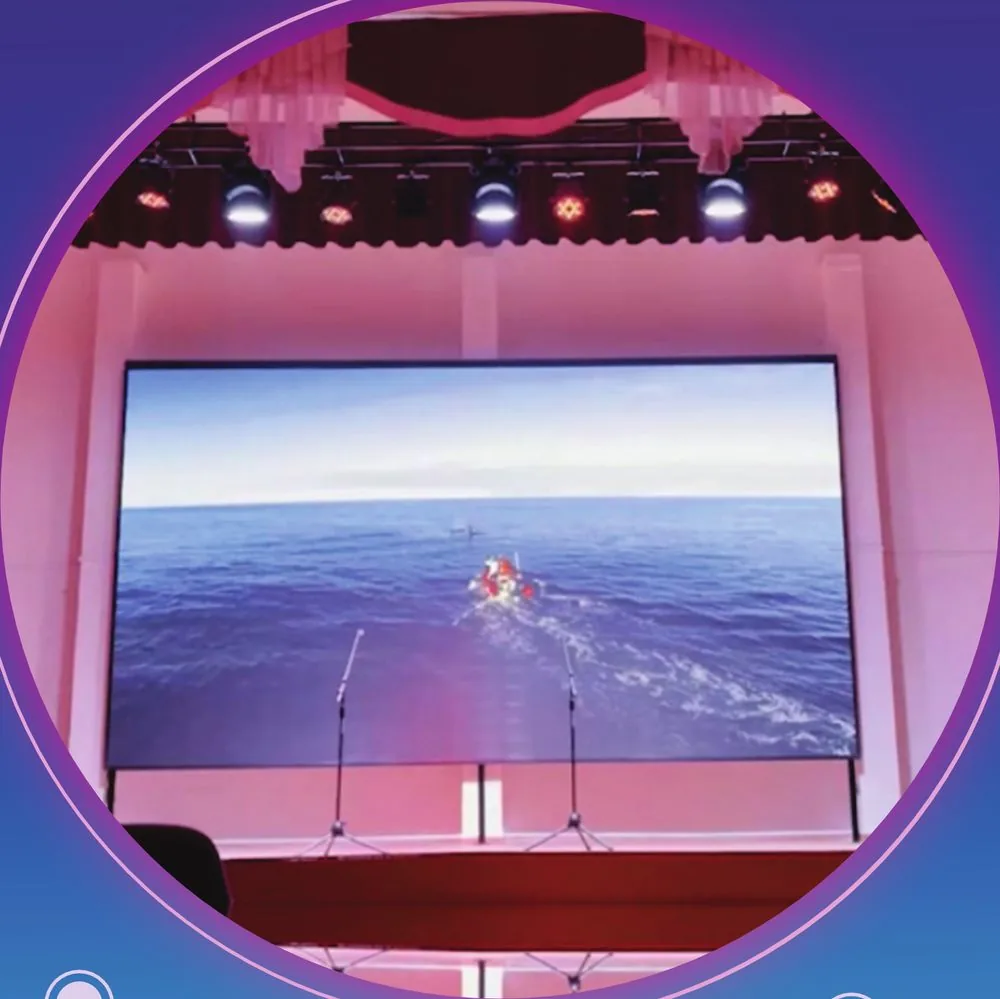
Almaty · February 2021
LED screen for School-Gymnasium No. 133
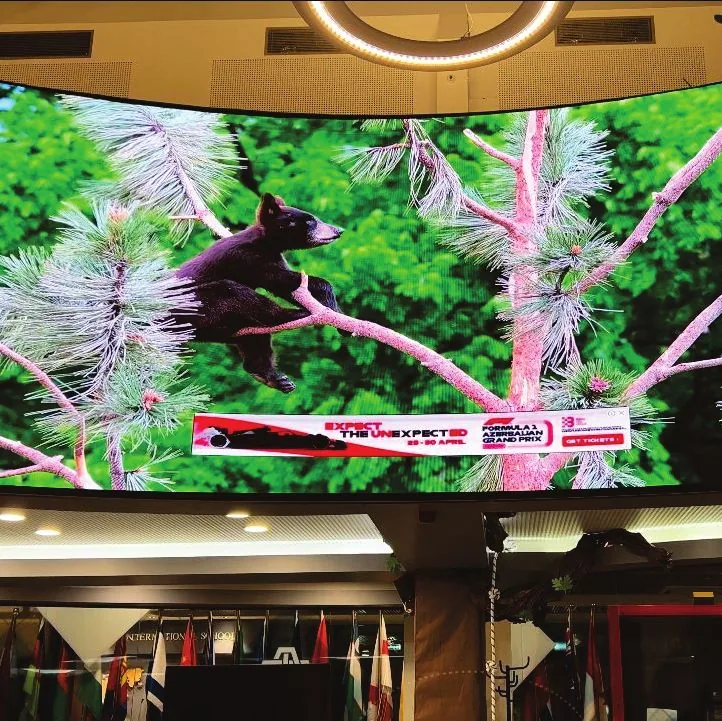
Almaty · April 2022
LED screen at Almaty International School

Almaty · April 2022
LED screen P2.5 at Almaty International School
Models from the price list
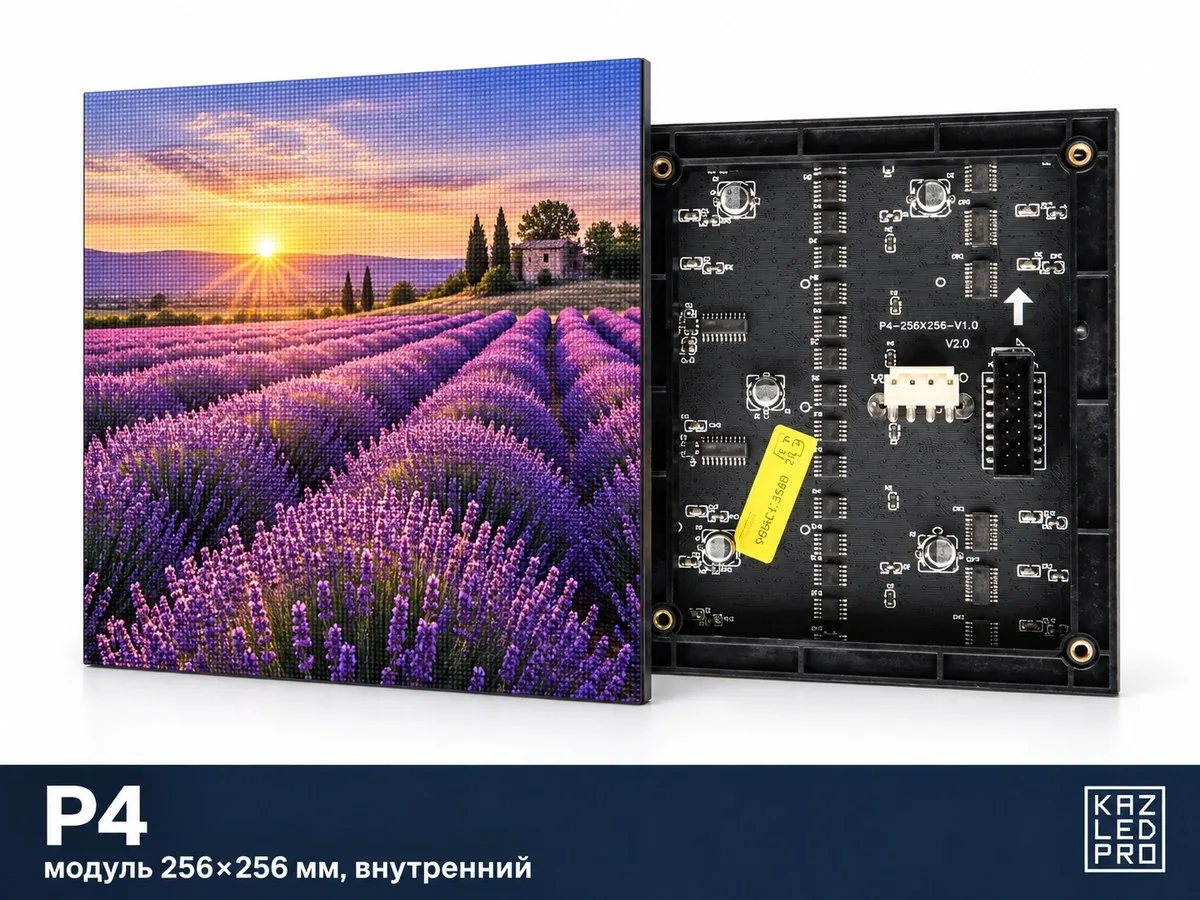 P4
P4Indoor displays
LED screen P4 for indoor use — 256×256 mm module
Indoor screen P4 (256×256 mm module), pixel density 62 500 dots/m². Comfortable viewing from 4 m.
- Brightness
- 350–400 cd/m²
- Density
- 62 500 dots/m²
- Protection
- IP40 / IP31
Details →
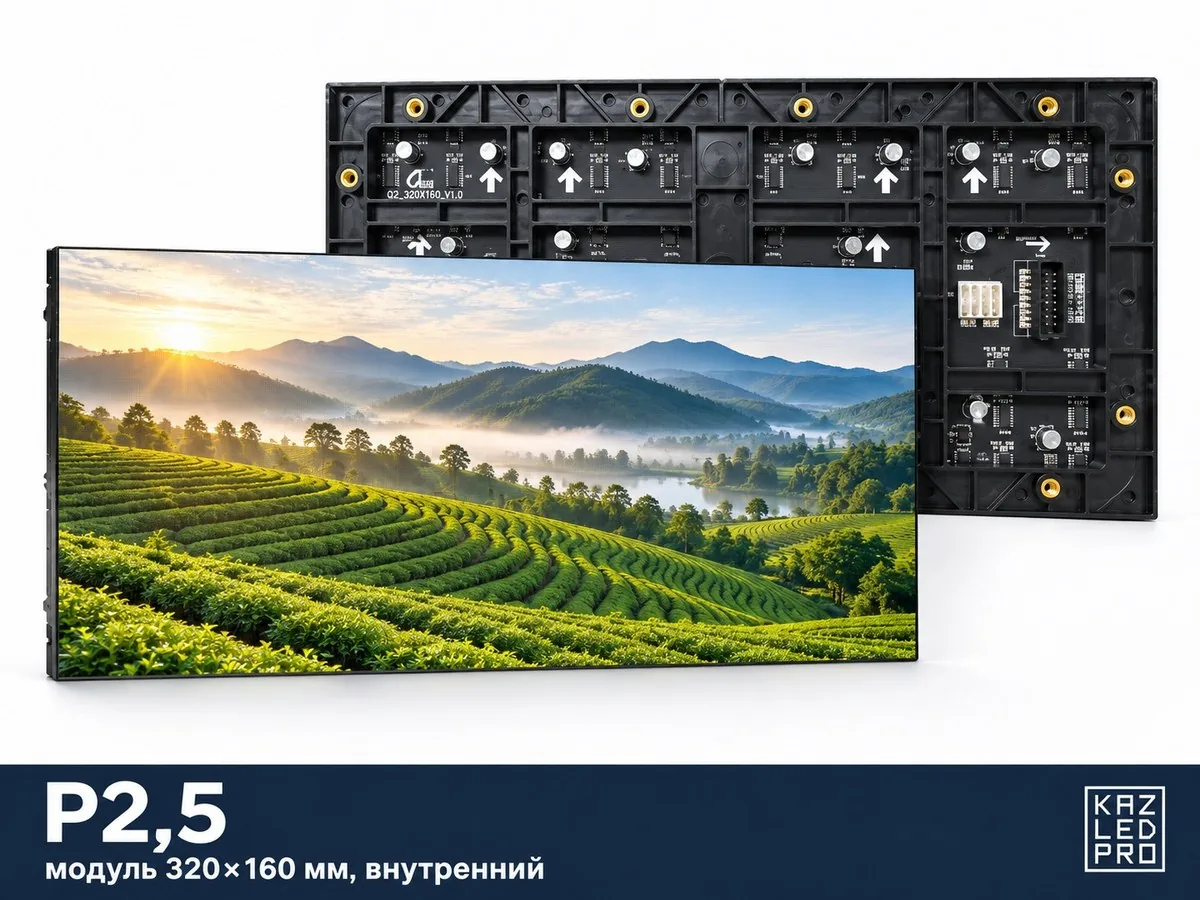 P2.5
P2.5Indoor displays
LED screen P2.5 for indoor use — 320×160 mm module
Indoor screen P2.5 (320×160 mm module), pixel density 160 000 dots/m². Comfortable viewing from 2 m.
- Brightness
- 350–550 cd/m²
- Density
- 160 000 dots/m²
- Protection
- IP 31
Details →
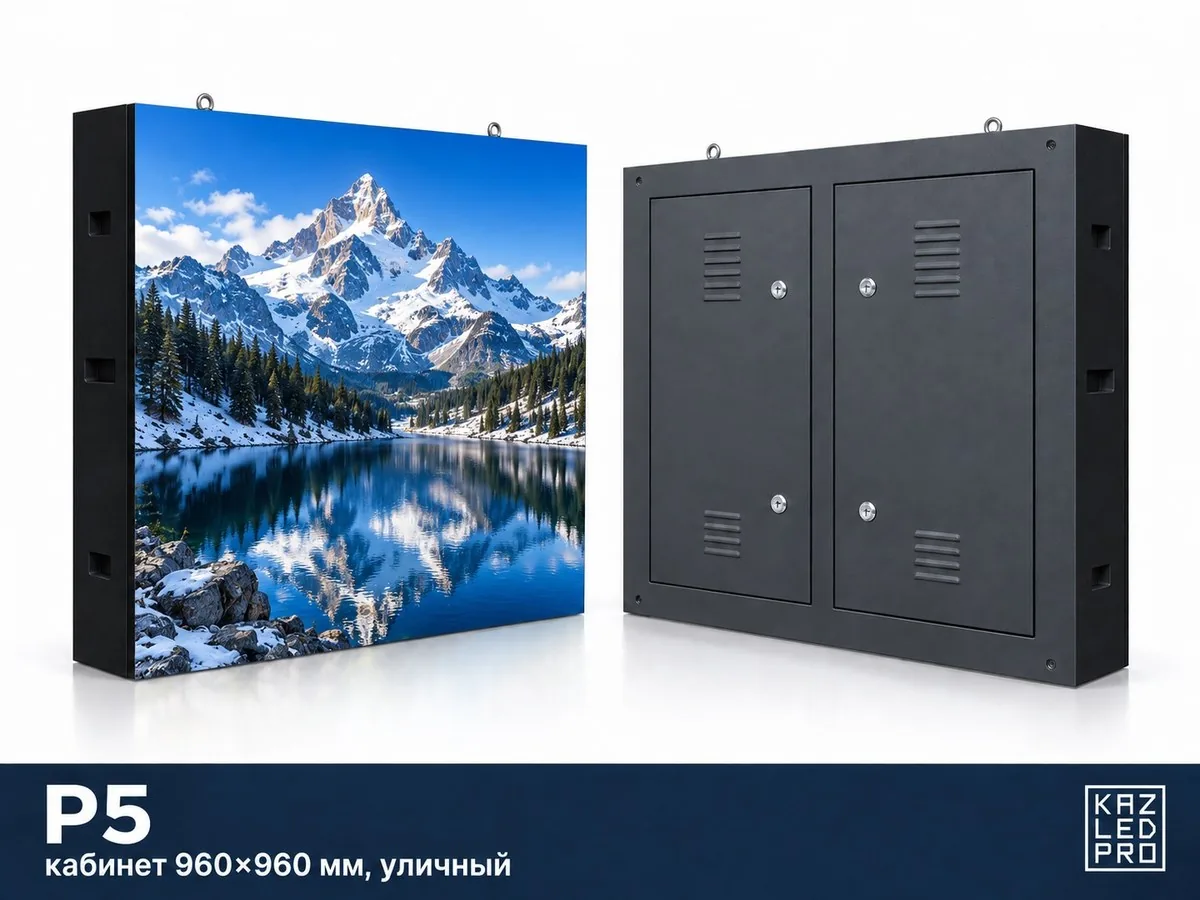 P5
P5Outdoor displays
LED screen P5 for outdoor use — 960×960 mm cabinet
Outdoor screen P5 (960×960 mm cabinet), brightness 5500–7800 cd/m², IP 68. Comfortable viewing from 5 m.
- Brightness
- 5500–7800 cd/m²
- Density
- 40 000 dots/m²
- Protection
- IP 68
Details →
An LED screen for a school, university or college assembly hall is the request KazLedPro receives more often than any other. The screen replaces the projector on stage: it is visible with the lights on, needs no blackout and works the same for morning assemblies, graduation, lectures and parent meetings. We have been building LED screens in Almaty since 2012, install with our own crew and keep a module warehouse from which warranty parts are replaced.
Our portfolio includes more than fifteen educational institutions across Kazakhstan: gymnasiums 130, 132, 133 and 153 in Almaty, schools in Karaganda and Taldykorgan, the private Shokan Ualikhanov school, Almaty International School, Tien Shan International School, KIS and NGS, the Nur-Mubarak, Yasawi and Zhubanov universities, and the Academy of Logistics and Transport. Most bought the screen through public procurement, and we know how to write a specification so the tender is not re-run.
Below: how to choose the pitch and size of an LED screen for the depth of the hall, what the school needs to prepare in terms of power and stage, how a laptop is connected, and what domestic-manufacturer status gives in procurement. A preliminary estimate can be calculated on the website by screen width and height.
Which screen an assembly hall needs
Pixel pitch is chosen by the distance to the front row. A simple rule: the pitch in millimetres roughly equals the minimum viewing distance in metres. If the front row is three metres from the stage, P3 is enough; if the audience sits two metres away or it is a lecture theatre with small-print presentations, P2.5 is used. In Almaty gymnasiums in 2021 we installed P4 built from 256×256 mm modules with viewing from four metres — enough for a hall of 200–300 seats, and noticeably cheaper than fine pitch.
Size is calculated from the stage, not from the budget. Width follows the stage opening minus the wings, the bottom edge sits above the heads of the front row, and the 16:9 ratio lets presentations and video run without black bars. Indoor models have no fans, so nothing hums in the hall during performances.
- P2.5, 320×160 mm module — viewing from 2 m, brightness 350–550 cd/m², for lecture theatres and small halls.
- P3, 320×160 or 192×192 mm modules — viewing from 3 m, the standard choice for a school stage.
- P4, 256×256 mm module — viewing from 4 m, the economical option for large halls; gymnasiums 130, 132, 133 and 153 are built this way.
- P2.6 and P2.9, 500×1000 mm cabinets — 1,000 cd/m², 13 kg per cabinet; when the screen must be taken down and moved to events.
- Outdoor P5–P10 for a facade or sports ground — as at Zhubanov University in Aktobe.
Public procurement and the domestic manufacturer registry
Schools and universities buy screens through goszakup.gov.kz, and what actually arrives depends on how the specification is written. We help draft the technical specification before the tender is announced: we survey the stage and hall, calculate resolution, brightness, power and weight, describe characteristics that can be verified at acceptance, and provide an estimate for budget planning.
KazLedPro is listed in the registry of domestic manufacturers and holds the KTP industrial certificate. For the buyer this is a lawful preference: a conditional discount on our bid price and priority under domestic-producer support rules. We submit the bid with the full package — certificates of conformity, KTP documents, warranty obligations, a record of similar school deliveries. After the award: delivery, installation, commissioning, training, acts and the screen passport. Warranty is 2–5 years depending on the model.
Laptop connection and everyday use
The screen connects to a laptop over HDMI through a video processor and behaves like a second monitor: presentations, video, a live camera feed at graduation, an online lesson. A dedicated computer is not required — any teacher's laptop will do. A schedule can be set so the screen switches on before the first lesson and off after the last one.
After launch we train the facilities manager or the IT teacher: how to upload a video, switch the source, what to do if the screen does not turn on. Service is from the front — a module comes off its magnets without dismantling the stage. Schools often order stage lighting on a truss together with the screen: this was done at gymnasiums 132, 133 and 153 and at NGS school. Light, sound and screen come under one contract and one acceptance act.
Schools and universities where our screens already work
Every site is in the portfolio with photos, and the Shokan Ualikhanov school and KIS also have video testimonials. You can call any of them and ask how the screen is doing several years on.
- Gymnasium 130 named after I. Zhansugurov, Almaty, 2021 — P4 in the assembly hall, viewing from 4 m.
- School-gymnasium 133 and school-gymnasium 153 named after A. Rozybakiev, Almaty, 2021 — P4 from 256×256 mm modules, stage lighting and a lighting truss.
- Gymnasium 132, Almaty, 2021 — P4 and stage lighting on a truss in the assembly hall.
- A school in Karaganda, 2021, and a school in Taldykorgan, 2021 — installed by our travelling crew from Almaty.
- Private Shokan Ualikhanov school, Almaty — a 9 m² screen in 2020, a 120 m² flexible P2.5 screen in 2023 and a third screen in 2025.
- Almaty International School, 2022 — a P2.5 screen and a screen with stage lighting; KIS, 2025 — the assembly hall stage, with the school's video review on the case page.
- Private school NGS, Almaty, 2021 — P4 from 256×256 mm modules and stage lighting on a truss in the gym; Tien Shan International School, 2022 — a screen from 320×160 mm modules and stage lighting.
- Nur-Mubarak University, Almaty, 2022 — two screens: the assembly hall stage and a small lecture hall.
- Yasawi University, Turkestan, 2021 — 500×1000 mm P4.81 cabinets; Zhubanov University, Aktobe, 2021 — outdoor P10; Academy of Logistics and Transport, Almaty, 2022.
- Children's centre in Karaganda, 2021 — P4 with a full stage-lighting set; Music school No. 5 named after M. Tulebayev, Almaty, 2020 — 256×256 mm modules.
How the project goes
- 1
Enquiry and site survey
We visit the school, measure the stage and hall, check the power supply and mounting points. For another city, photos and dimensions are enough — the crew measures before installation.
- 2
Specification and quotation
We choose pitch and size, calculate resolution and power, and prepare the quotation. For public procurement — a technical specification with verifiable characteristics and an estimate for budget planning.
- 3
Contract and assembly
After signing we assemble the screen from modules in our Almaty warehouse, prepare the frame and cabling, and send the school an electrical brief for bringing power to the stage.
- 4
Installation and commissioning
Our own crew mounts the frame and modules, connects the video processor, calibrates brightness and colour. With power points ready, a school screen is installed in one day.
- 5
Training and handover
We show the facilities manager or a teacher how to switch the screen on and upload videos, and hand over the passport, wiring diagram, acts and a 2–5 year warranty card.
What the price depends on
The cost of an LED screen for an assembly hall is made up of several quantities, and the same stage can cost differently depending on pitch and configuration. We calculate the exact estimate from dimensions: the calculator on the website gives a guide immediately, and a quotation with specification is ready within a day.
Pixel pitch
The finer the pitch, the more LEDs per square metre and the more expensive the metre. For a school stage with the front row 3–4 metres away, P3–P4 is enough; P2.5 is needed only for lecture theatres.
Area and resolution
Price grows almost linearly with area. A screen across the whole stage and a screen in the centre of the stage differ several times over, so size should be derived from the hall, not padded.
Module or cabinet
320×160 or 256×256 mm modules fit the opening exactly and cost less. 500×1000 mm lock cabinets cost more, but the screen can be taken down and moved to an event.
Steel structure and stage
A frame on the wall behind the stage is simpler than a suspended truss or a structure at height. If the stage needs reinforcing or a recess, that is a separate line in the estimate.
Power and control
Video processor, cables, power lines to our electrical brief. Indoor models draw up to 800 W/m² at peak and about 320 on average — the supply depends on this.
Light, sound and warranty
Stage lighting on a truss and speakers are added to the same contract. The 2–5 year model warranty is included; a service contract with call-outs is optional.
Questions and answers
Which pixel pitch should I choose for a school assembly hall?
Count from the front row. Front row at three metres — P3, at four metres and beyond — P4, at two metres or for a lecture theatre with small presentation text — P2.5. Fine pitch in a large hall gives nothing but cost: from the tenth row the difference between P2.5 and P3 is invisible.
How big should the screen on the stage be?
Width follows the stage opening minus the wings so the screen does not fight the curtain. Height comes from the 16:9 ratio, with the bottom edge above the heads of the front row. In the website calculator you only enter width and height and it shows resolution and area; at the survey we refine the dimensions on site.
Can the screen be bought through public procurement, and what does KTP give?
Yes, most of our school screens were bought through goszakup.gov.kz. KazLedPro is in the registry of domestic manufacturers with a KTP certificate, and under domestic-producer support rules our bid receives a conditional price discount and priority. We help prepare the technical specification and submit the bid with the full document package.
How do we connect a laptop — is a separate computer needed?
No. The screen connects over HDMI through a video processor and works as a second monitor for any laptop: presentations, video, a camera feed. A dedicated computer is installed only when a video schedule must run without anyone present. We train the IT teacher or facilities manager in one session.
How long from contract to the first video on the screen?
Assembly and installation take little time: with power points ready, the crew installs a school screen in a day. The overall lead time depends on whether the required modules are in stock in Almaty and how quickly the school electrician brings power to the stage per our brief. Deadlines are fixed in the contract.
What about warranty and maintenance?
Warranty is 2–5 years depending on the model. Modules are replaced from the Almaty warehouse, and a module can be removed from the front without dismantling the screen. Under a service contract we do a scheduled inspection every six months and monitor the screen remotely; call-outs in Almaty are within one working day.
What power is needed and what should be prepared electrically?
Indoor P2.5–P4 models draw up to 800 W/m² at peak and about 320 W/m² on average. A 12 m² screen peaks at up to 10 kW and uses about 4 kW in normal operation. Before installation the school receives our electrical brief with line and breaker calculations, and the school electrician prepares the supply to the stage.
Do you work with schools in other cities of Kazakhstan?
Yes. Schools in Karaganda and Taldykorgan, Yasawi University in Turkestan and Zhubanov University in Aktobe were done by our travelling crew from Almaty. Photos of the stage and dimensions are enough for a calculation, survey and installation happen in one visit, and warranty and service apply nationwide.

A turnkey screen: quote, installation, launch.
Send us the dimensions and location — a quote today. WhatsApp around the clock.