
Solutions
LED video walls for control rooms and situation centres
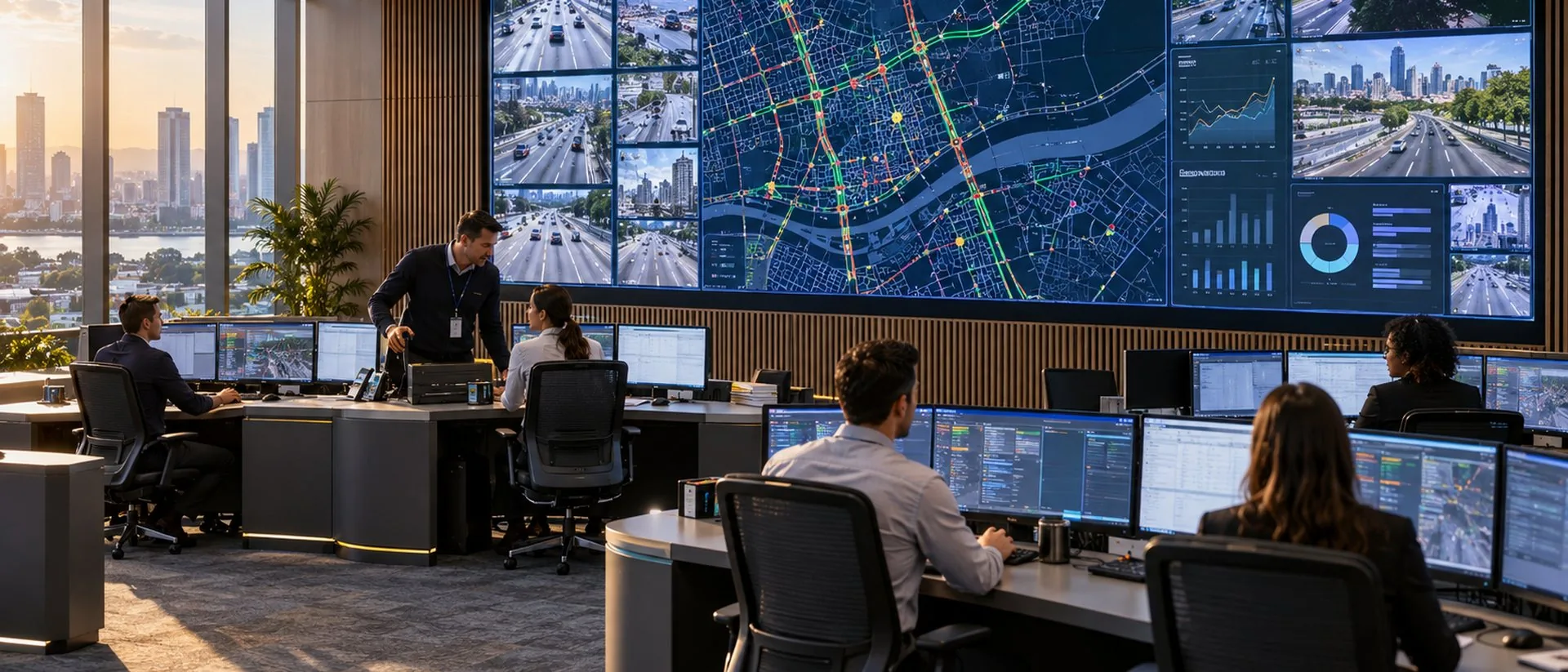
A video wall watched 24 hours a day: dozens of sources on one seamless canvas.
In a control room the screen is a working tool: maps, cameras and charts at once. A multi-window video processor lays out the sources and switches them without a black frame.
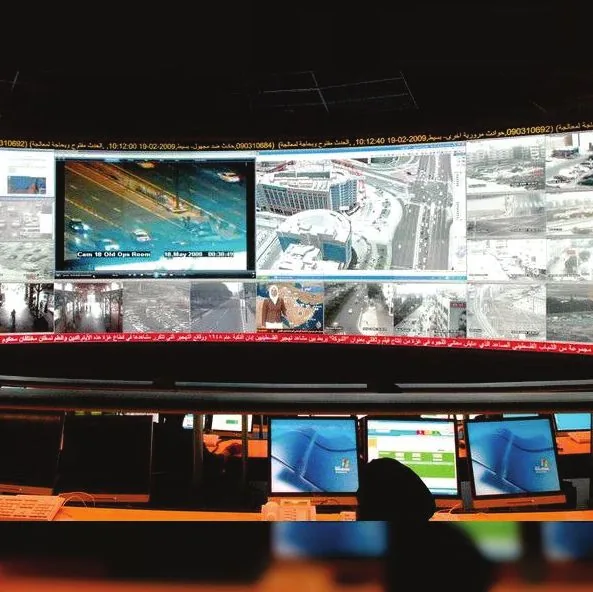
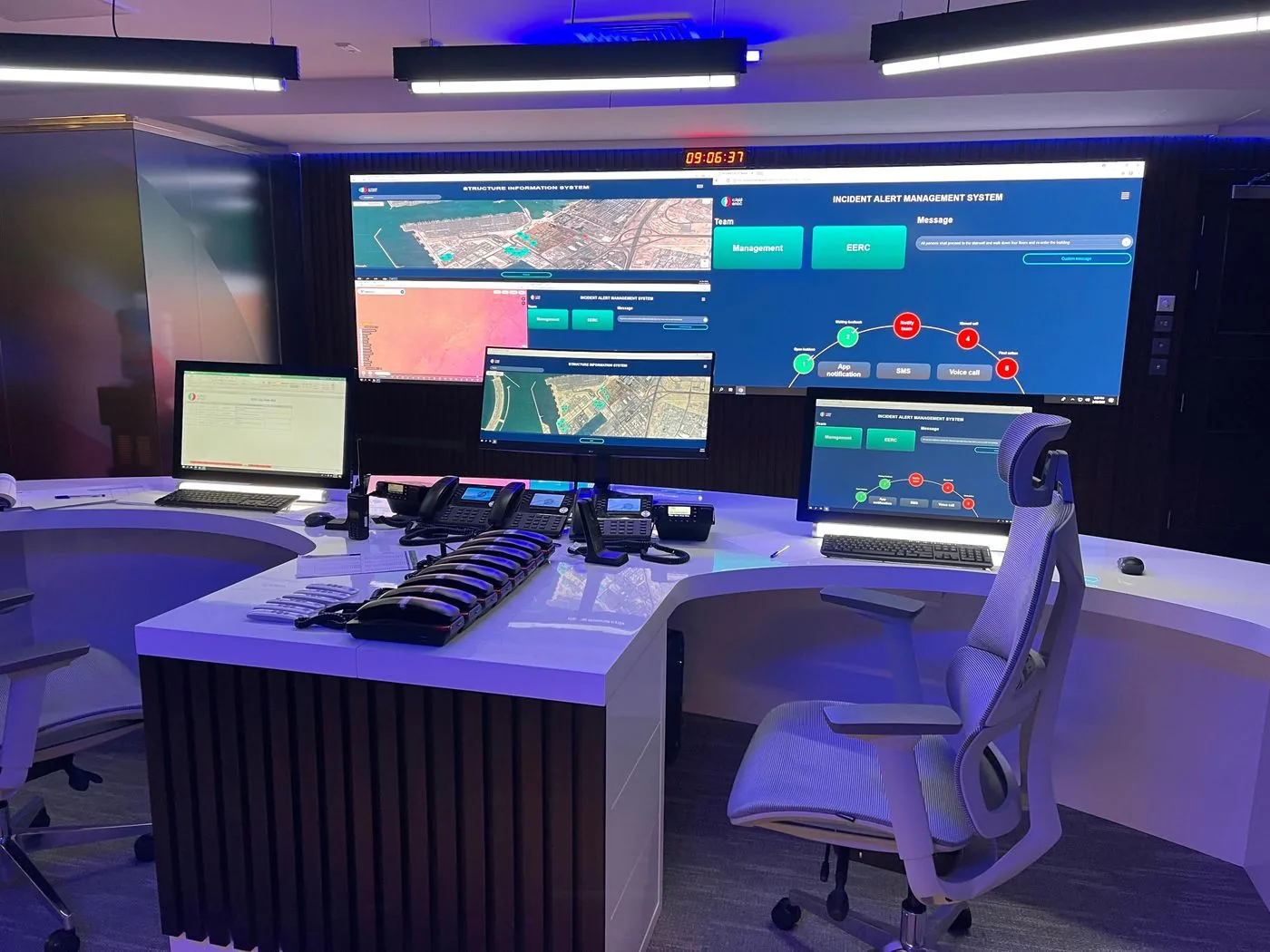
We built such centres for ENOC and Dubai Police, and for situation centres in Kazakhstan.
The scene visualisation is generated; the project photos below are real.
What matters here
- 1
Multi-window processor
Any source layout, presets at a button.
- 2
Around the clock
100,000-hour lifespan, running at 30–40% brightness.
- 3
Redundancy
Duplicated power and signal in the design.
Which screens fit
Models from the price list
 P2.5
P2.5Indoor displays
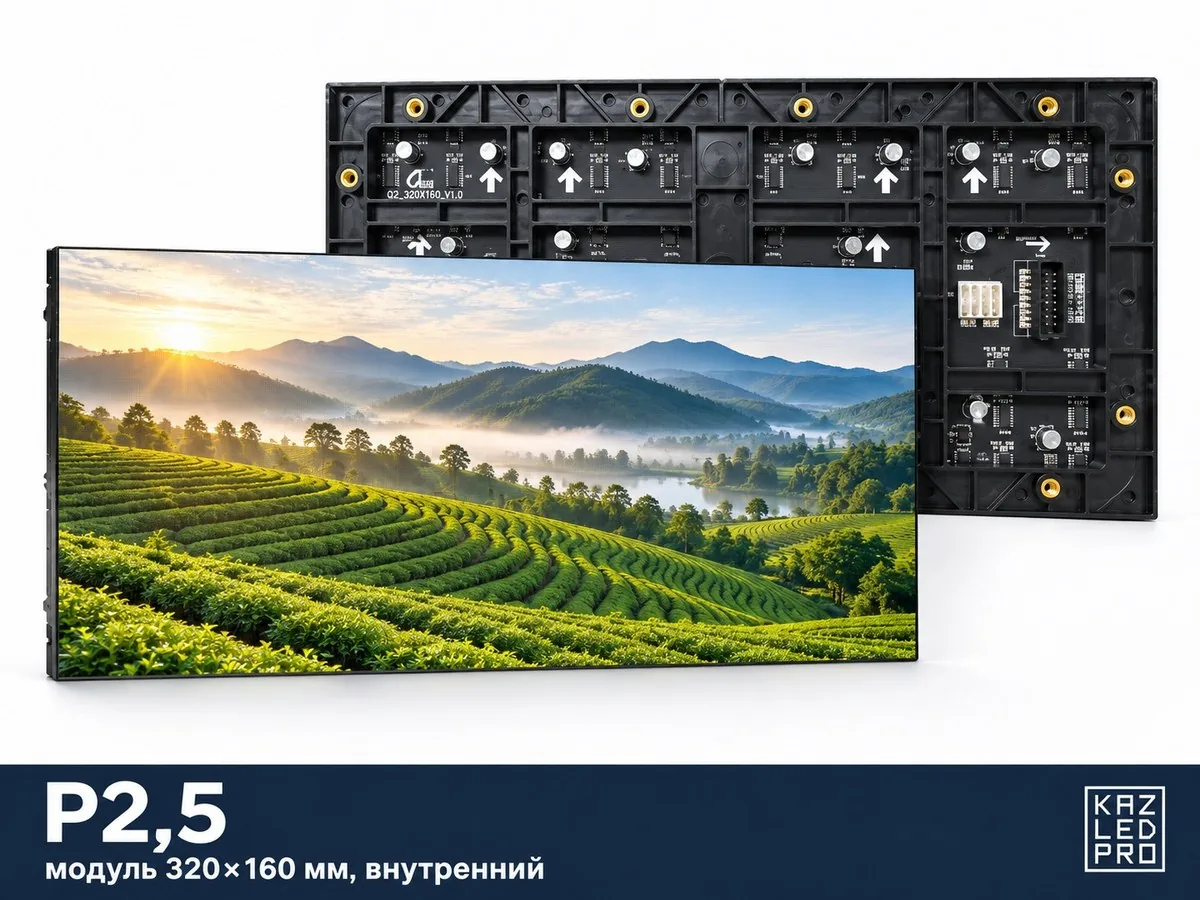
LED screen P2.5 for indoor use — 320×160 mm module
Indoor screen P2.5 (320×160 mm module), pixel density 160 000 dots/m². Comfortable viewing from 2 m.
- Brightness
- 350–550 cd/m²
- Density
- 160 000 dots/m²
- Protection
- IP 31
Details →
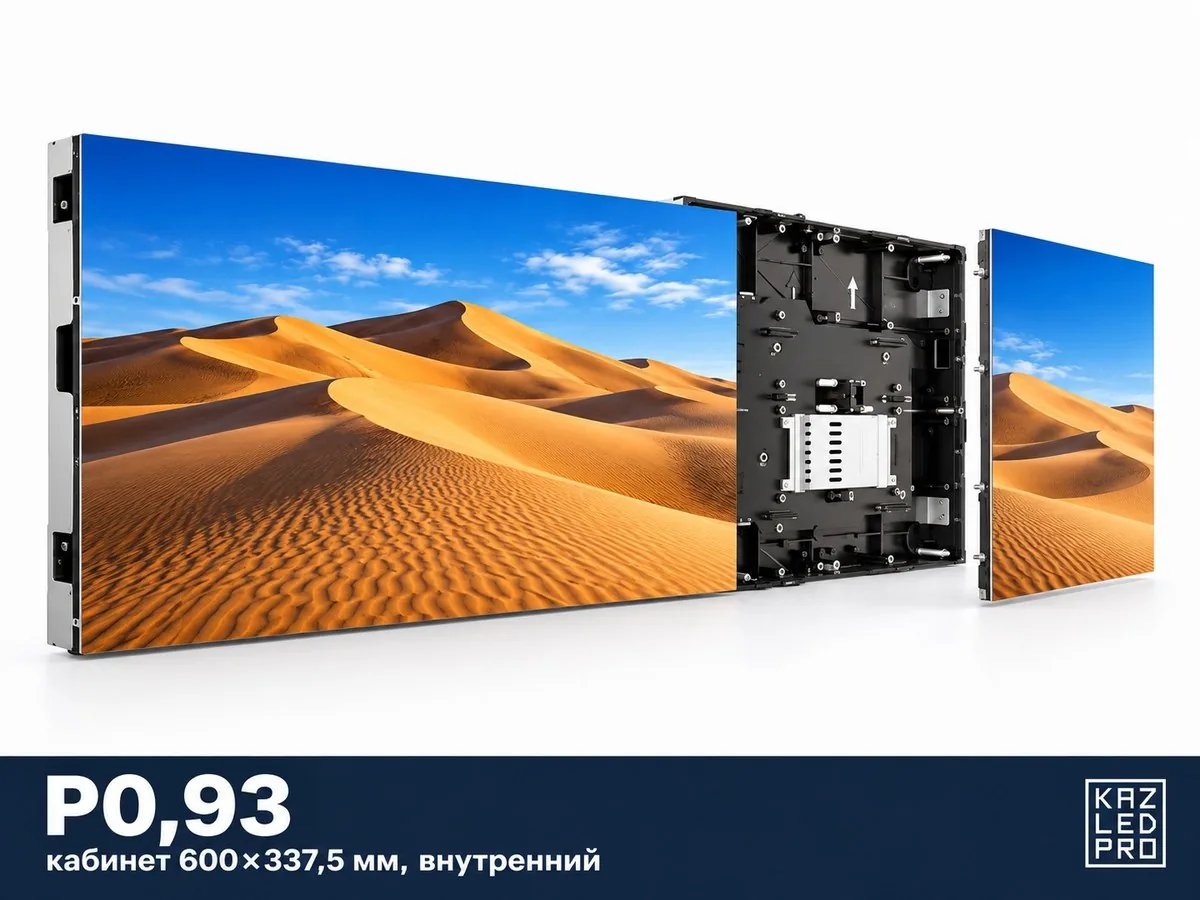 P0.93
P0.93Indoor displays
LED screen P0.93 for indoor use — 600×337.5 mm cabinet
Indoor screen P0.93 (600×337.5 mm cabinet), pixel density 1 137 778 dots/m². Comfortable viewing from 1 m.
- Brightness
- 600 cd/m²
- Density
- 1 137 778 dots/m²
- Protection
- IP40 (indoor version)
Details →
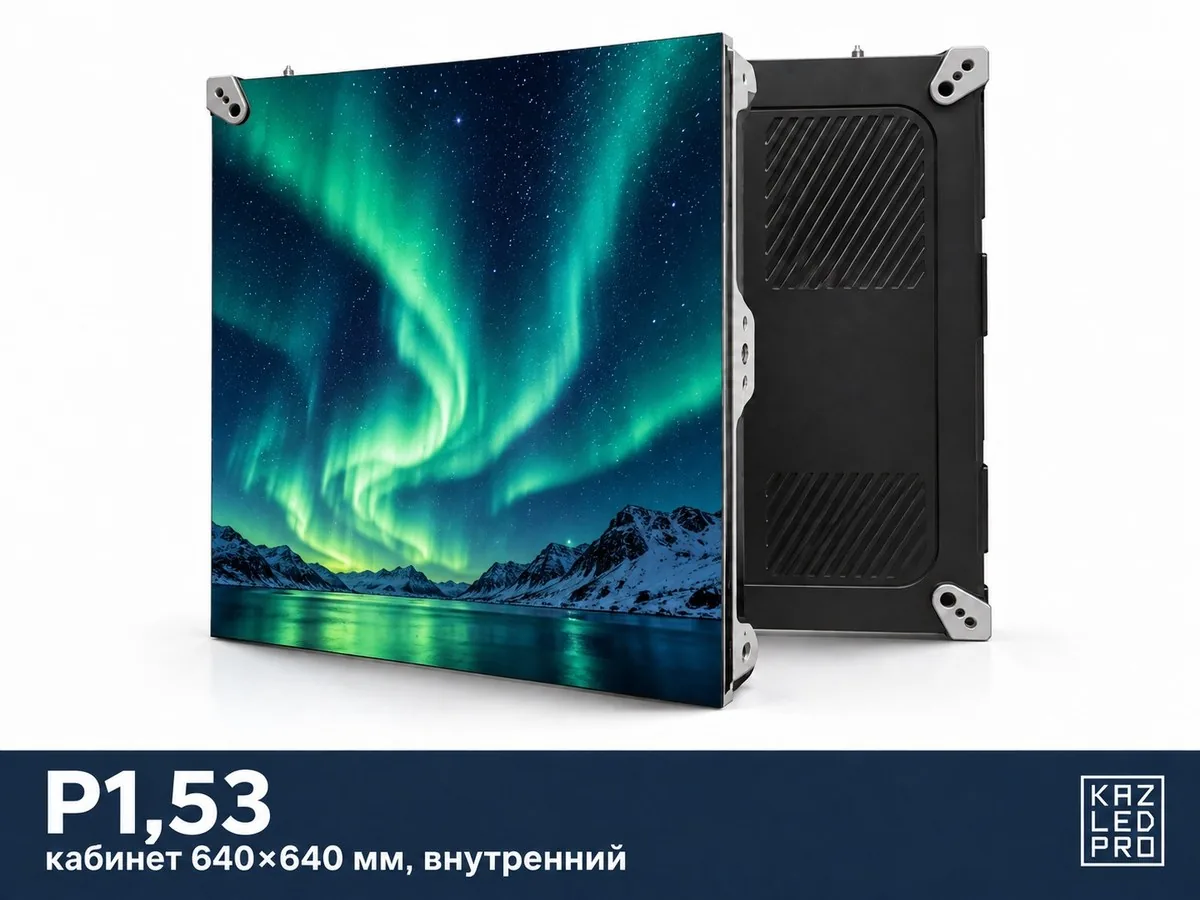 P1.53
P1.53Indoor displays
LED screen P1.53 for indoor use — 640×640 mm cabinet
Indoor screen P1.53 (640×640 mm cabinet), pixel density 422 500 dots/m². Comfortable viewing from 2 m.
- Brightness
- 350–400 cd/m²
- Density
- 422 500 dots/m²
- Protection
- IP 24
Details →
A control room or situation centre is a place where the screen is watched for a whole shift, not half an hour. What is needed is not a bright shop window but a seamless canvas holding a city map, a dozen cameras, load charts and the duty summary at the same time. An LED video wall is assembled in any size and proportion, there are no bezels between modules, and no joint cuts across the middle of a map the way it happens on a wall of monitors.
KazLedPro has worked with LED screens since 2012. Our portfolio includes situation centres in Kazakhstan and beyond: ENOC in Dubai (P1.53, 20 m², 2022), the Dubai Police command and control centre (P0.93, 48 m², 2023), the assembly hall of the National Security Committee building in Taraz (P2, 2021) and the Border Academy of the National Security Committee in Almaty (2022). Model selection, steel structure, installation by our own crew, commissioning and service come under one contract.
Our module stock is in Almaty and we work across Kazakhstan with a travelling crew: more than 1,000 projects, 62 of them with photos on the site. Canvas size and resolution for your operator seating can be estimated with the calculator on the site, and a commercial proposal with the equipment list and video processor is ready within a day.
Pixel pitch and brightness for an eight-hour shift
An operator sits two to four metres from the canvas and reads text off it rather than watching a video. So the pitch is finer than in a conference hall: P0.93 in COB technology gives 1,137,778 dots/m² and a comfortable distance from one metre, P1.53 gives 422,500 dots/m² and a distance from two metres, while P1.86 and P2 suit the far wall of a large room. Close seating is exactly why the Dubai Police command centre runs P0.93 and the ENOC situation centre runs P1.53.
Brightness in a control room, by contrast, is turned down. The rated 350–600 cd/m² is held at 30–40 per cent: the eye is not tired by the end of the shift, and maps and tables read without halo. A refresh rate from 3,840 Hz removes flicker when a log is photographed on a phone or shown over a video call. Viewing angles are 150 by 150 degrees, and 160 by 160 on COB models — the end workstations see the same picture as the central ones.
- Front row closer than two metres — P0.93 COB with a solid front surface
- Operators at two to four metres — P1.53 or P1.86
- A large briefing room next to the centre — P2 and coarser
- Working brightness at 30–40 per cent of rated, refresh from 3,840 Hz
Multi-window processor, sources and redundancy
A video wall in a control centre runs on a video processor with a multi-window mode. It gathers the GIS map, camera windows, an operator desktop and a browser dashboard onto one canvas, and layouts are stored as presets: the duty view, incident review, a briefing for management. Presets switch with no black frame — during an incident review the canvas must not go dark even for a second. Inputs are standard HDMI and DVI, so a surveillance server and an analyst workstation connect directly.
Round-the-clock operation needs margin. The design includes duplicated power and signal: two lines from different phases of the board, a backup video processor or a spare input, and a looped signal path across the receiving cards. The number of signal and power feeds is calculated from the resolution and load of the canvas and issued as a technical specification for the site electricians before delivery.
Round-the-clock service, installation without stopping the centre
Rated LED life is from 100,000 hours — eleven years of continuous operation, and at reduced brightness degradation is slower. Cast-aluminium cabinets are serviced from the front on magnets: a module comes off a working wall in a minute, no rear access is needed, and the video wall can sit flush to a solid wall with no service corridor. Cabinet depth is 36 mm on P0.93 and 65 mm on the 640×640 series, weight from 4.3 to 16 kg — the structure hangs on a wall or a stand, and the floor needs no reinforcement.
COB models are practical where people walk up to the screen: the dies are encapsulated in compound, the front surface is solid, it can be wiped and survives an accidental knock with a shoulder. Consumption on P0.93 is 300 W/m² peak and 100 W/m² average; on the 640×640 series it is 800 and 320 W/m². In a live centre we install within an agreed window: at night, shift by shift, or section by section, so the duty crew is never left without a picture.
How the project goes
- 1
Enquiry and survey
You send the room plan, the operator seating layout and the list of sources: surveillance servers, GIS, SCADA, workstations. In Almaty we come out to measure; in other cities we work from drawings and photos.
- 2
Configuration calculation
We calculate pitch and canvas size from the front-row distance, the resolution, the class of video processor and the number of signal lines. A commercial proposal with the full equipment list is ready within a day.
- 3
Contract, design and delivery
We fabricate the steel structure for your wall or stand and agree the electrics and cable routes with the site engineers. Cabinets in common pitches come from the Almaty stock.
- 4
Installation and commissioning
We assemble the video wall in the agreed window, match brightness and colour between cabinets, program the layout presets and test the backup power and signal lines.
- 5
Training and service
We teach the duty crew to switch presets and add new sources, hand over the documents and a 2–5 year warranty depending on the model. Spare modules and engineer visits come from the Almaty stock.
What the price depends on
The cost of an LED video wall for a control room comes from canvas area and pixel pitch, the class of video processor, the supporting structure and the redundancy requirements. We calculate an exact estimate from your room and seating layout: the calculator on the site gives a guide, and a commercial proposal is sent within a day.
Pixel pitch
The main cost driver. Moving from P2 to P0.93 raises density from 250,000 to 1,137,778 dots per square metre, and the price per metre moves accordingly. We choose the pitch by the real front-row distance, not with a margin.
Area and resolution
Canvas size is set by the farthest operator and the number of windows that must be readable at once. More pixels mean a higher class of video processor and more receiving cards and signal lines in the design.
Module technology
COB with a solid encapsulated surface is tougher and draws less power, but costs more than plain SMD of the same pitch. In a room where people walk right up to the wall, the difference pays for itself.
Structure and installation
Fixing to a solid wall is cheaper than a floor stand, a suspended frame or a structure with a service gap. Canvas height, night shifts and working in a live centre all affect the estimate.
Redundancy and control
Duplicated power, a backup video processor, a health monitoring system and an operator console are quoted as separate items — the set depends on the site regulations.
Warranty and service
The warranty is 2–5 years depending on the model. For round-the-clock sites a stock of spare modules and power supplies is kept on site so a replacement does not wait for delivery.
Questions and answers
Which pixel pitch should a control room use?
Count from the front row of operators. Closer than two metres — P0.93, with 1,137,778 dots per square metre and a comfortable distance from one metre. Two to four metres — P1.53 or P1.86. The far wall of a large briefing room is fine with P2. Fine text on a map matters more than canvas size.
How does an LED video wall compare with a wall of monitors?
A LED canvas has no bezels: a map, a scheme or a drawing is not cut by joint lines at an arbitrary place. Size and proportions are assembled freely rather than in multiples of a panel diagonal. LED life is from 100,000 hours, and a module is replaced from the front in a minute without dismantling the wall.
The screen runs around the clock — how long will it last?
Rated LED life is from 100,000 hours, about eleven years of continuous operation. In a control room brightness is held at 30–40 per cent of rated, and degradation is slower in that mode. Power supplies and receiving cards are replaced as consumable units while the canvas stays in place.
How many sources can be shown at once?
The number of windows is set by the video processor, not by the screen. Multi-window mode arranges maps, cameras, workstations and a browser in any combination; layouts are saved as presets and switch with no black frame. We choose the input count and processor class from your list of sources.
What electrical supply is needed and how much does it draw?
By specification P0.93 draws 300 W/m² peak and about 100 W/m² average; the 640×640 series draws 800 and 320 W/m². We calculate the exact load from the canvas area and issue a technical specification for the supply: number of power lines, breakers, cable cross-section and UTP lines for signal.
Can it be installed without stopping the centre?
Yes, that is the usual case. Installation is split into windows: night shifts, weekends, or assembling the canvas in sections while some sources go temporarily to backup monitors. The schedule is agreed with the duty service in advance and written into the contract.
Do you work through public procurement?
Yes. The company is in the registry of domestic manufacturers under the KTP industrial certificate, which is a price preference at tender. We prepare the technical specification for the tender documents, the load calculation and the connection diagram. We have experience with security-sector sites: the National Security Committee in Taraz and its Border Academy.
Do you install video walls in other cities?
Yes, with a travelling crew across Kazakhstan — Astana, Shymkent, Karaganda, Aktobe, Taraz and others — and abroad: the ENOC situation centre and the police command centre in Dubai. Measurements from drawings and photos, equipment from the Almaty stock, installation, setup and crew training by our own team.
A turnkey screen: quote, installation, launch.
Send us the dimensions and location — a quote today. WhatsApp around the clock.