
Products
Media facades: LED screens for building fronts
A screen the size of a building. Strips, cabinets, mesh and smart pixels at P15–P50 — a facade by day, a screen by night.
Where it goes
Business centres and hotels
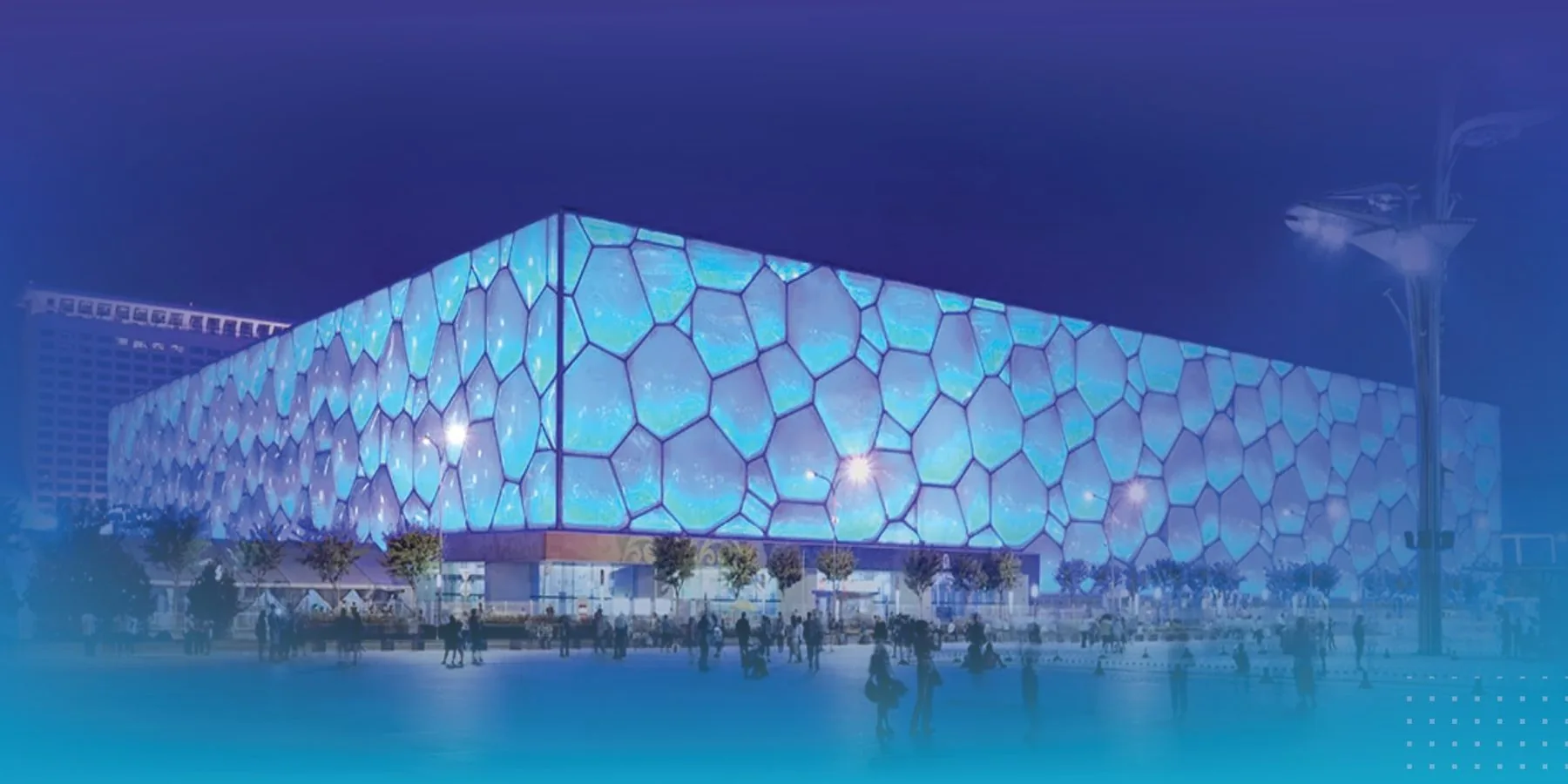
An image facade: the building is recognised by its evening screen.
Shopping malls
Tenant advertising across the whole wall, visible from the highway.
Stadiums and arenas
An outdoor screen for posters and broadcasts to the square.
Facade renovation
A media facade covers an old facade without repairing it.
Models from the price list
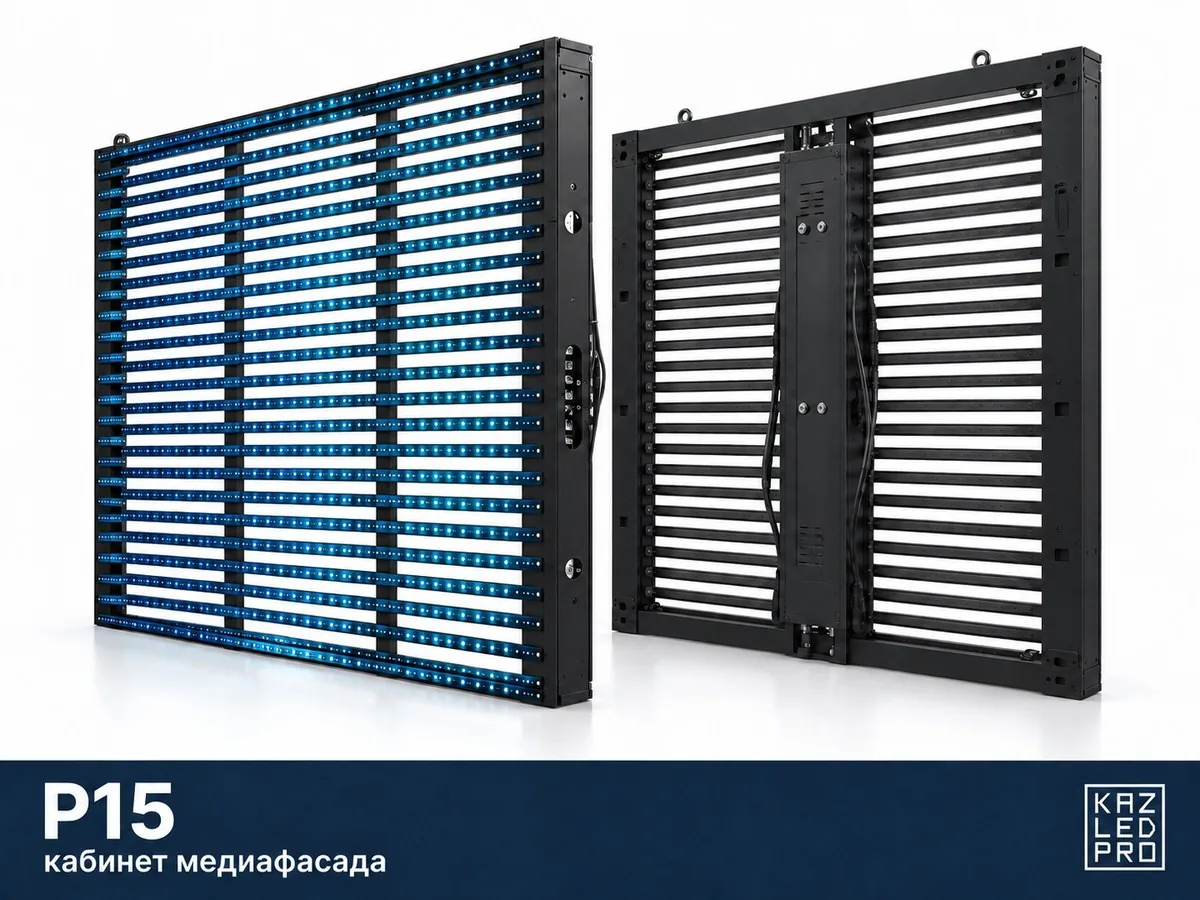 P15
P15Media facades
Media façade P15
Large-format media façade P15 for an entire building. Brightness 900 nit, IP65, viewing distance from 30 m.
- Brightness
- 900 nit
- Density
- 4 444 dots/m²
- Protection
- IP65
Details →
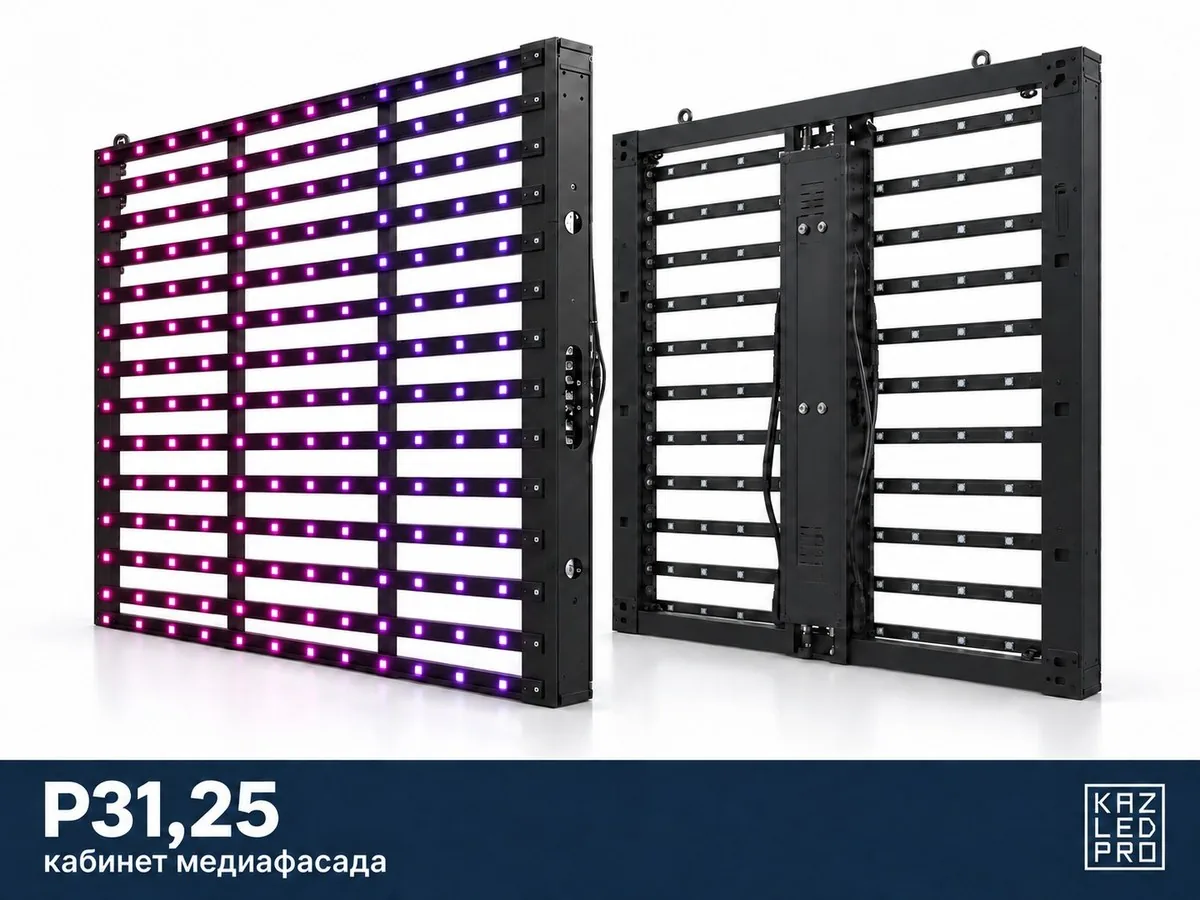 P31.25
Media facades
Media façade P31.25
Large-format media façade P31.25 for an entire building. Brightness up to 6 000 nit, IP67, viewing distance from 62 m.
- Transparency
- 30–90 % — the façade behind the screen stays visible
- Brightness
- up to 6 000 nit
- Protection
- IP67
Details →
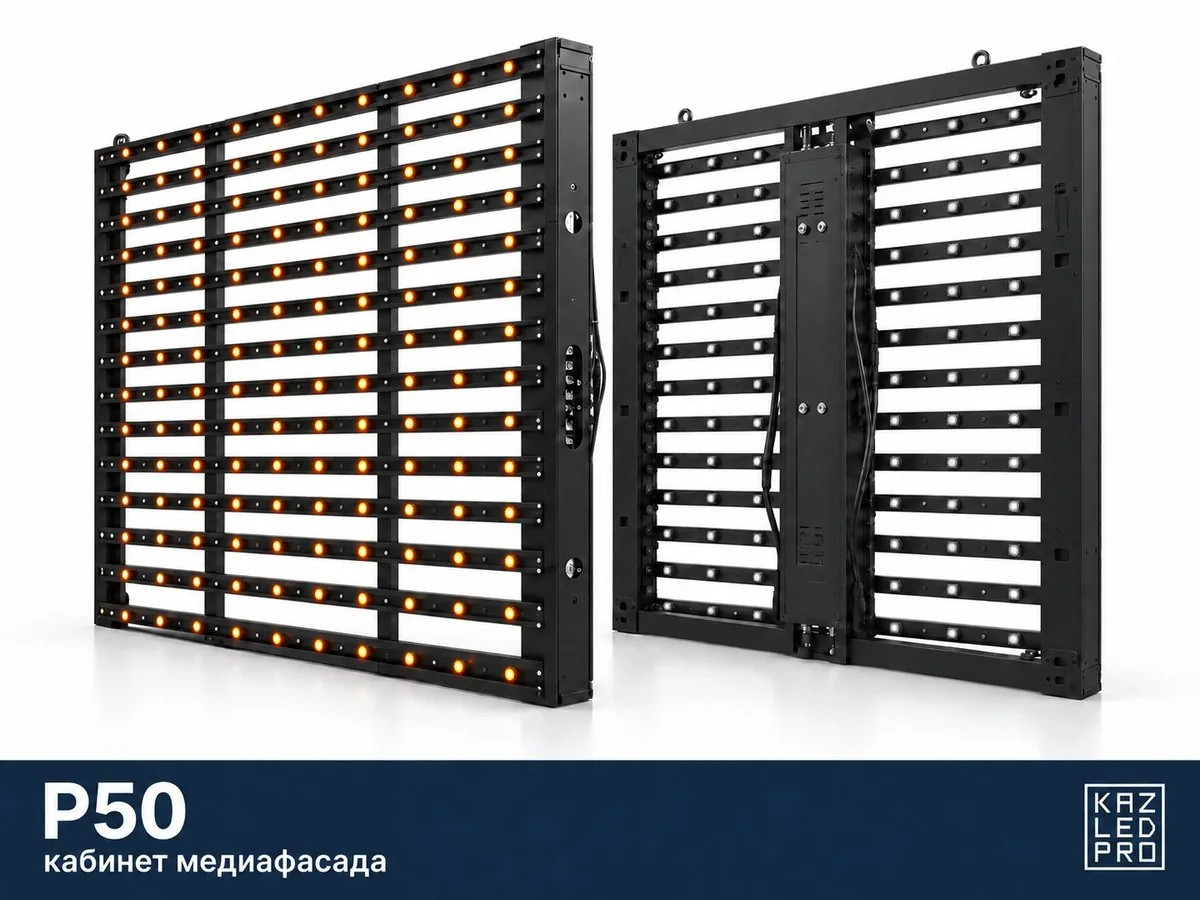 P50
P50Media facades
Media façade P50
Large-format media façade P50 for an entire building. Brightness up to 6 000 nit, IP67, viewing distance from 100 m.
- Transparency
- 30–90 % — the façade behind the screen stays visible
- Brightness
- up to 6 000 nit
- Protection
- IP67
Details →
Why this type
Five technologies
Strip, cabinet strips, smart pixel, diffuser strips, mesh — for any facade.
Up to 70% transparency
Windows stay windows: daylight and the view from inside remain.
Light mounting
Aluminium substructure for glass, concrete, ventilated facades.
Designed with the facade
Wind load, power and approvals calculated before installation.
Why an LED display
Warranty of up to 5 years
On screens of our own manufacture and on the equipment we supply.
Brightness control
Different by day and by night — the screen does not dazzle or flood windows with light, and consumption drops.
Service without dismantling
Front, rear or mixed — the module comes off and the structure stays in place.
Round-the-clock operation
LED life of 50–100 thousand hours in continuous use.
Vandal-resistant build
For places where the screen is within arm's reach.
Any shape and size
The screen is assembled from modules, so the dimensions fit the opening and the shape fits the task.
Wide temperature range
Outdoor models operate from −30 to +50 °C.
Installation on any surface
Brick, concrete, glass, an aluminium facade, a free-standing pylon or a roof.
Types of media facades
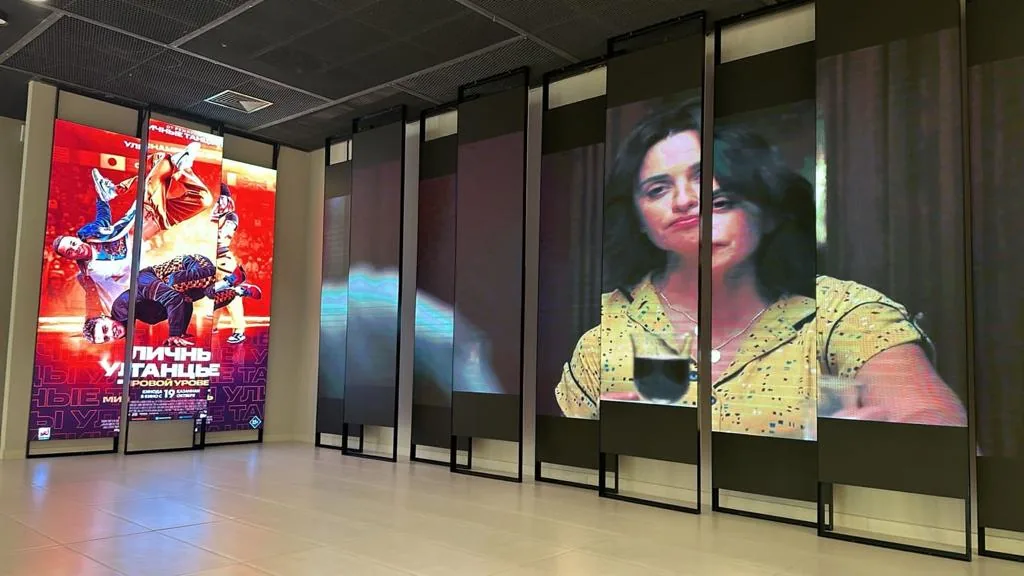
A media facade is an LED screen that covers large areas and is fitted to the face of a building, sometimes to the roof as well. There are several kinds, and the choice between them decides both the price and what can realistically be hung on a particular building.
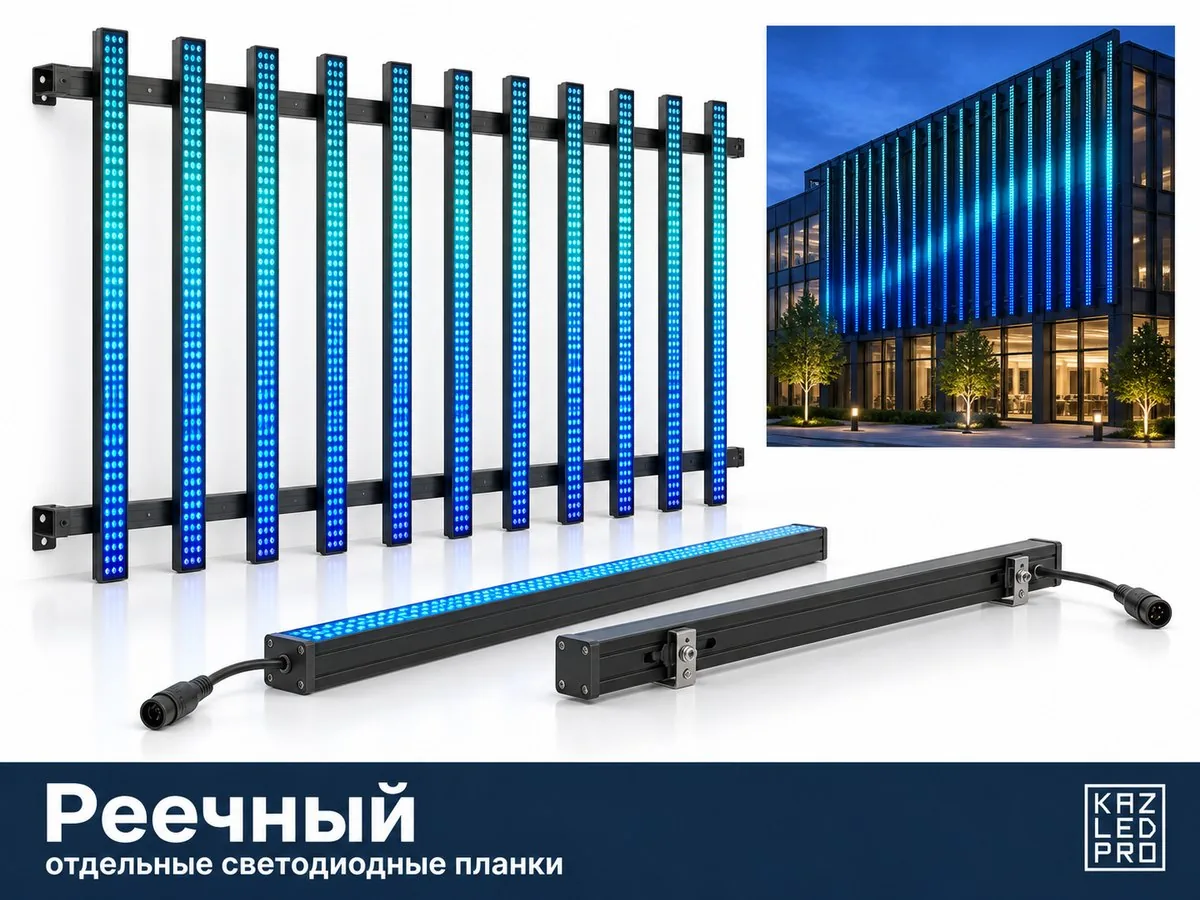
Strip
Assembled from individual LED strips with a pixel pitch of 25 to 64 mm. The strips are set vertically or horizontally; the closer they sit to each other, the higher the resolution and the brighter the image. There is no cabinet, so strips are used to build arched and cylindrical facades. Strip length runs from 200 to 2000 mm, which is where complex shapes come from. Power supplies and control electronics move into a separate enclosure.
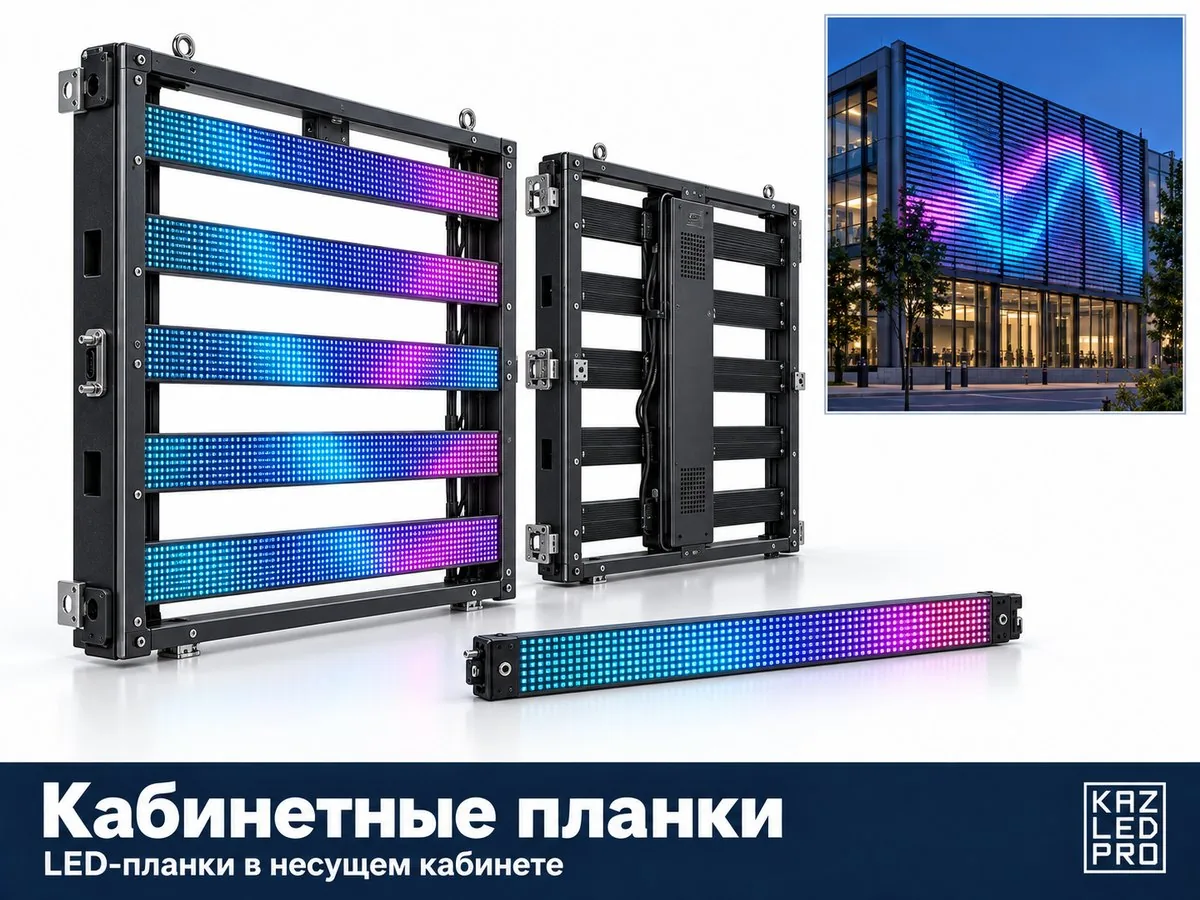
Cabinet strips
The load-bearing element is a light cabinet case: power supplies and the control system inside, LED strips outside. Each cabinet is connected with a single cable. This is the most common and the most reliable technology for large areas. The kit includes an aluminium substructure with mounts for any facade — glass, aluminium or concrete.
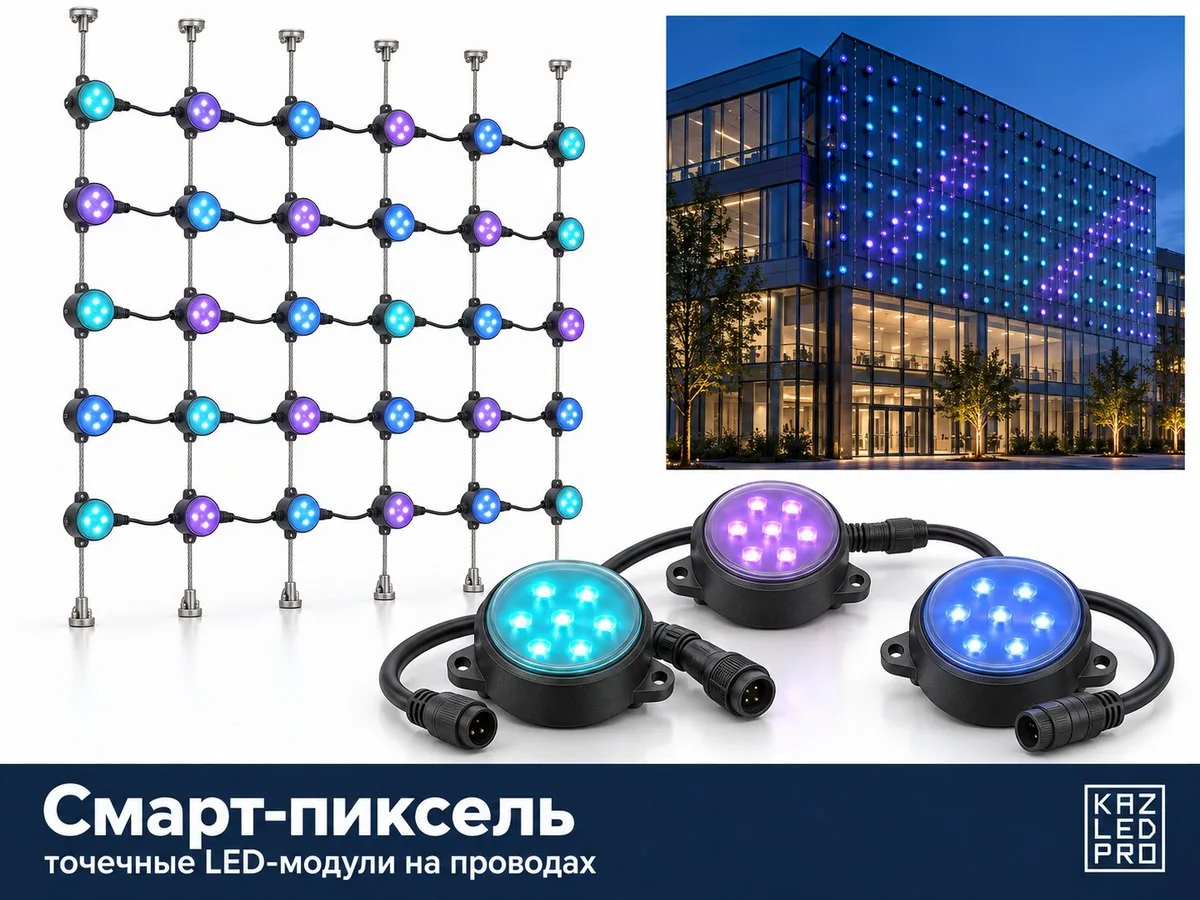
Smart pixel
The screen element is a separate puck with a group of LEDs: a self-contained pixel programmed for video or decorative lighting. The pucks are joined by power and signal wires, and the spacing between them sets the brightness and the quality. They are strung on cables, clipped on or recessed into a surface — hence any designer shape and three-dimensional art objects.
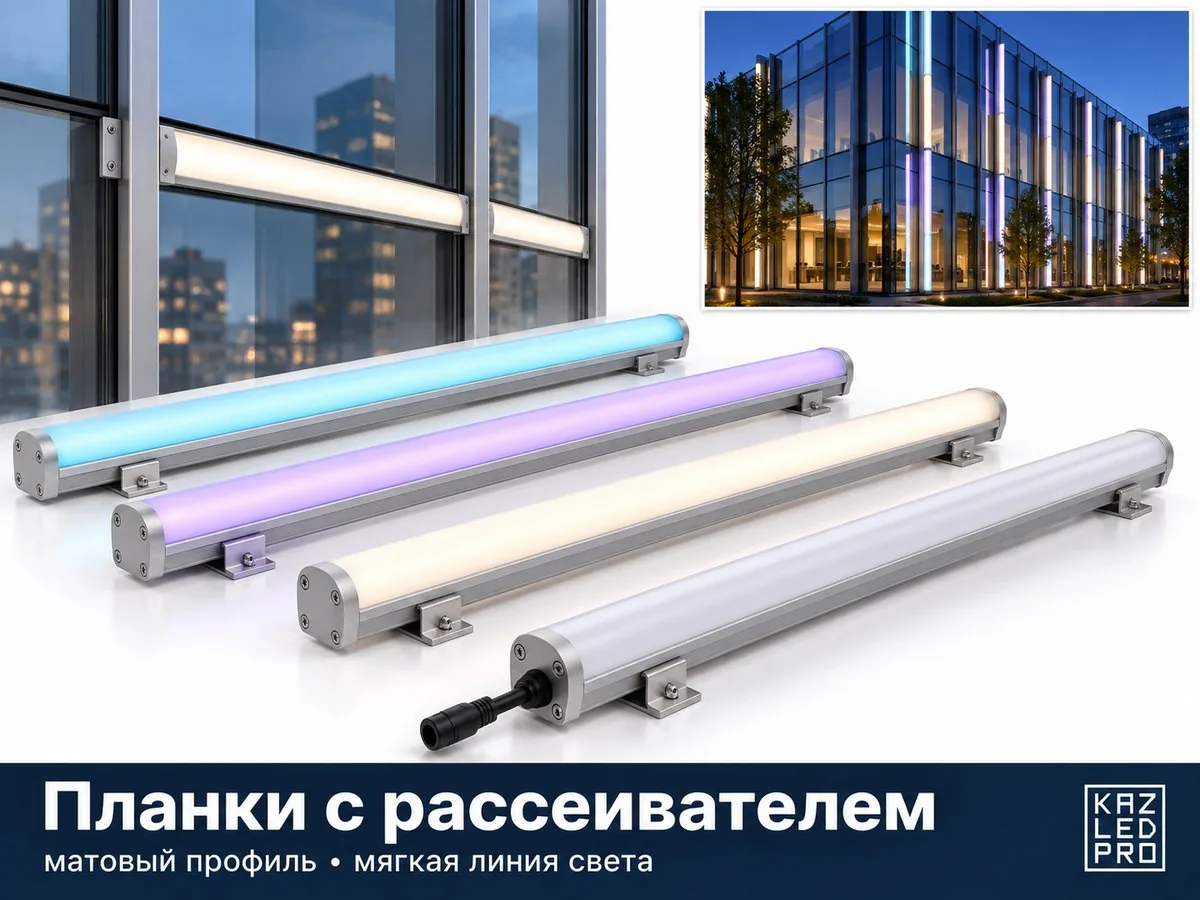
Diffuser strips
LED strips in a diffusing plastic housing. They are mounted into profiles between glazing units at wide spacing: from inside the room the screen is invisible, while from outside the building turns into a light installation after dark. The sparse pitch keeps the cost per square metre low.
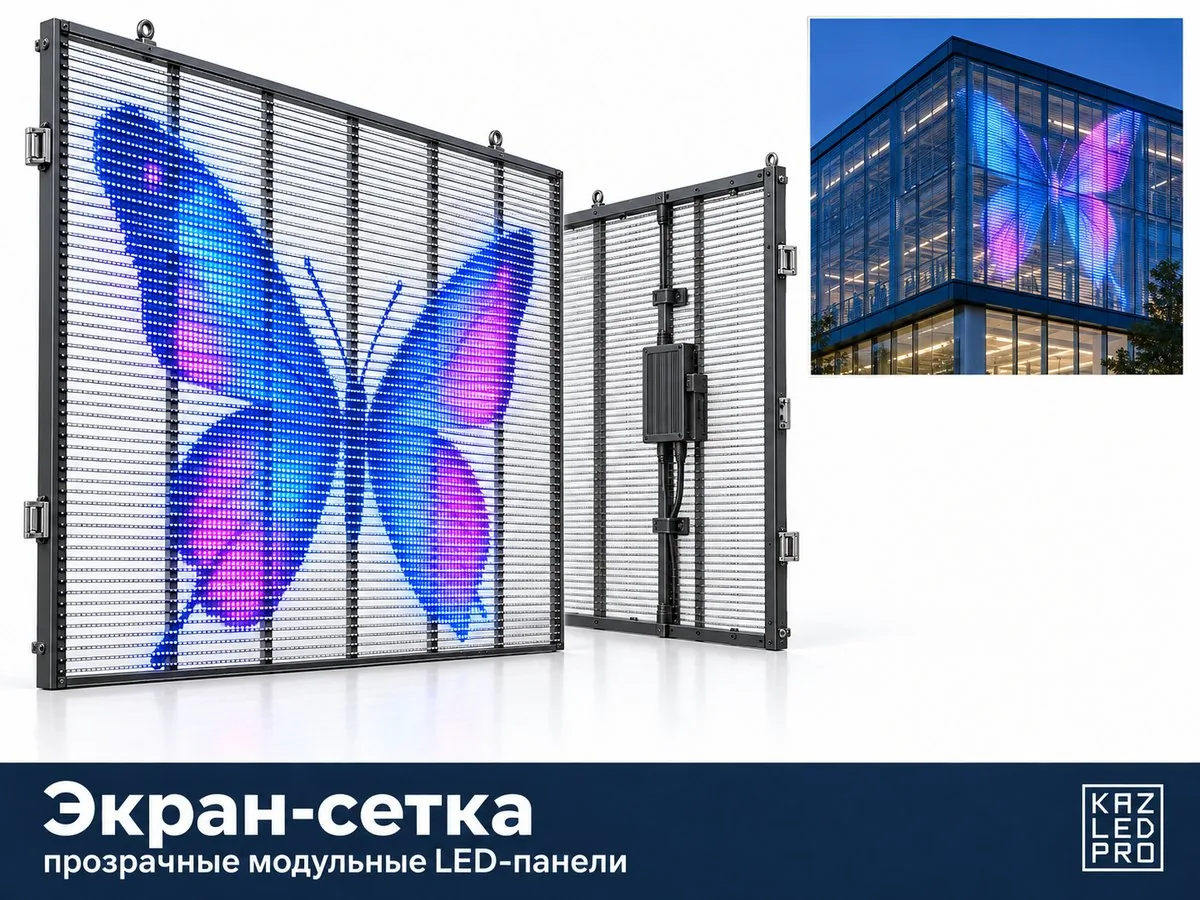
Mesh screen
Essentially a full screen: refresh rate up to 3840 Hz, brightness matched to the facade lighting. Modules of a special type give 30–50% transparency. Aluminium cabinets of 1000×500 and 500×500 mm, pitch from 10 to 15 mm. Front and rear service, structure depth from 100 mm with no complex frame. Used for advertising and for rental alike.
A media facade is an LED screen that covers an entire building facade or most of it. The pixel pitch is coarse, P15–P50: a media facade is viewed from 20–30 metres and further — from the road, the square, the next block. By day the building stays a building; in the evening the facade becomes a screen for advertising, brand videos and city broadcasts. KazLedPro designs, supplies and installs media facades in Almaty and across Kazakhstan.
We have worked with LED screens since 2012. More than 1,000 sites across the country, 62 of them published in the portfolio on this site, including facade screens on shopping malls and office buildings. Installation is done by our own crew, we calculate and fabricate the steel and the substructure ourselves, and our module warehouse is in Almaty. The catalogue has three media facade models with datasheet specifications: P15, P31.25 and P50.
Buying a media facade means buying a project, not just a screen: wind load, the bearing capacity of the wall, power supply, approvals from the building owner and the city. We close these questions before installation and price the job by the actual facade dimensions: there is a calculator on the site, and a commercial proposal is ready within a day.
Five types of media facade
The word “media facade” covers five different constructions, and the choice between them decides what can be hung on a given building at all and what it will cost. They have one thing in common: the screen is designed for distant viewing and does not seal the facade shut.
Strip and cabinet types are chosen when a full advertising picture across the building is needed. Smart pixels and diffuser strips suit decorative tasks with a limited budget per square metre. Mesh is for glazed facades where daylight inside must be preserved.
- Strip type: individual LED strips 200 to 2,000 mm long with a pitch of 25 to 64 mm. There is no cabinet, so arched and cylindrical facades are assembled from strips.
- Cabinet strips: a light pencil-case cabinet with power supplies and control inside, LED strips outside, one cable per cabinet. A widespread technology for large areas; an aluminium substructure for glass, aluminium and concrete comes in the kit.
- Smart pixel: a separate puck with a group of LEDs, linked by power and signal wires. Mounted on cables and clips or recessed into a surface — hence three-dimensional art objects and designer shapes.
- Diffuser strips: mounted in profiles between glazing units, far apart from each other. Invisible from inside; after dark the building becomes a light installation from outside.
- Mesh screen: a full screen with a refresh rate up to 3,840 Hz and 30–50% transparency, aluminium cabinets 1000×500 and 500×500 mm, pitch 10 to 15 mm, construction depth from 100 mm.
Catalogue models: P15, P31.25 and P50
The P15 media facade is a 500×500×54 mm cabinet weighing 10 kg, 33×33 pixels per cabinet, 900 nit brightness, IP65, recommended viewing distance from 30 m. This is the option for facades that need readable text, logos and video, not just colour patches.
The P31.25 and P50 media facades are a grid assembled to the facade size, with a standard 1000×1000 mm transport module. Brightness up to 6,000 nit, IP67, operating temperature from −40 to +60 °C, transparency 30–90%: the facade behind the screen stays visible and windows remain windows. Weight about 12 and 8 kg/m², average power 478 and 187 W/m². P31.25 gives 32×32 pixels per square metre, P50 gives 20×20. The rule is simple: the further the viewer stands, the coarser the pitch can be and the lower the cost per square metre.
Designing a media facade: load, power, approvals
A media facade weighs 8 to 12 kg/m² without the substructure, and its wind resistance is considerable. So before ordering equipment we calculate the wind load and check what we are fixing to: a ventilated facade, cast concrete, brick and glazing all need different fixing details. The aluminium substructure is matched to the specific wall, not taken from a standard drawing.
Power: maximum consumption is 1,200 W/m² for P15 and 1,434 W/m² for P31.25, with the average two to three times lower. A facade of several hundred square metres needs its own supply line, protective switchgear and usually three-phase power. Control is a video processor and a controller; content and brightness are changed remotely.
Placing an advertising structure on a facade is approved with the building owner and city services. We prepare the technical part of the package: drawings, load calculations, the power supply diagram, equipment datasheets.
Facade screens in our portfolio
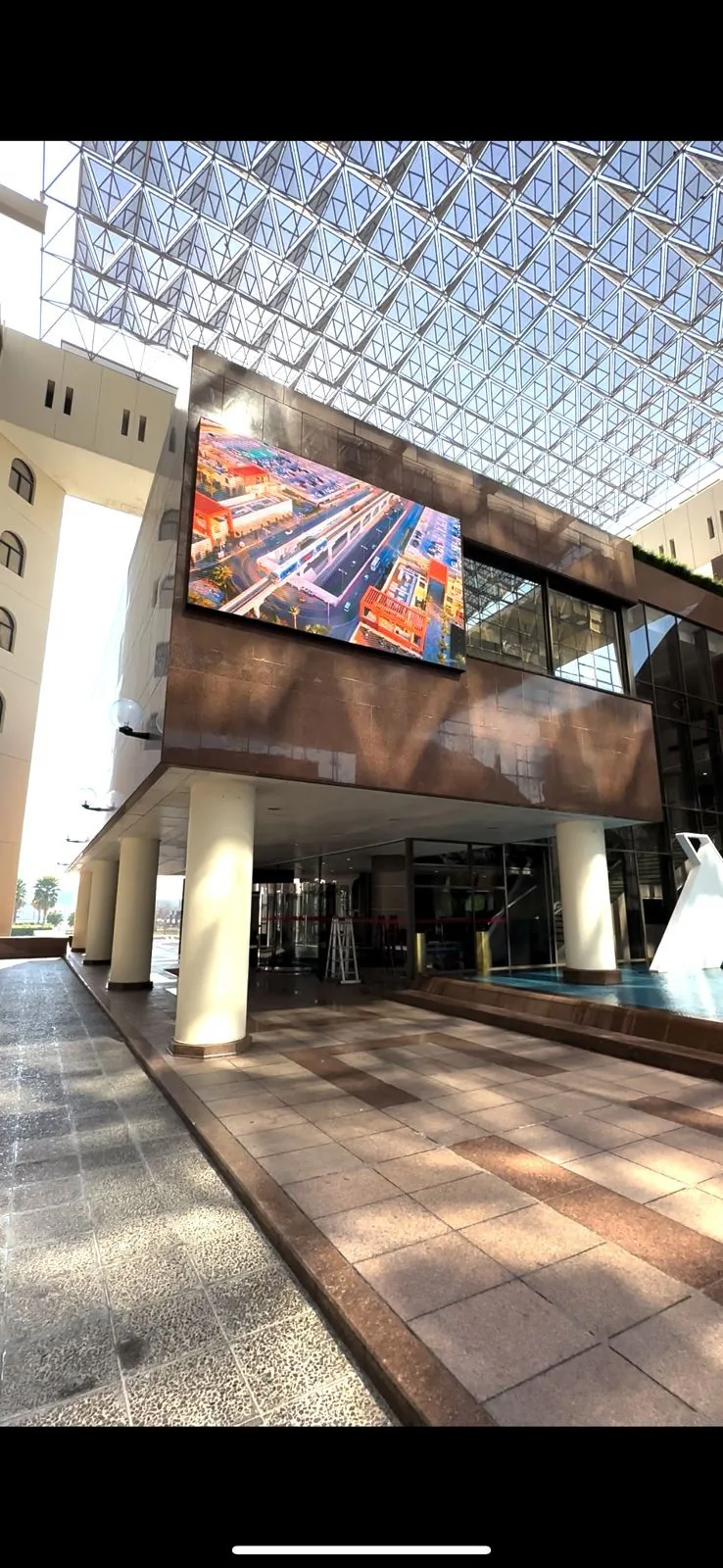
The published part of the portfolio includes facade LED screens with a finer pitch than a classic media facade: a corner outdoor P5 screen of 48 m² on the facade of Atakent Mall in Almaty (2023), an outdoor P10 screen of 960×960 mm cabinets for the Bazis company in Astana (2021), and a 36 m² outdoor P3 screen on the Dubai Municipality Headquarters building in Dubai (2023). It is the same facade work: substructure, work at height, power, approvals.
If the building already has a banner or an old screen, the media facade goes in its place without repairing the facade itself: the substructure covers irregularities, and the transparent P31.25 and P50 models do not interfere with windows or ventilation.
What the supply includes and how we deliver across Kazakhstan
A media facade supply includes strips, cabinets or mesh of the chosen type with power supplies and receiving cards, a video processor and a control computer with a brightness schedule, cabling along the facade, a substructure design with wind-load calculation and its fabrication, installation with work at height, commissioning, training and documents: passport, diagrams, acts and a 2–5 year warranty card.
Equipment ships from our Almaty warehouse or to order from the factory and travels across Kazakhstan by freight company; the substructure is fabricated in Almaty and installed by our travelling crew with a lift or rope-access technicians. Design, placement approval, delivery and installation timing are fixed in the contract — for a media facade they are longer than for a hall screen and depend on the facade being ready.
How the project goes
- 1
Enquiry and site survey
We clarify the task: advertising, image, broadcasts. We visit the building in Almaty, measure the facade, look at the wall, glazing, power entry points and where the screen will be seen from.
- 2
Design and calculation
We match the media facade type and pitch to the viewing distance and calculate area, resolution, power and wind load. A commercial proposal with a drawing and equipment list is ready within a day.
- 3
Approvals and contract
We prepare the technical part for the building owner and city services: drawings, loads, power diagram. After approval we sign a contract with a specification and schedule.
- 4
Fabrication and substructure
We order modules and strips and in parallel fabricate the aluminium substructure and steelwork for the specific wall. Power and cable routes are laid before the equipment arrives.
- 5
Installation and commissioning
Our own crew installs the media facade with access at height, connects power and control, and sets brightness by time of day. We train the operator and hand over the documents.
What the price depends on
At KazLedPro indoor screens start from 260,000 ₸ per m² and outdoor screens from 300,000 ₸ per m². On the Kazakhstan market a square metre of LED screen costs roughly between 180,000 and 1,500,000 ₸: the lower end is a coarse pitch for outdoor use, the upper end a fine-pitch screen for a studio or meeting room. This is a market reference, not our price list: the exact figure is calculated from your dimensions and scope of work. The price of a media facade is made up of equipment and project work: a screen of the same area on different buildings can differ in cost several times over. We calculate an exact estimate from the dimensions and type of facade — the calculator on the site gives a guide, and a commercial proposal is ready within a day.
Media facade type
Cabinet strips and the strip type cost more per square metre than diffuser strips or smart pixels: they carry more LEDs and show full video. Mesh sits between them.
Area and pixel pitch
The finer the pitch, the more pixels per metre and the higher the price. P15 is noticeably more expensive than P50 for the same area, but it reads with detail from 30 m.
Facade and substructure
Ventilated facade, cast concrete, brick, glazing — different fixing details and a different substructure. Complex geometry, arches and corners add labour and material.
Height and installation method
Installation above the third or fourth floor needs a lift, a cradle or rope-access technicians. Access to the facade from the yard or the roadway also affects the estimate.
Power and control
A separate supply line, switchgear, cable routes, a video processor and a controller. The larger the area and the brighter the screen, the heavier the power requirement.
Warranty and service
Equipment warranty is 2–5 years depending on the model. A service contract with scheduled inspections and module replacement is priced separately.
Questions and answers
Which pixel pitch should I choose for a media facade?
Start from the distance the facade is most often viewed from. P15 is recommended from 30 m and gives readable text and logos. P31.25 and P50 are for distant viewing from a highway or square: the picture resolves into a whole from a distance, while the square metre is cheaper and the facade stays 30–90% transparent.
Will the windows stay visible, and will the rooms get darker?
It depends on the type. The P31.25 and P50 media facades are 30–90% transparent, so daylight and the view from the windows remain. Diffuser strips sit between glazing units and are not visible from inside at all. The P15 cabinet type is solid — it goes on blank wall sections, parapets and roof structures.
How long does a media facade project take?
Survey and commercial proposal — a day or two. After that the schedule depends on approvals with the building owner and the city and on equipment delivery: media facades sized to a facade are made to order. We do the substructure and power in parallel so installation starts as soon as the modules arrive. The exact schedule is written into the contract.
Will a media facade withstand wind, snow and frost?
The P31.25 and P50 models are rated from −40 to +60 °C with IP67, P15 from −20 to +60 °C with IP65. We calculate the wind load before ordering equipment and build it into the substructure and fixings. A mesh construction does not collect snow and offers less wind resistance than a solid cabinet.
How much power is needed?
Maximum consumption by datasheet: P15 — 1,200 W/m², P31.25 — 1,434 W/m², P50 — 560 W/m². The average in operation is two to three times lower, and brightness drops automatically at night. A facade of hundreds of square metres needs its own supply line and usually three-phase power — we give the exact figure in the design.
Who handles the approvals for a media facade?
Approvals are handled by the client as the owner or tenant of the building, and we prepare the technical part: drawings, load calculations, power supply diagram, equipment datasheets. If needed, we attend meetings with the management company and city services and answer the technical questions.
What about warranty and maintenance?
Equipment warranty is 2–5 years depending on the model. We recommend a scheduled inspection each season: fixings, sealing, power and connectivity. A failed strip or module is replaced individually without dismantling the facade; we keep a stock of modules at our warehouse in Almaty.
Do you build media facades in other cities of Kazakhstan?
Yes. Our travelling crew has worked in Astana, Aktobe, Turkistan, Karaganda and other cities. The building survey can be done from photos, video and facade drawings, followed by a trip for measurement and installation. Equipment logistics and crew accommodation are added to the estimate as a separate line.
A turnkey screen: quote, installation, launch.
Send us the dimensions and location — a quote today. WhatsApp around the clock.