
Solutions
LED screens by application: industry solutions
A screen for the task: thirteen scenarios from TV studios to stadiums, with models, projects and what matters there.
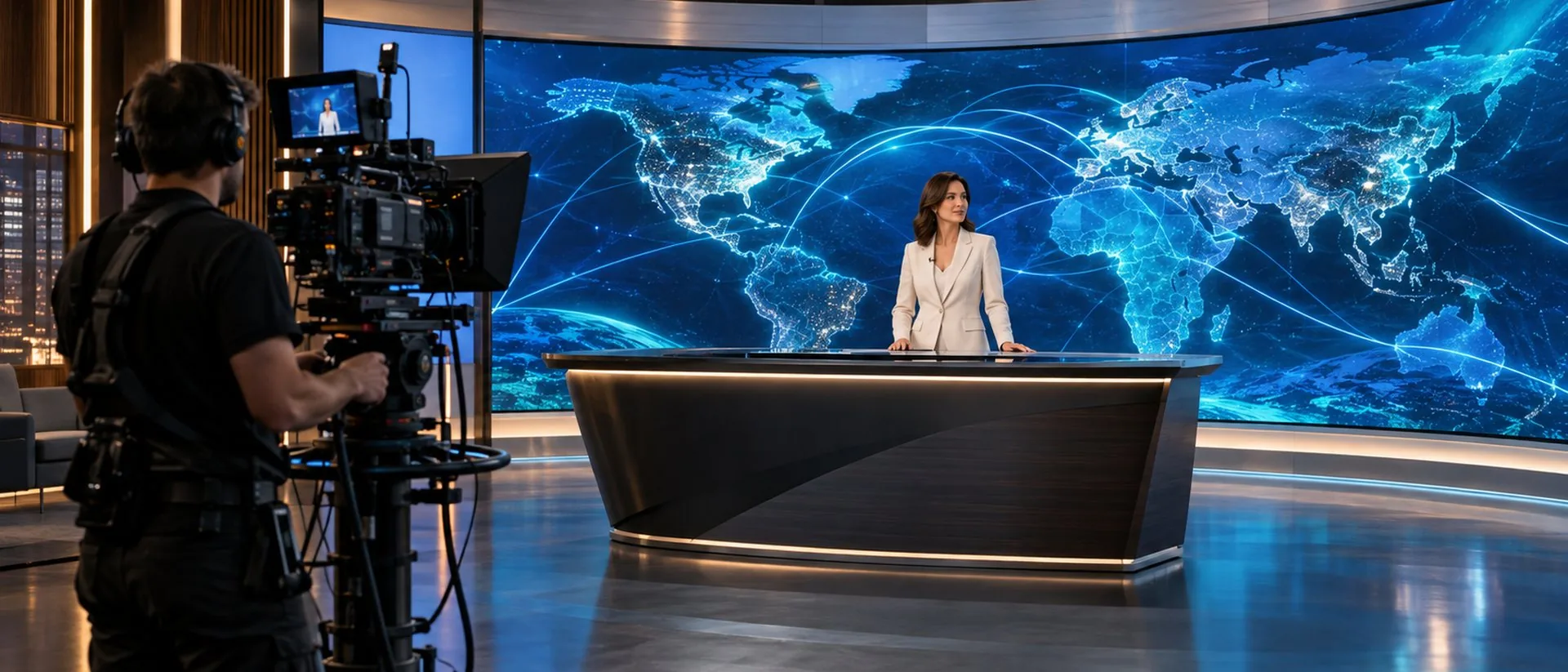
Screens for TV studios
A backdrop behind the presenter with no banding on camera and no glare.
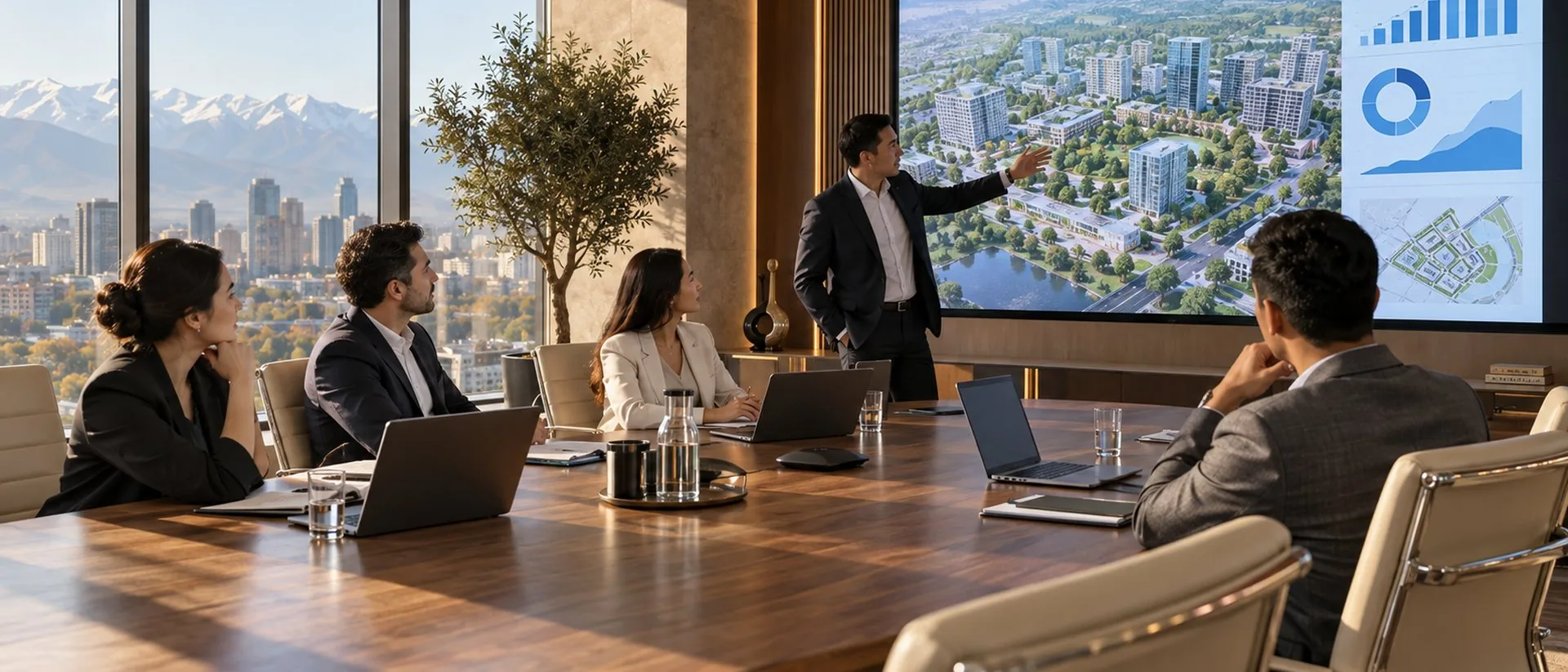
Business centres and meeting rooms
A screen instead of a projector: visible in daylight, no seams, no lamp to burn out.
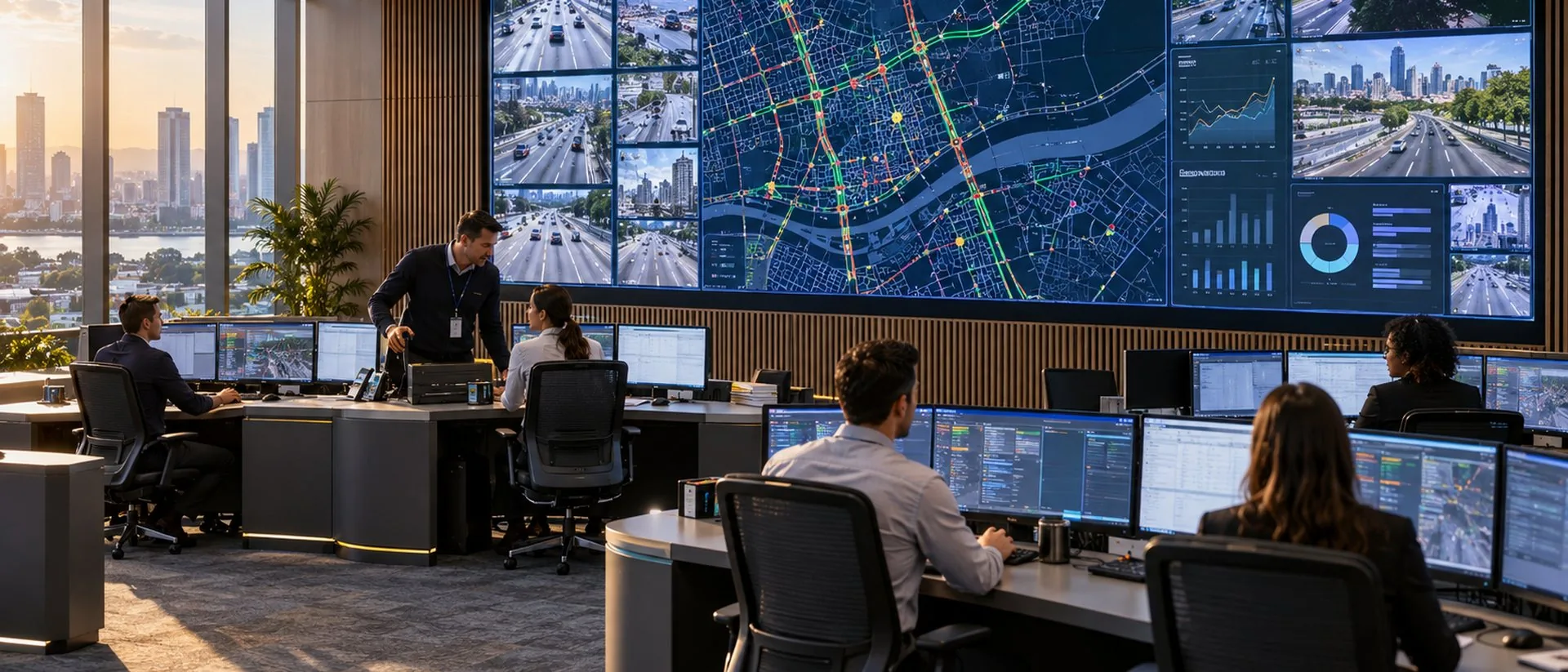
Control and situation rooms
A video wall watched 24 hours a day: dozens of sources on one seamless canvas.
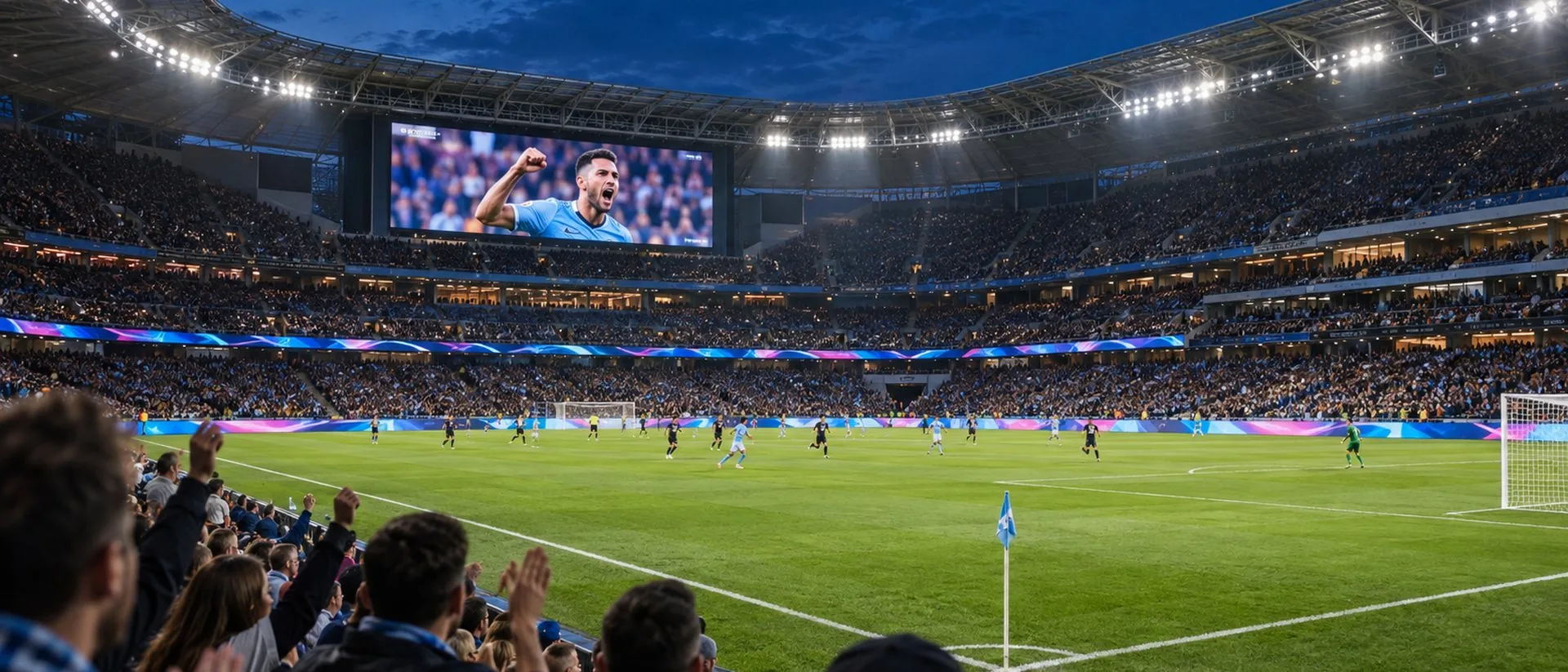
Stadiums and arenas
Equipping the whole arena: from tournament regulations to the test match — several canvases, one control system, power and lightning protection, installation by our own crew.
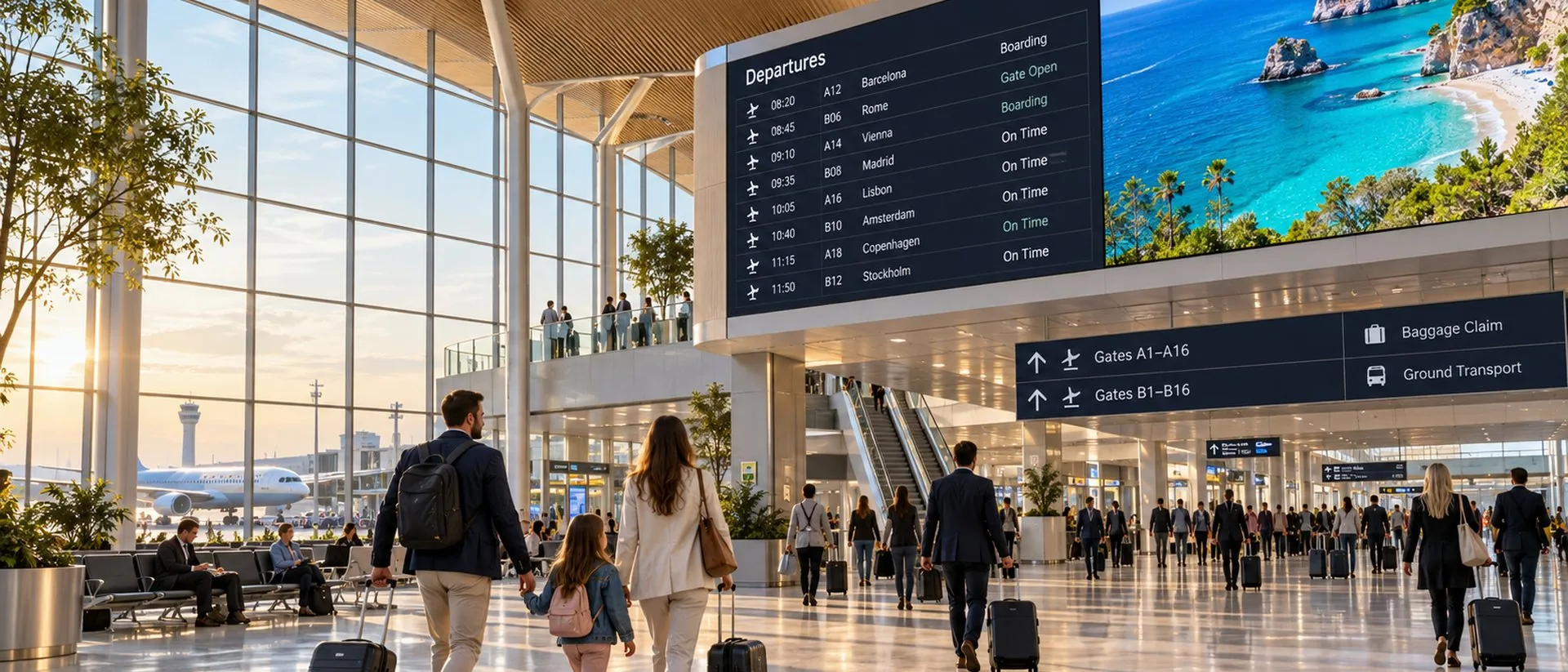
Airports and stations
Screens read on the move from twenty metres: timetables, wayfinding, advertising in the passenger flow.
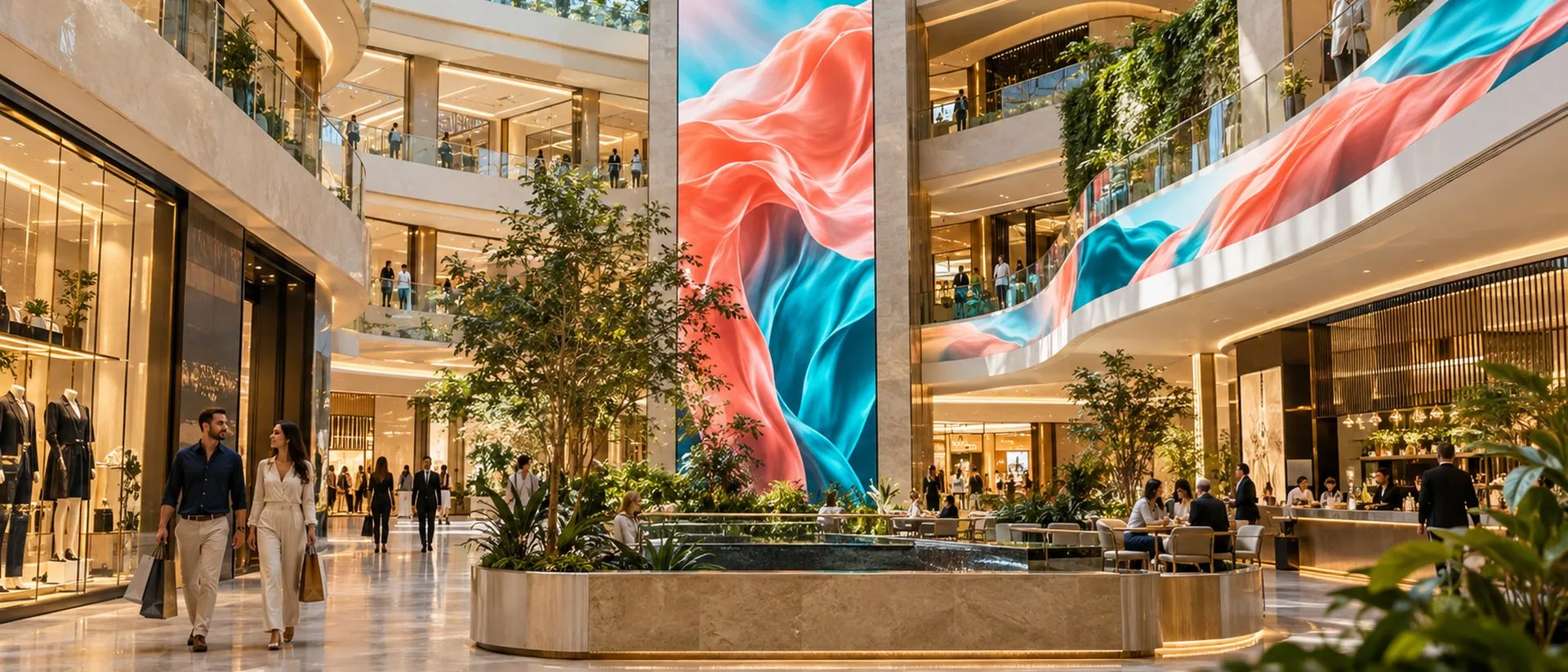
Shopping malls
Atrium, facade, columns, tenant windows — screens that sell advertising and gather people.
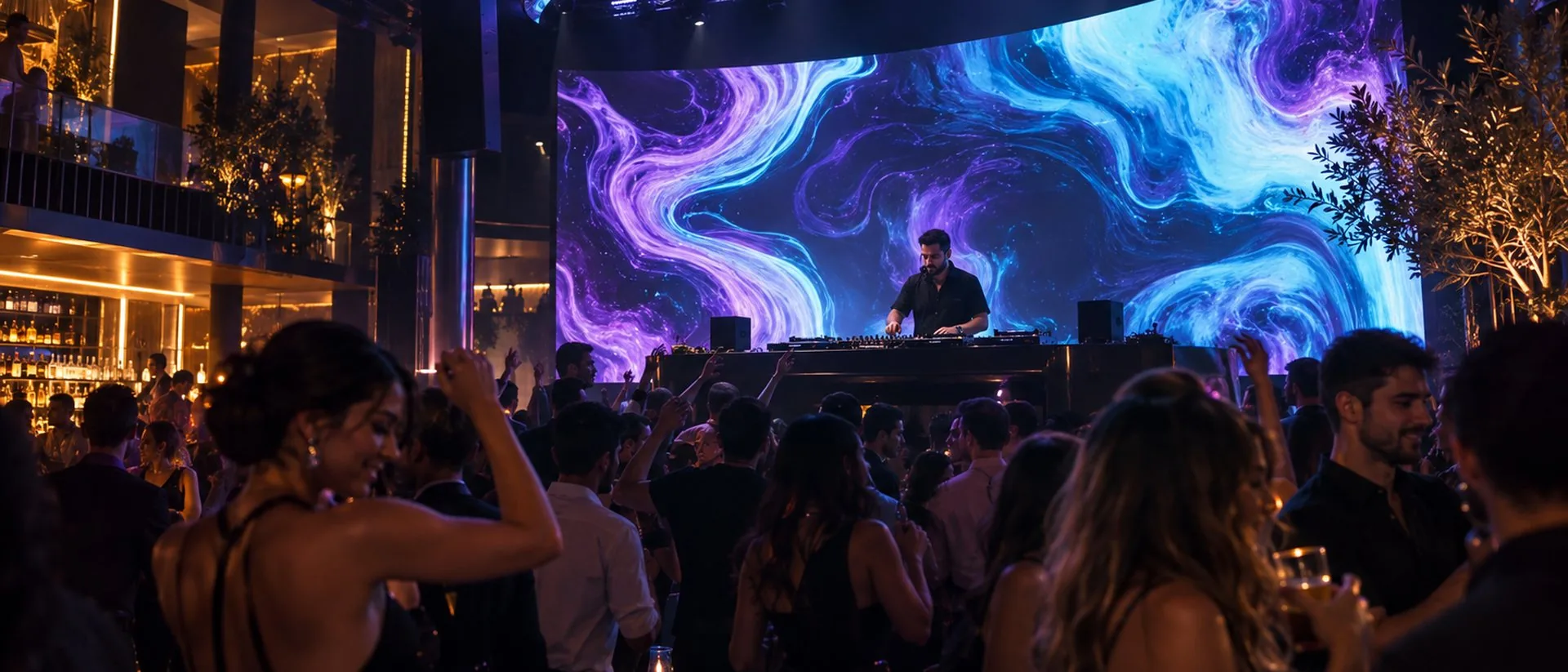
Bars and clubs
A screen behind the DJ, a wall by the dance floor, a ceiling of modules — light and picture in time with the music.
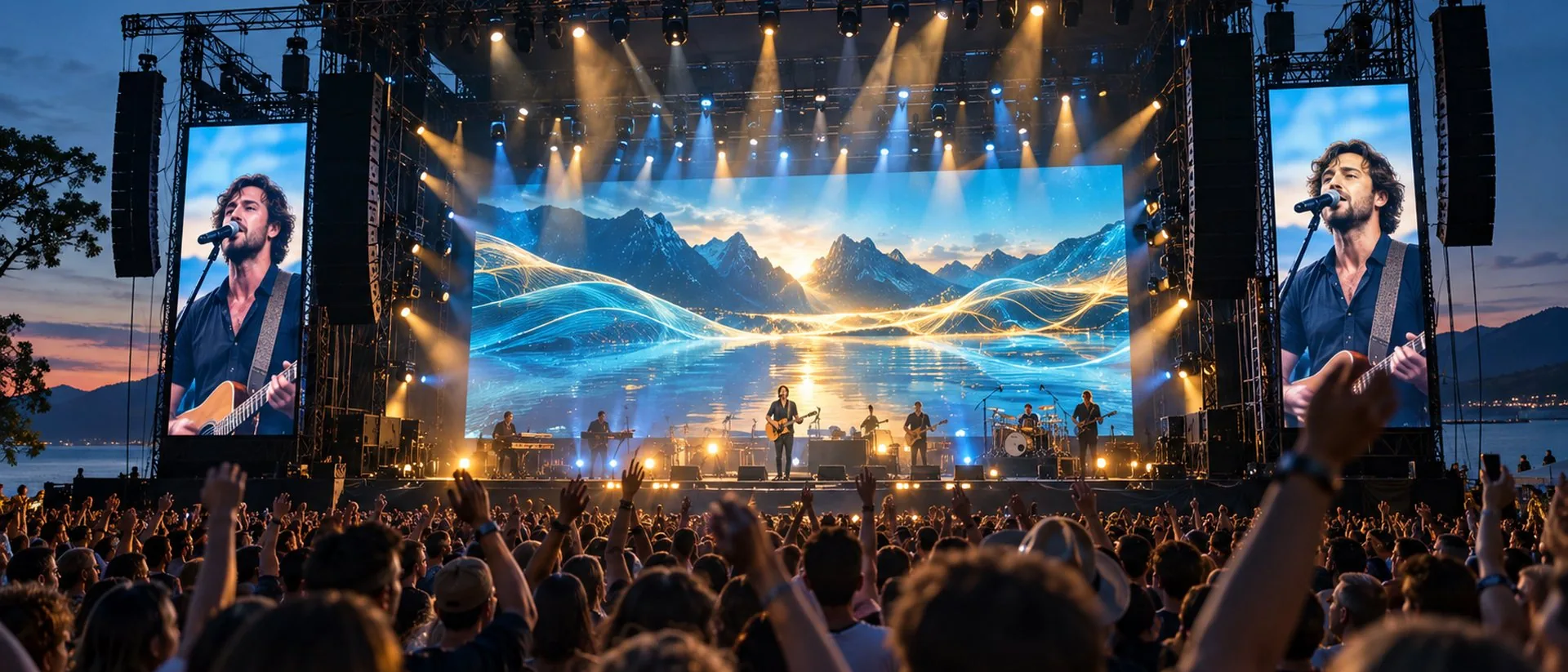
Stage and concerts
A screen for the stage of an assembly hall, house of culture or concert venue — to own, installed on truss or in the portal; for a single event the same screen can be rented.
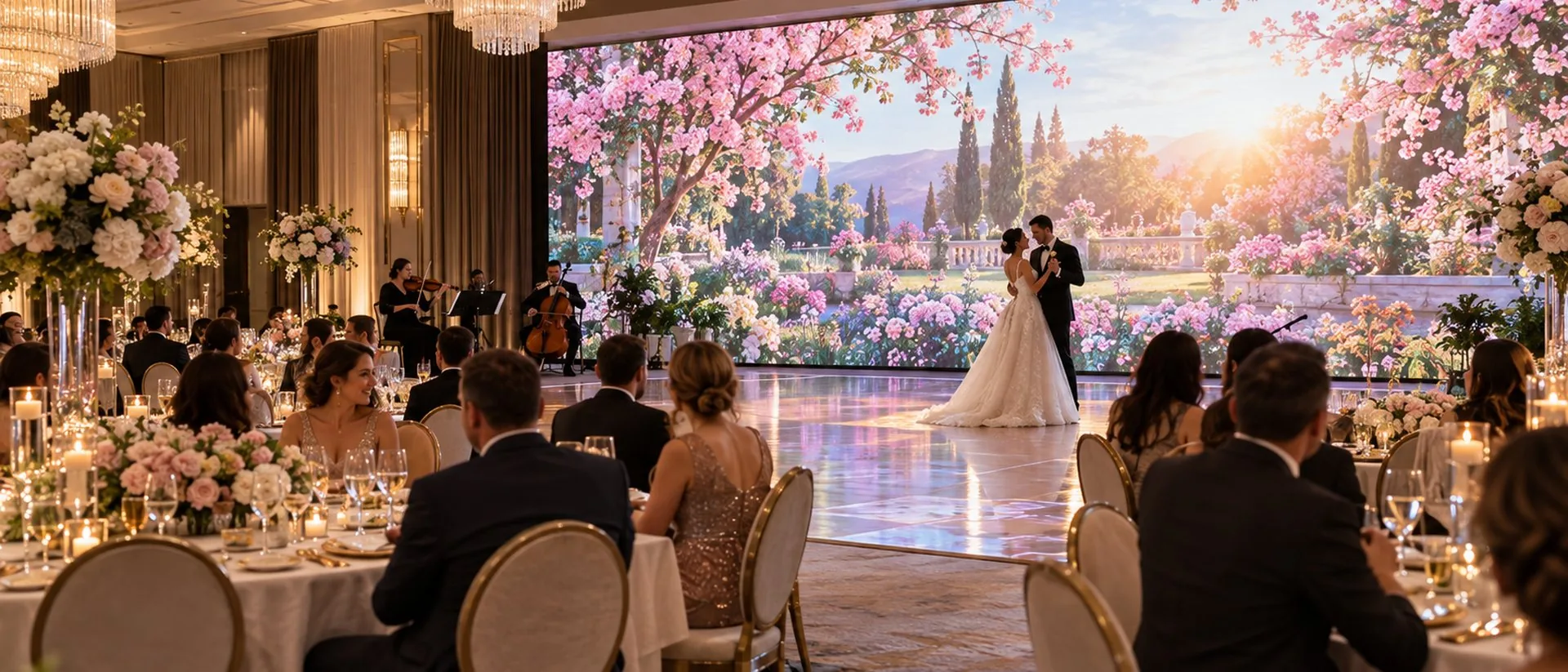
Restaurants and banquet halls
A screen for weddings, broadcasts and atmosphere — instead of a projector invisible with the lights on.

Car dealerships
A wall behind the car and a transparent screen on the window — the car stays the hero, the screen works as a backdrop.
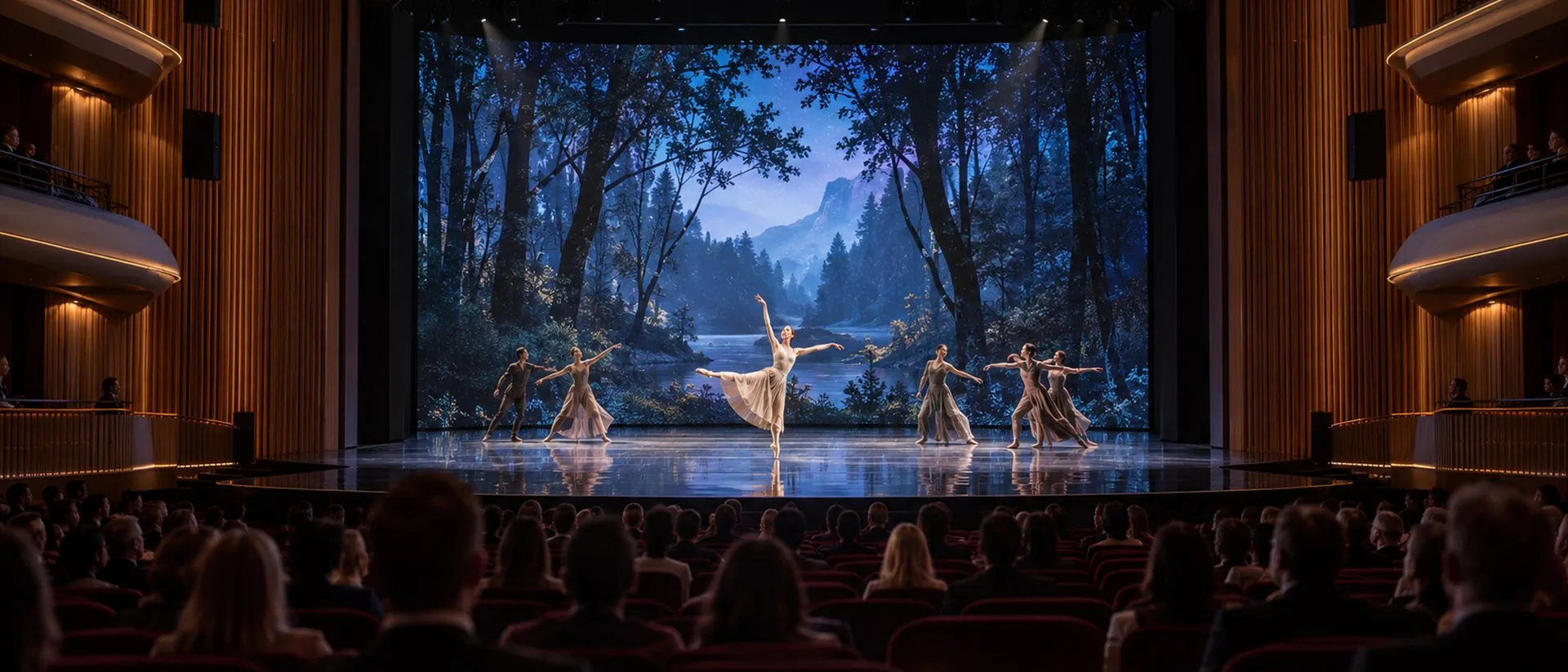
Cinemas and theatres
A stage backdrop that changes the set in a second, and a lobby screen instead of posters.
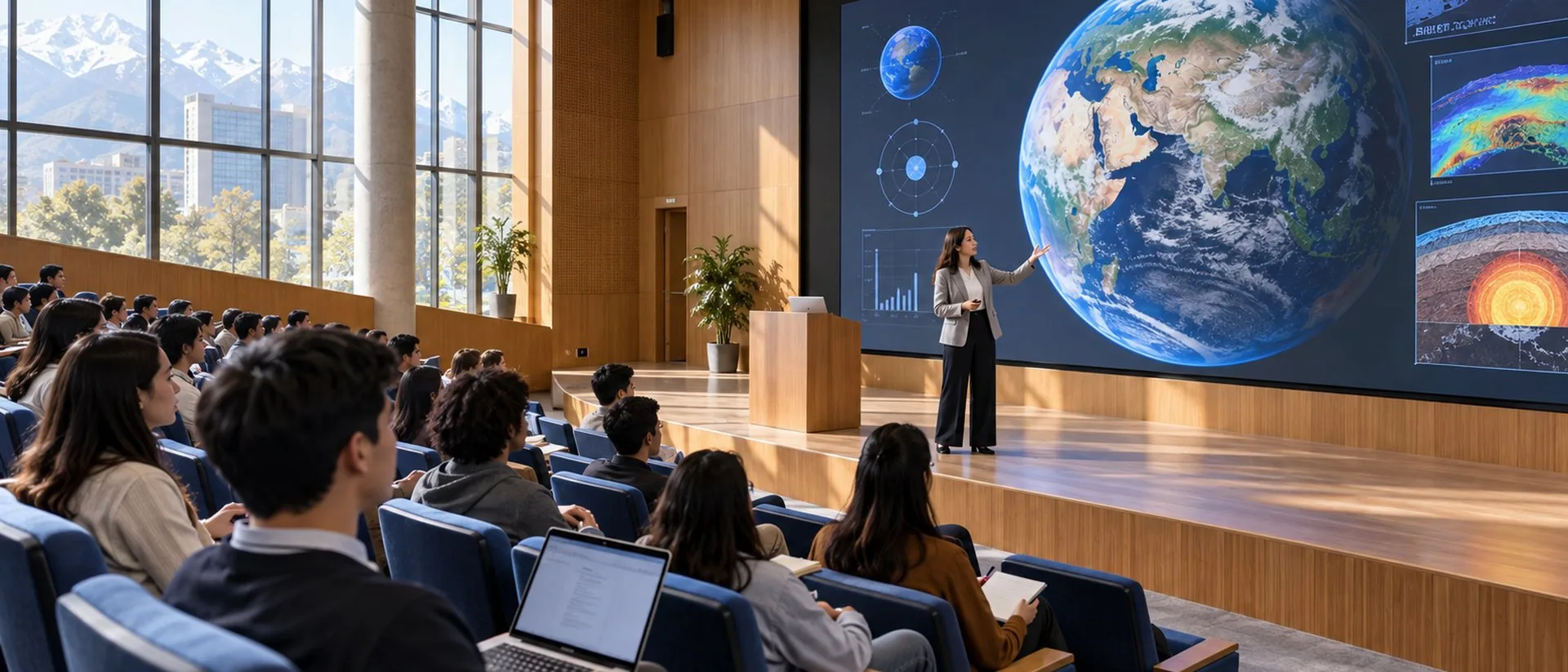
Schools and universities
Assembly hall, lobby, gym and facade — screens a school procures through public tenders with the domestic-manufacturer preference.
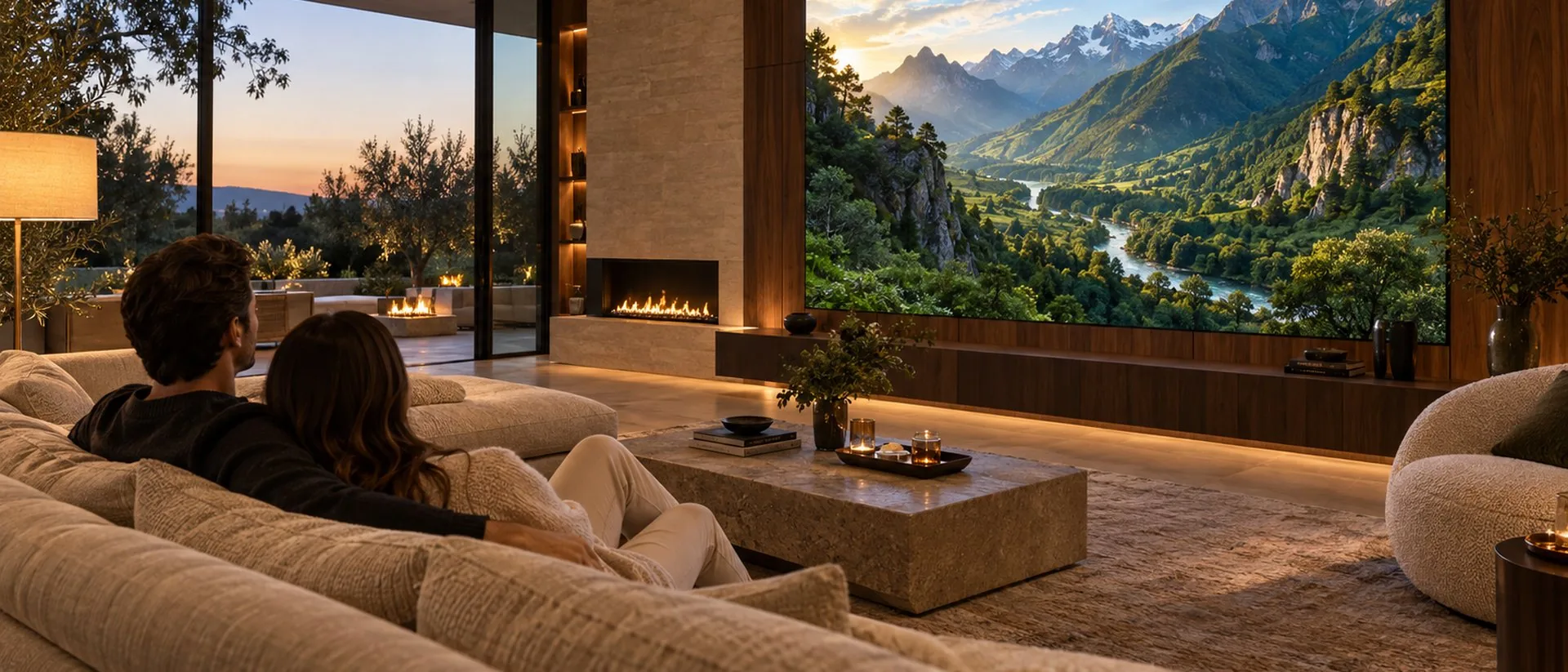
Home
A home cinema without seams or edge glow — a wall that becomes a 3–5 metre screen.
The Solutions section is organised by task, not by equipment type: TV studio, meeting room and business centre, control room, stadium, airport and railway station, shopping mall, bar and club, stage and concert, restaurant and banquet hall, car dealership, cinema and house of culture, school and university, home cinema. Thirteen scenarios, and in each of them an LED screen is chosen differently: what works perfectly in an assembly hall will show banding on camera in a studio.
It is an easier way to choose: you arrive with a task rather than with a pixel pitch. Since 2012 we have completed more than 1,000 sites across Kazakhstan — 62 of them are published in the portfolio with photos and descriptions, and almost every scenario on the list is represented there by a real hall, facade or studio. Screens are installed by our own crew, and the warehouse of modules and spare parts is in Almaty, so neither the launch nor later service depends on shipments from abroad.
Below are the general rules of selection: how viewing distance sets the pixel pitch, how ambient light defines brightness, what changes when the screen is filmed, and how the operating mode affects lifespan. Then open the page for your own scenario: it holds specific configurations, industry cases and the matching catalogue categories. Resolution, power and a quote for your dimensions are produced by the calculator on the site.
Four questions that define the screen
The first is distance. The comfortable viewing distance in metres roughly equals the pixel pitch in millimetres: a meeting room at three metres asks for P1.5–P2, an assembly hall for P2.5–P3, a square in front of a building for P5–P8, a media facade for P15 and coarser. The second is light. Indoor models give 350–1,000 cd/m², enough for a hall with curtains and a lobby with glazing, while outdoors you need 5,500–7,800 cd/m² with automatic dimming at night. The third is the camera: if the screen appears on video, a refresh rate from 3,840 Hz is mandatory, otherwise the recording shows banding. The fourth is the operating mode: round-the-clock work runs at 30–40% brightness, and LED lifespan is 100,000 hours.
- The distance to the nearest viewer sets the pitch — not the budget and not a fashion for fine grain.
- Ambient light sets brightness: 350–1,000 cd/m² indoors, 5,500–7,800 cd/m² outdoors.
- Filming demands a refresh rate from 3,840 Hz and careful colour matching to studio lighting.
- The operating mode defines brightness headroom and the inspection schedule: eight hours a day and 24/7 are different loads.
- The shape of the surface decides the module type: a flat wall, a column, a shop window or a glazed facade.
Thirteen scenarios and what matters in each
It helps to group the scenarios by who looks at the screen and how. Where filming happens, refresh rate and colour come first: TV studios, stage, houses of culture, stadiums with broadcast. Where people work and study, legibility of text and silence matter more: meeting rooms, conference halls, school and university assembly halls, control rooms. Where people walk past, area and brightness decide: shopping malls, airports and stations, facades and entrances. And apart from those stand the scenarios of shape — columns and waves of flexible modules, shop windows with transparent mesh, a home cinema flush with the wall.
- On camera: TV studios, stage and concerts, cinemas and houses of culture, stadiums and arenas.
- Work and study: meeting rooms and business centres, schools and universities, control and situation rooms.
- Passing crowds: shopping malls, airports and railway stations, building facades and squares.
- Evening and show: bars and clubs, restaurants and banquet halls — picture in sync with the lighting.
- Special shapes: car showrooms with transparent windows, columns of flexible modules, home cinema from P0.93.
From a scenario to a catalogue model
Next the scenario turns into a specific configuration. A hall, lobby or studio means the indoor category P0.93–P4, with front-serviced 640×640 mm cabinets or 320×160 mm modules for a non-standard opening. A facade, square or entrance means outdoor P2–P8 in 960×960 mm cabinets, IP68 and an operating range from −40 to +50 °C. A shop window or glazing means mesh screens with 65–70% transparency, 7.5 kg per 1000×1000 mm cabinet. Columns and waves mean flexible modules. An event for one evening means 500×1000 mm rental cabinets with quick locks, assembled in 2–4 hours.
Here is how that looks on real sites: a screen in the ORT Eurasia TV studio in Almaty (2021), the ENOC situation centre in Dubai on P1.53 (2022), the arrivals hall of Karaganda airport (2020), 64 m² of P3 at Mall Aport in Almaty (2023), 100 m² of P3 at the I. Zhansugurov Palace of Culture in Taldykorgan (2023), a 120 m² flexible P2.5 screen at the Shokan Ualikhanov private school in Almaty (2023), the conference hall of the Holiday Inn Almaty (2025) and a P3 screen in the Highvill residential complex in Astana (2021).
How the project goes
- 1
The task, not the specifications
Tell us where the screen goes, from what distance it is viewed, what it will show and whether it will be filmed. That is enough to rule out unsuitable models before anyone measures anything.
- 2
Survey and assessment of conditions
In Almaty an engineer comes in person: measures the opening, checks ambient light, power and mounting points. For another city we work from photos, dimensions and a floor plan.
- 3
Configuration and quote
We propose one or two options of pitch and construction for the scenario and calculate resolution, power, weight and layout. A commercial proposal with specification and lead times is sent within a day.
- 4
Installation and setup for the scenario
Our own crew erects the frame and the screen, runs power and signal and configures the processor. Brightness and colour are calibrated for the particular room: studio lighting and outdoor sun need different profiles.
- 5
Training and support
We show how to prepare content for your resolution and aspect ratio and hand over the documents. Warranty of 2–5 years depending on the model, with spare modules for your screen kept in stock.
What the price depends on
At KazLedPro indoor screens start from 260,000 ₸ per m² and outdoor screens from 300,000 ₸ per m². On the Kazakhstan market a square metre of LED screen costs roughly between 180,000 and 1,500,000 ₸: the lower end is a coarse pitch for outdoor use, the upper end a fine-pitch screen for a studio or meeting room. This is a market reference, not our price list. The spread comes from the scenarios themselves: a studio screen and a facade sign of the same area are simply different money. We calculate an exact quote for your dimensions — the calculator on the site gives layout and resolution, and the commercial proposal is ready within a day.
Pitch matched to distance
The main price factor. A fine pitch pays off only where the viewer stands close: a meeting room or a studio. For a hall of ten rows or for a facade it is surplus, yet you still pay for it.
Area and resolution
Area multiplies modules, frame, installation and power, while resolution sets the requirements for the video processor and signal source. A control room with multi-window layouts needs a costlier processor than a banquet hall.
Operating conditions
An outdoor build means 5,500–7,800 cd/m², IP68 protection and operation at −40…+50 °C. An indoor screen does not need that base, but a studio does need 3,840 Hz refresh and accurate colour.
Structure and mounting height
A wall frame in a hall, a suspension in an atrium, a pylon on a square or a roof structure with counterweights mean different steel and different work. Height adds a lift or rope-access technicians.
Control and content
Video processor, computer, scheduling software, integration with DMX in a club or with theatre lighting. Operator training belongs here too, and the first package of clips if you need it.
Warranty and service
A warranty of 2–5 years depending on the model is part of the supply. A maintenance contract with scheduled inspections and a fixed response time is priced separately and pays off where the screen runs every day.
Questions and answers
How does the Solutions section differ from the catalogue?
The catalogue answers «what kinds of screens exist», solutions answer «which one do I need». A solution describes the whole scenario: pitch and brightness for the task, how the signal is connected, what installation and service involve, and which sites in that industry we have already delivered. Every solution links on to the matching catalogue categories.
Which pixel pitch suits an assembly hall?
For a school or university assembly hall P2.5–P3 is the usual choice: the front row sits three to four metres from the stage, and at that distance the grain is no longer visible. A finer pitch is overpayment, a coarser one shows in the front rows. We calculate the exact size from hall depth and stage height.
The screen will be filmed — what matters?
A refresh rate from 3,840 Hz: below that the camera catches banding and flicker at short shutter speeds. Then a finer pitch if the presenter stands close to the screen, and brightness calibrated to studio lighting. We installed such screens in the Eurasia TV studios in Almaty and Astana in 2021.
Will brightness be enough in a lobby with panoramic glazing?
Usually yes. Indoor models give 350–1,000 cd/m², which copes with sunlight through glazing as long as the screen does not face the window directly. When the sun hits the surface all day, we use a bright indoor model or an outdoor one with auto-brightness that dims itself in the evening.
How long will a screen last running around the clock?
LED lifespan is 100,000 hours on outdoor models and from 50,000 on media facades. Running 24/7 at 30–40% brightness — exactly how control rooms and information screens operate — that is more than ten years. The screen that lasts longest is the one inspected and cleaned regularly.
We need a screen for a single event — must we buy one?
No. If the screen is needed for an evening or a few days, that is the Rental section: we bring rental cabinets, assemble them in 2–4 hours and leave a technician on site. Buying makes sense when the screen works permanently — in a hall, a lobby, on a facade or in a studio.
My scenario is not on the list — what then?
Describe the task in plain words: indoors or outdoors, distance to the viewer, what you will show, whether it is filmed and how many hours a day it runs. We have selected screens for a petrol station, a clinic, an amusement park and a residential complex — thirteen pages cover the frequent cases, not every possible one.
Do you work in other cities of Kazakhstan?
Yes. Besides Almaty, the portfolio includes sites in Astana, Karaganda, Aktobe, Aktau, Taraz, Taldykorgan, Turkestan, Kokshetau, Aksai and Semey. In another city we survey from photos and drawings, carry out installation and commissioning on site, and ship spare modules from the Almaty warehouse.
A turnkey screen: quote, installation, launch.
Send us the dimensions and location — a quote today. WhatsApp around the clock.