
Products
LED display catalogue
LED displays for any application. Every model comes with installation, commissioning and warranty.
Price
Indoor displays — from 260,000 ₸ per m²
Outdoor displays — from 300,000 ₸ per m²
The exact price depends on pixel pitch, area and structure. We send a quote within one working day.
Models from the price list
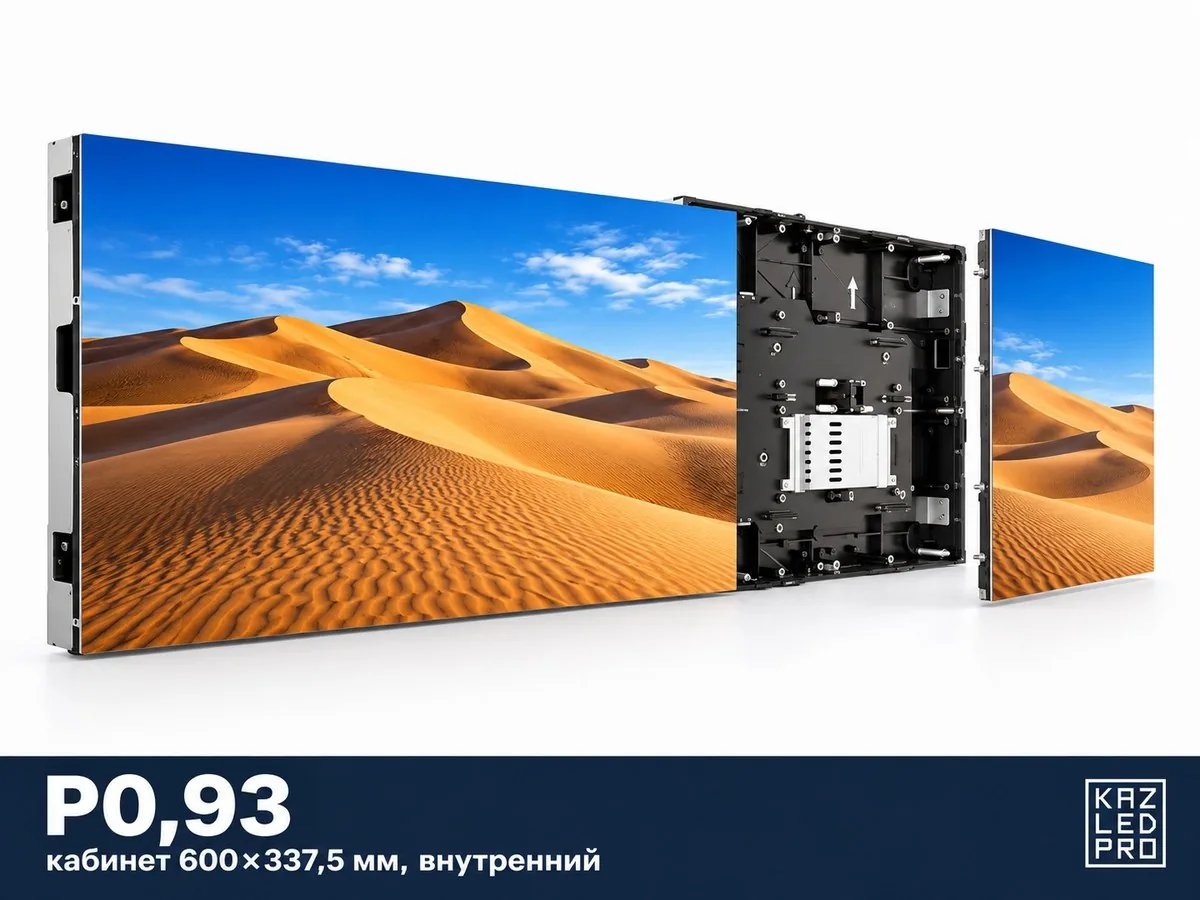 P0.93
P0.93Indoor displays
LED screen P0.93 for indoor use — 600×337.5 mm cabinet
Indoor screen P0.93 (600×337.5 mm cabinet), pixel density 1 137 778 dots/m². Comfortable viewing from 1 m.
- Brightness
- 600 cd/m²
- Density
- 1 137 778 dots/m²
- Protection
- IP40 (indoor version)
Details →
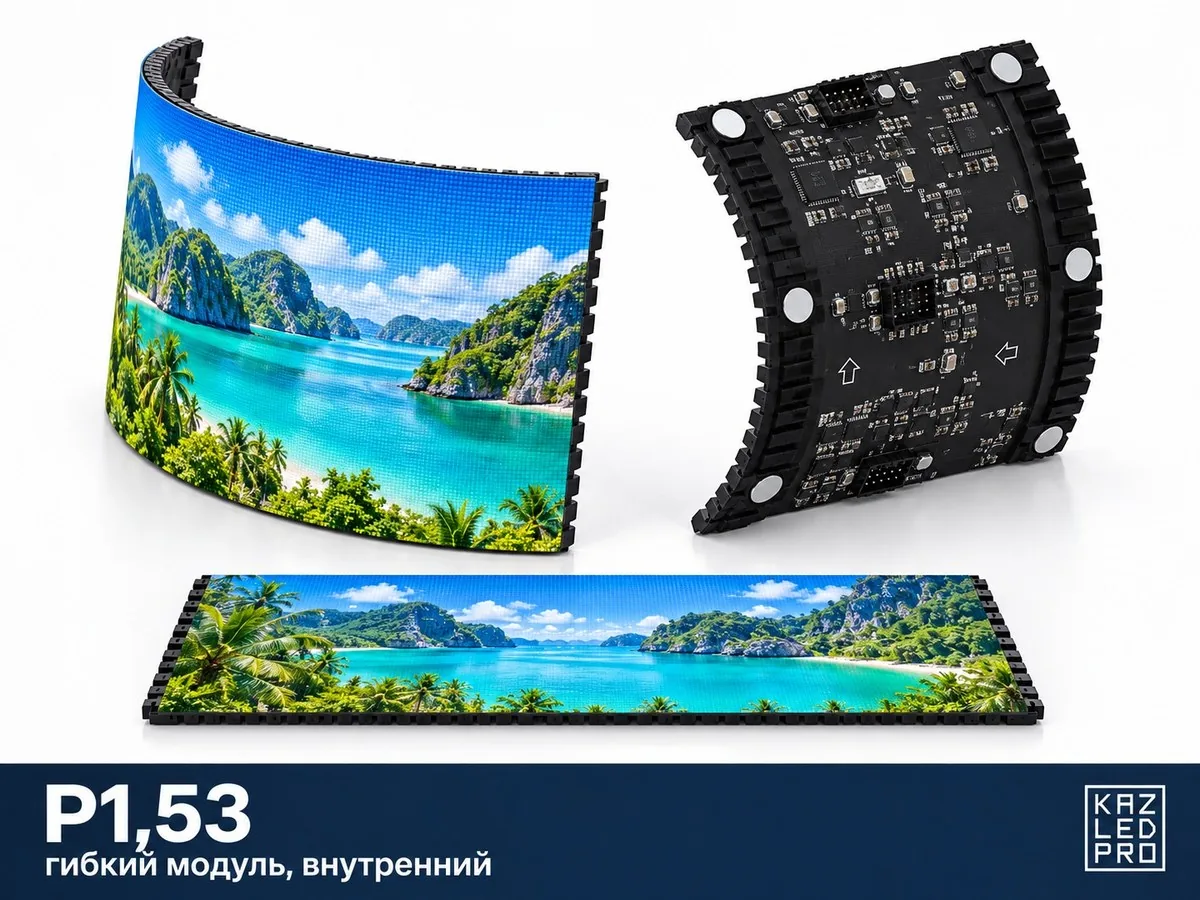 P1.53
P1.53Flexible displays
Flexible LED screen P1.53 for indoor use
Flexible module P1.53 for indoor use: bends to a radius, holds on magnets. Columns, waves and rounded façades.
- Brightness
- 350–400 cd/m²
- Density
- 422 500 dots/m²
- Protection
- IP 24
Details →
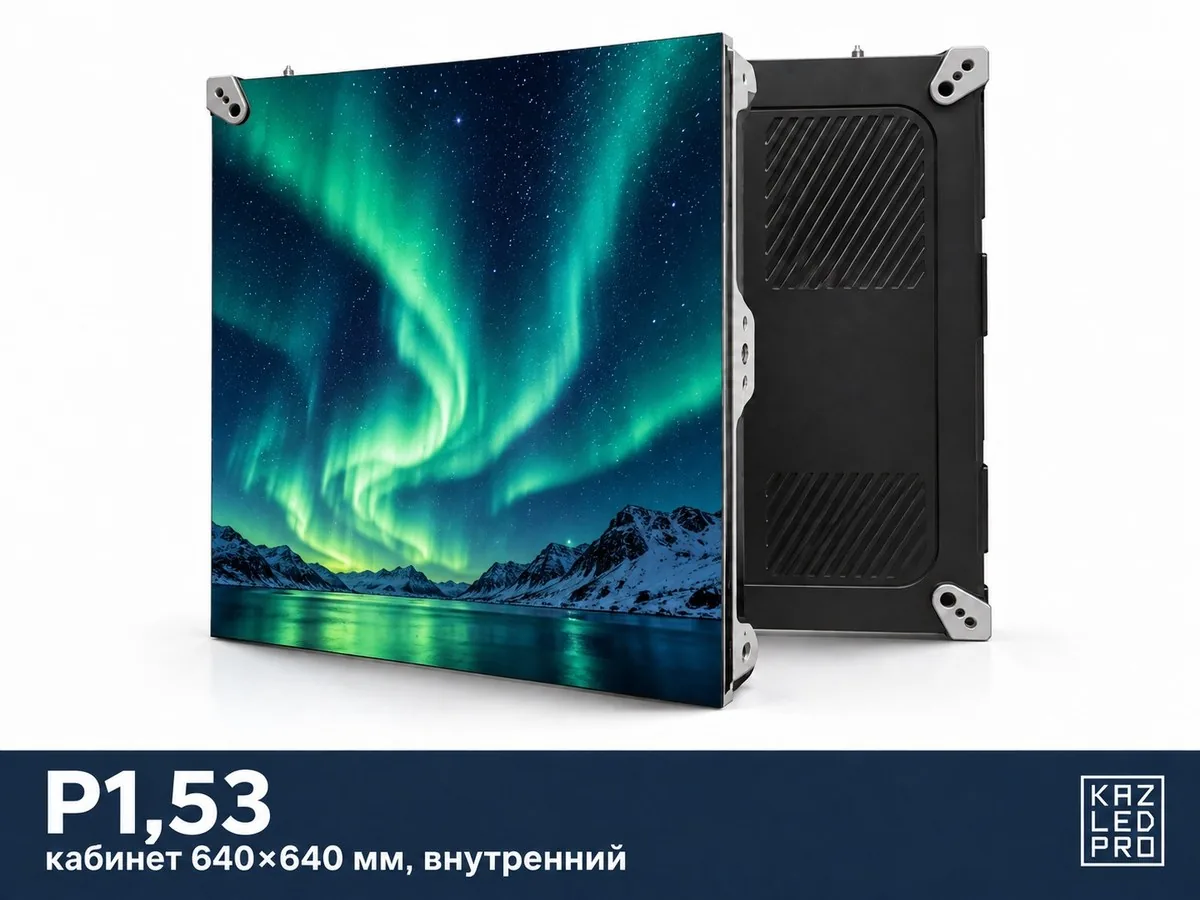 P1.53
P1.53Indoor displays
LED screen P1.53 for indoor use — 640×640 mm cabinet
Indoor screen P1.53 (640×640 mm cabinet), pixel density 422 500 dots/m². Comfortable viewing from 2 m.
- Brightness
- 350–400 cd/m²
- Density
- 422 500 dots/m²
- Protection
- IP 24
Details →
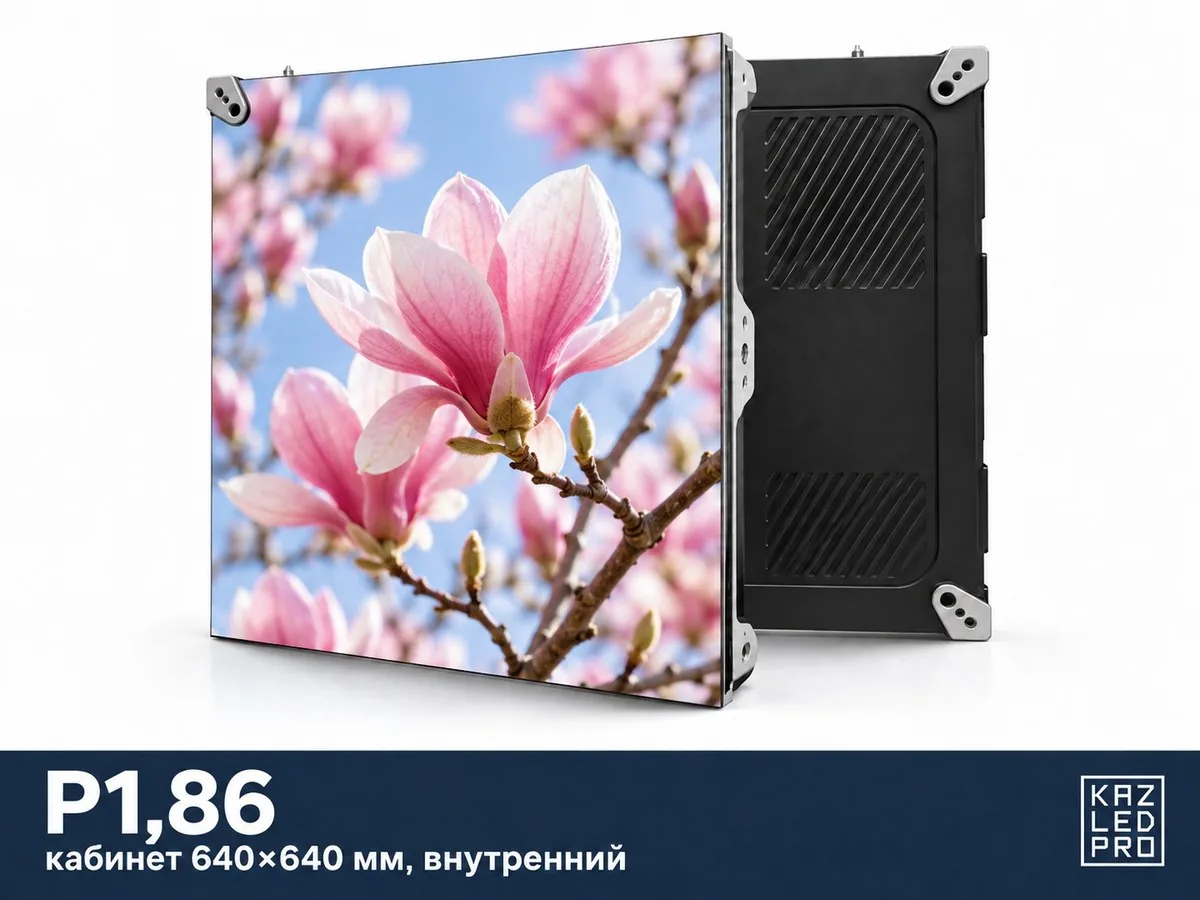 P1.86
P1.86Indoor displays
LED screen P1.86 for indoor use — 640×640 mm cabinet
Indoor screen P1.86 (640×640 mm cabinet), pixel density 288 906 dots/m². Comfortable viewing from 2 m.
- Brightness
- 400–450 cd/m²
- Density
- 288 906 dots/m²
- Protection
- IP 24
Details →
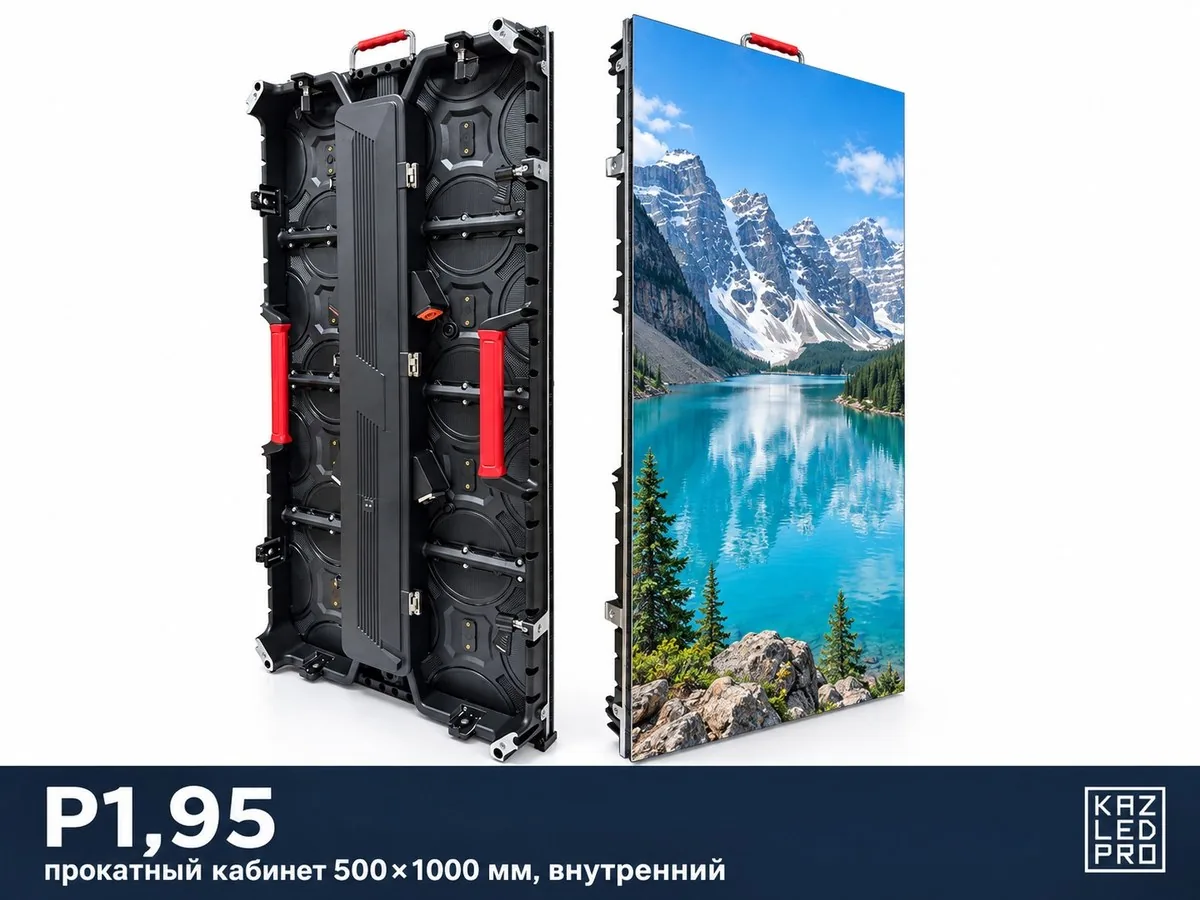 P1.95
P1.95Indoor displays
LED screen P1.95 for indoor use — 500×1000 mm cabinet
Indoor screen P1.95 (500×1000 mm cabinet), pixel density 262 144 dots/m². Comfortable viewing from 2 m.
- Brightness
- ≥900 cd/m²
- Density
- 262 144 dots/m²
- Protection
- IP31 / IP54
Details →
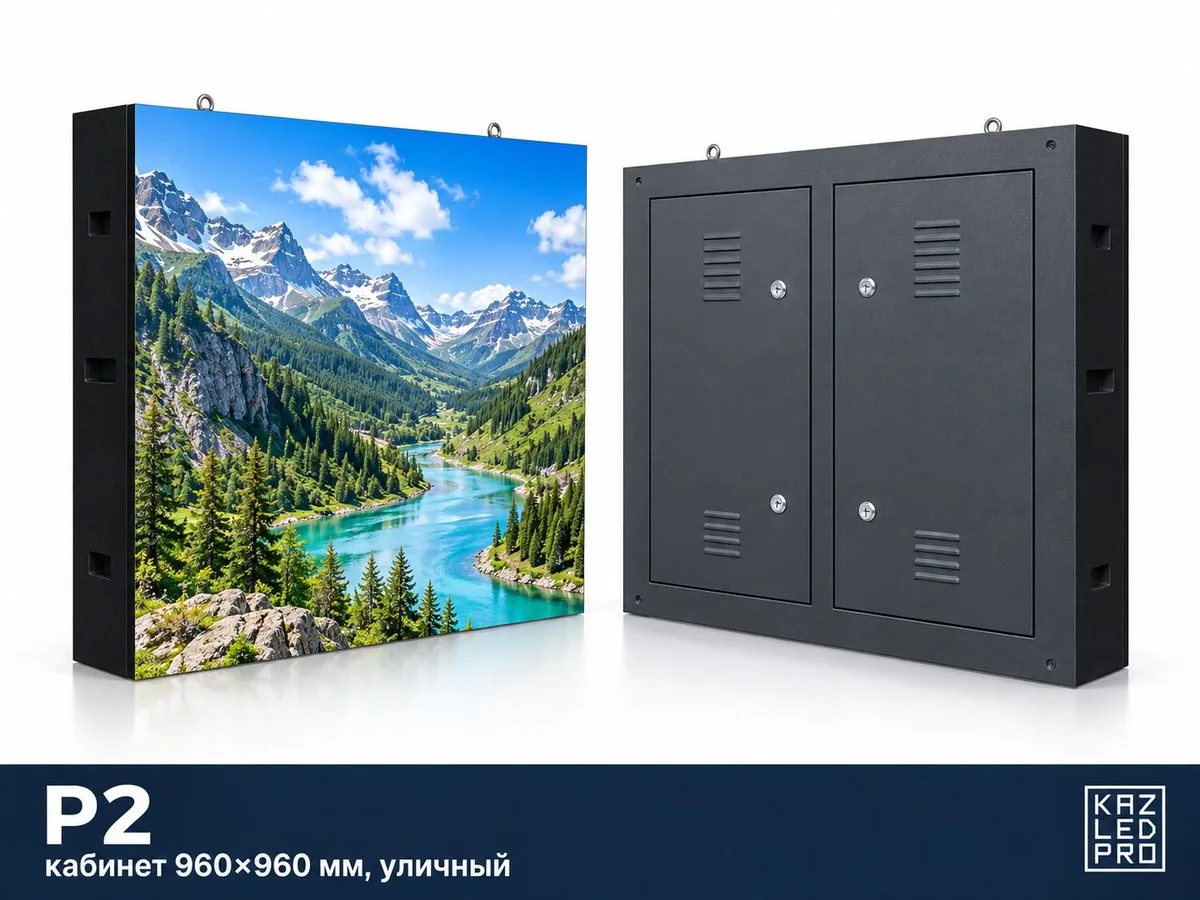 P2
P2Outdoor displays
LED screen P2 for outdoor use — 960×960 mm cabinet
Outdoor screen P2 (960×960 mm cabinet), brightness 5500–7800 cd/m², IP 68. Comfortable viewing from 2 m.
- Brightness
- 5500–7800 cd/m²
- Density
- 250 000 dots/m²
- Protection
- IP 68
Details →
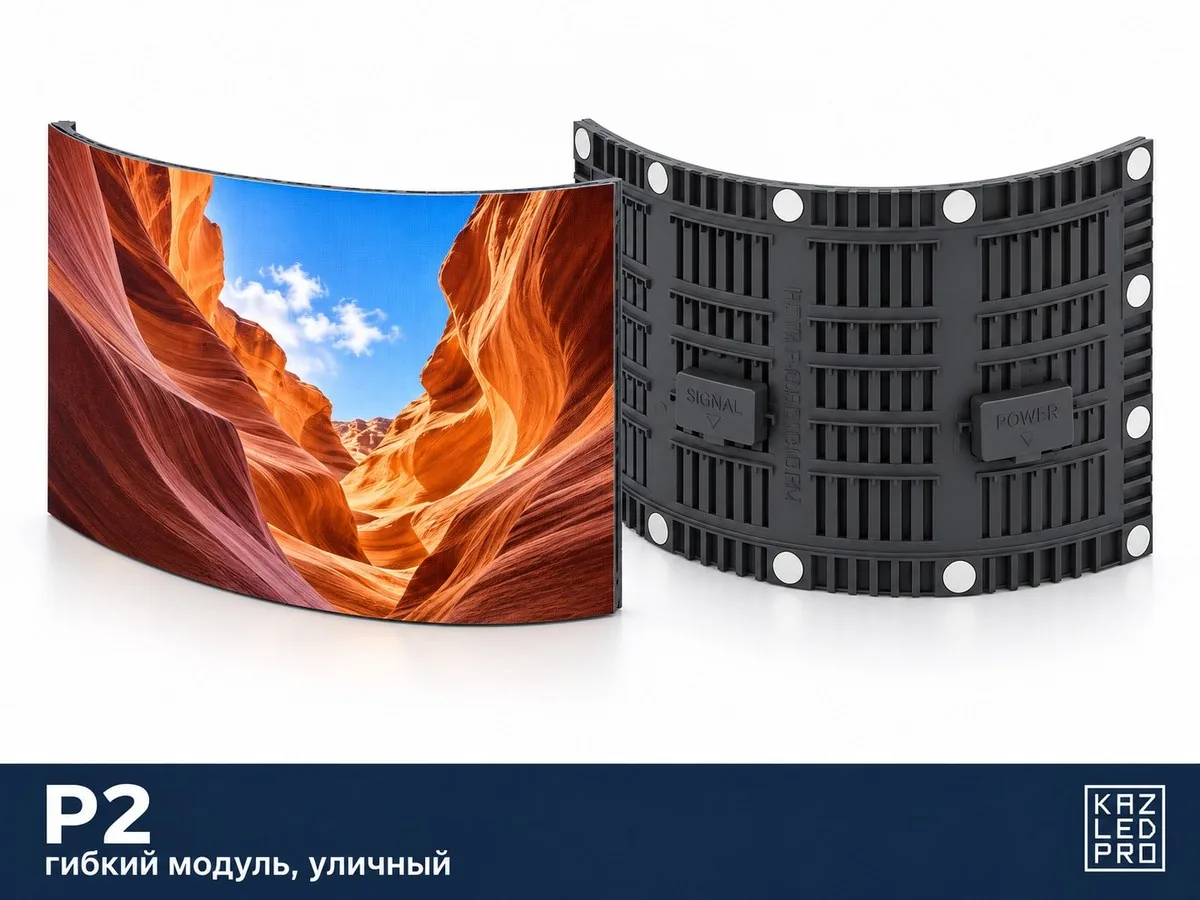 P2
P2Flexible displays
Flexible LED screen P2 for outdoor use
Flexible module P2 for outdoor use: bends to a radius, holds on magnets. Columns, waves and rounded façades.
- Brightness
- 5500–7800 cd/m²
- Density
- 250 000 dots/m²
- Protection
- IP 68
Details →
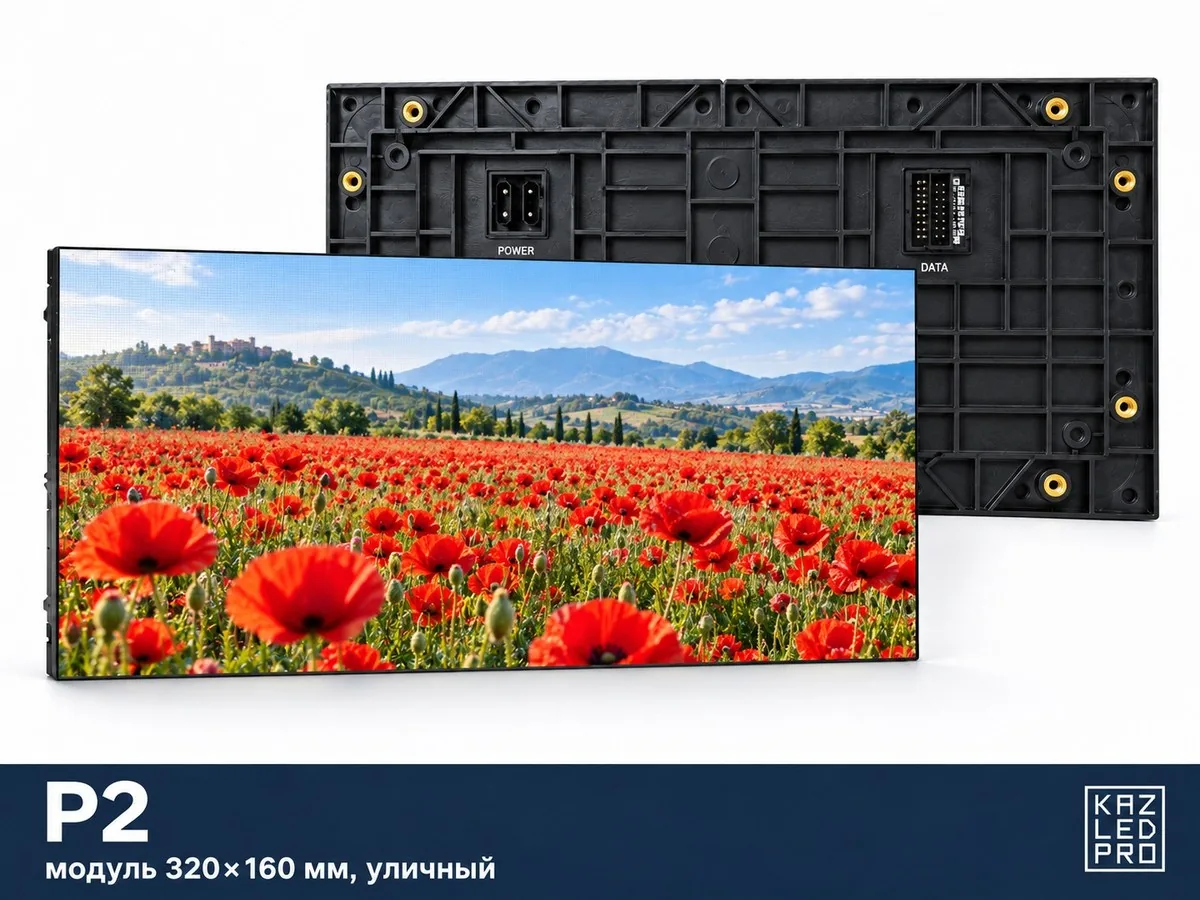 P2
P2Outdoor displays
LED screen P2 for outdoor use — 320×160 mm module
Outdoor screen P2 (320×160 mm module), brightness 5500–7800 cd/m², IP 68. Comfortable viewing from 2 m.
- Brightness
- 5500–7800 cd/m²
- Density
- 250 000 dots/m²
- Protection
- IP 68
Details →
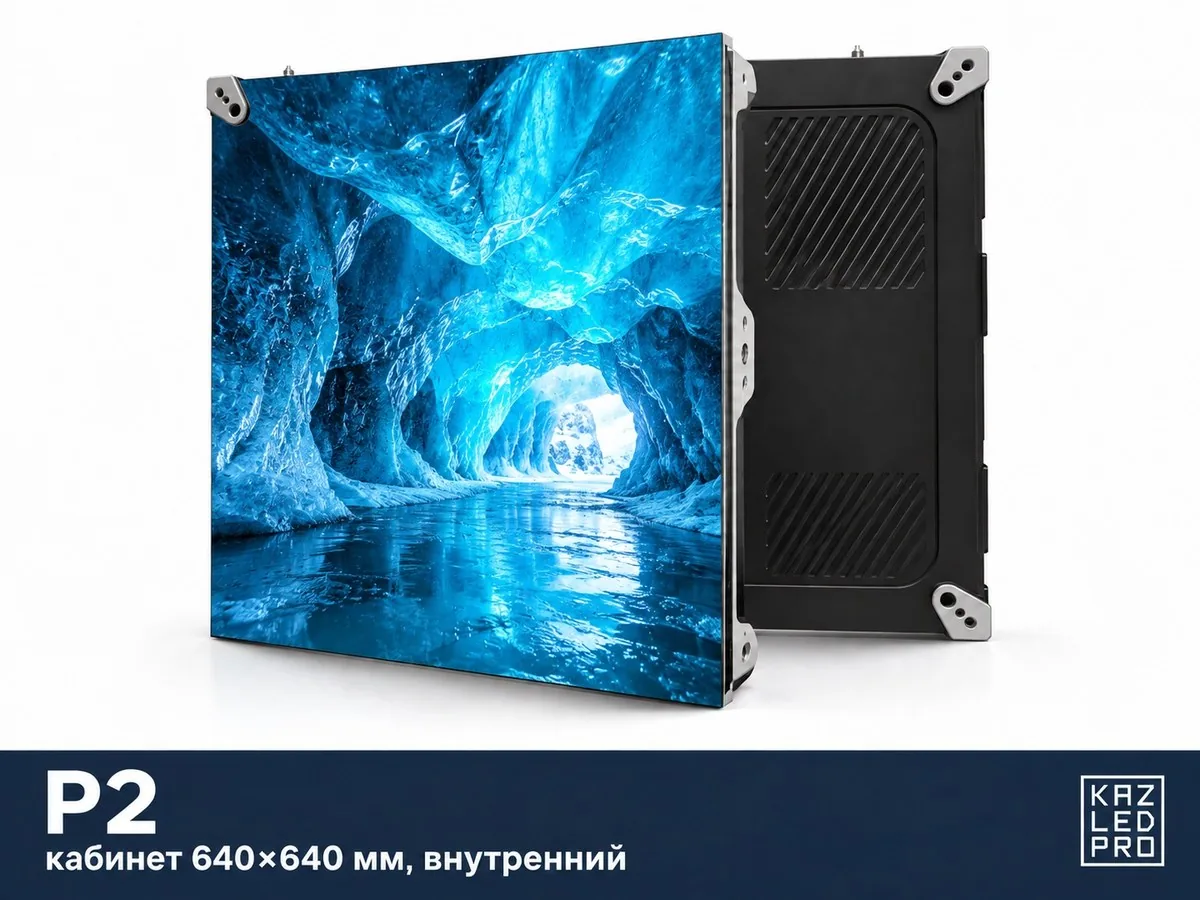 P2
P2Indoor displays
LED screen P2 for indoor use — 640×640 mm cabinet
Indoor screen P2 (640×640 mm cabinet), pixel density 250 000 dots/m². Comfortable viewing from 2 m.
- Brightness
- 450–500 cd/m²
- Density
- 250 000 dots/m²
- Protection
- IP 24
Details →
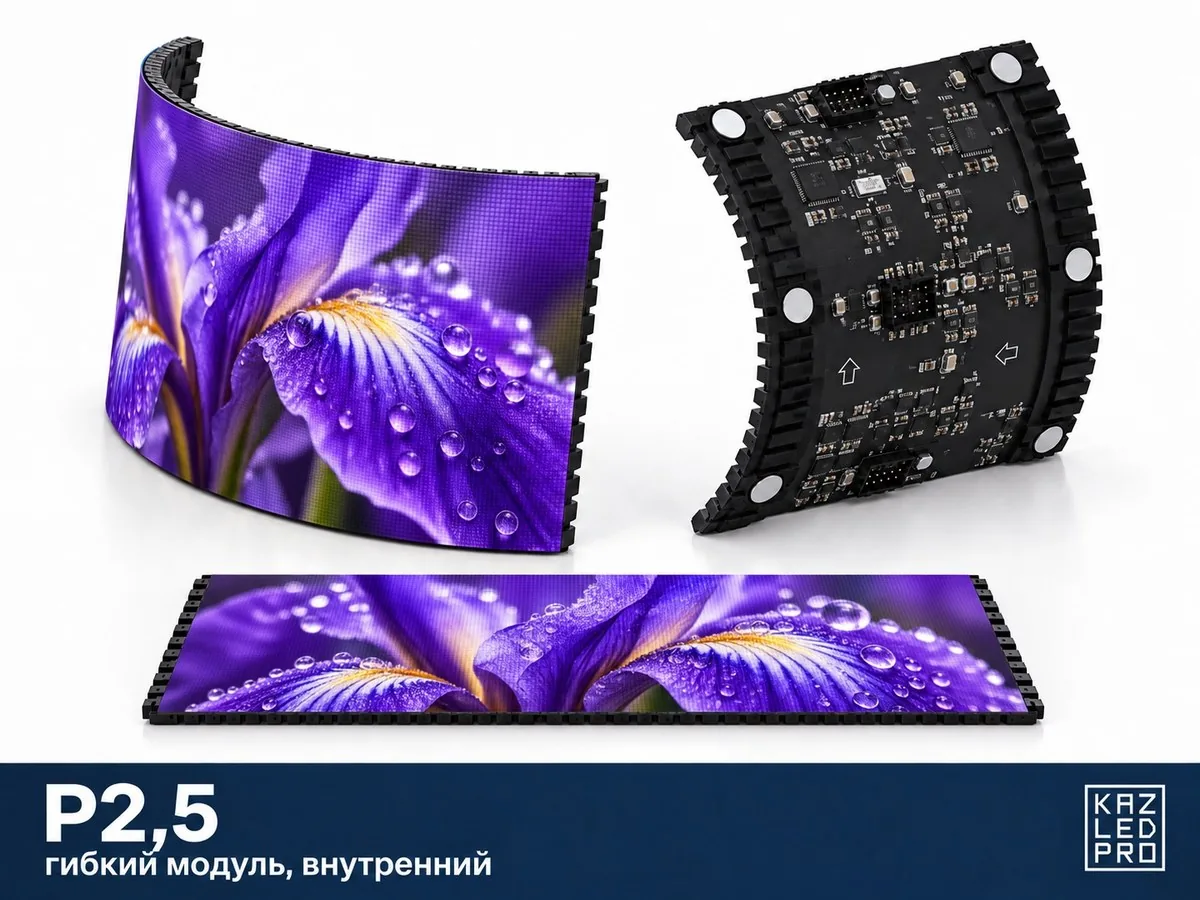 P2.5
P2.5Flexible displays
Flexible LED screen P2.5 for indoor use
Flexible module P2.5 for indoor use: bends to a radius, holds on magnets. Columns, waves and rounded façades.
- Brightness
- 350–550 cd/m²
- Density
- 160 000 dots/m²
- Protection
- IP 31
Details →
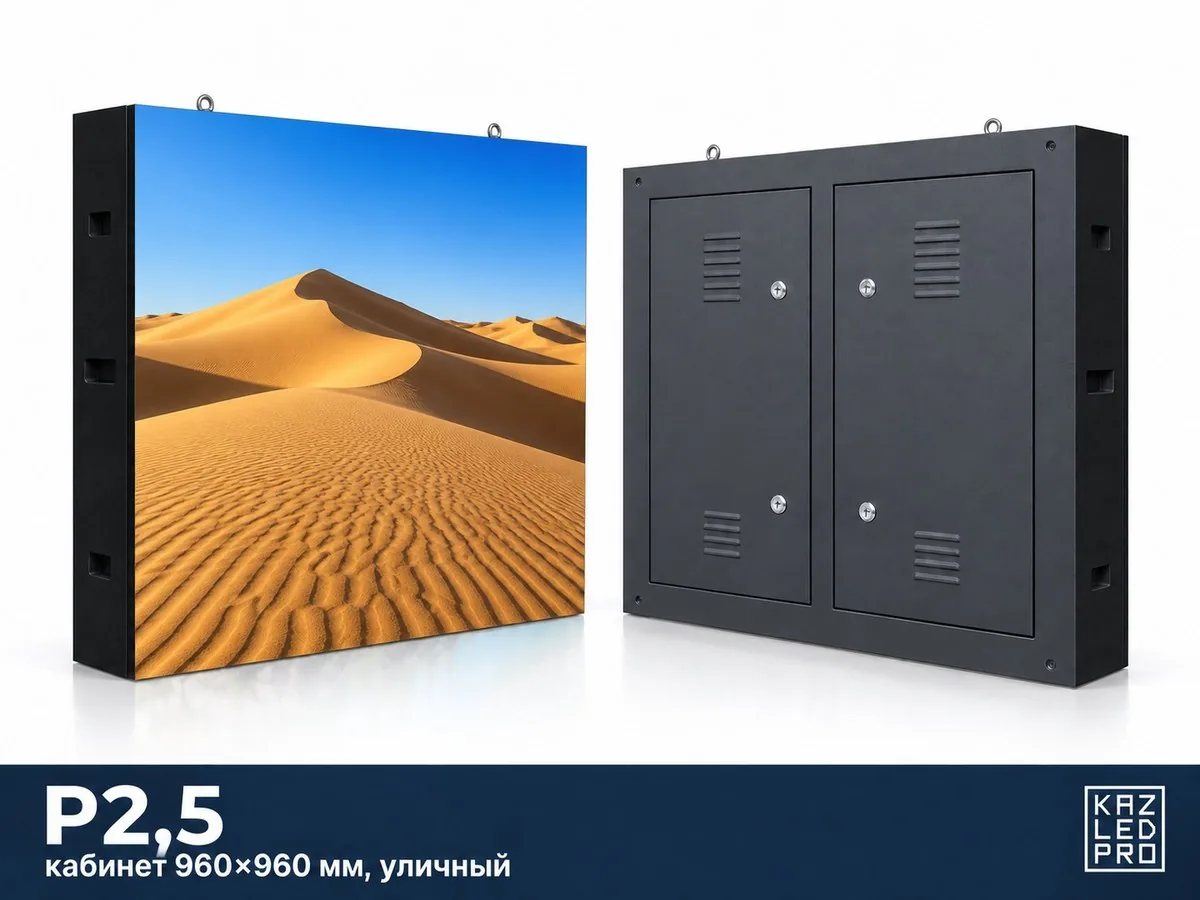 P2.5
P2.5Outdoor displays
LED screen P2.5 for outdoor use — 960×960 mm cabinet
Outdoor screen P2.5 (960×960 mm cabinet), brightness 5500–7800 cd/m², IP 68. Comfortable viewing from 2 m.
- Brightness
- 5500–7800 cd/m²
- Density
- 160 000 dots/m²
- Protection
- IP 68
Details →
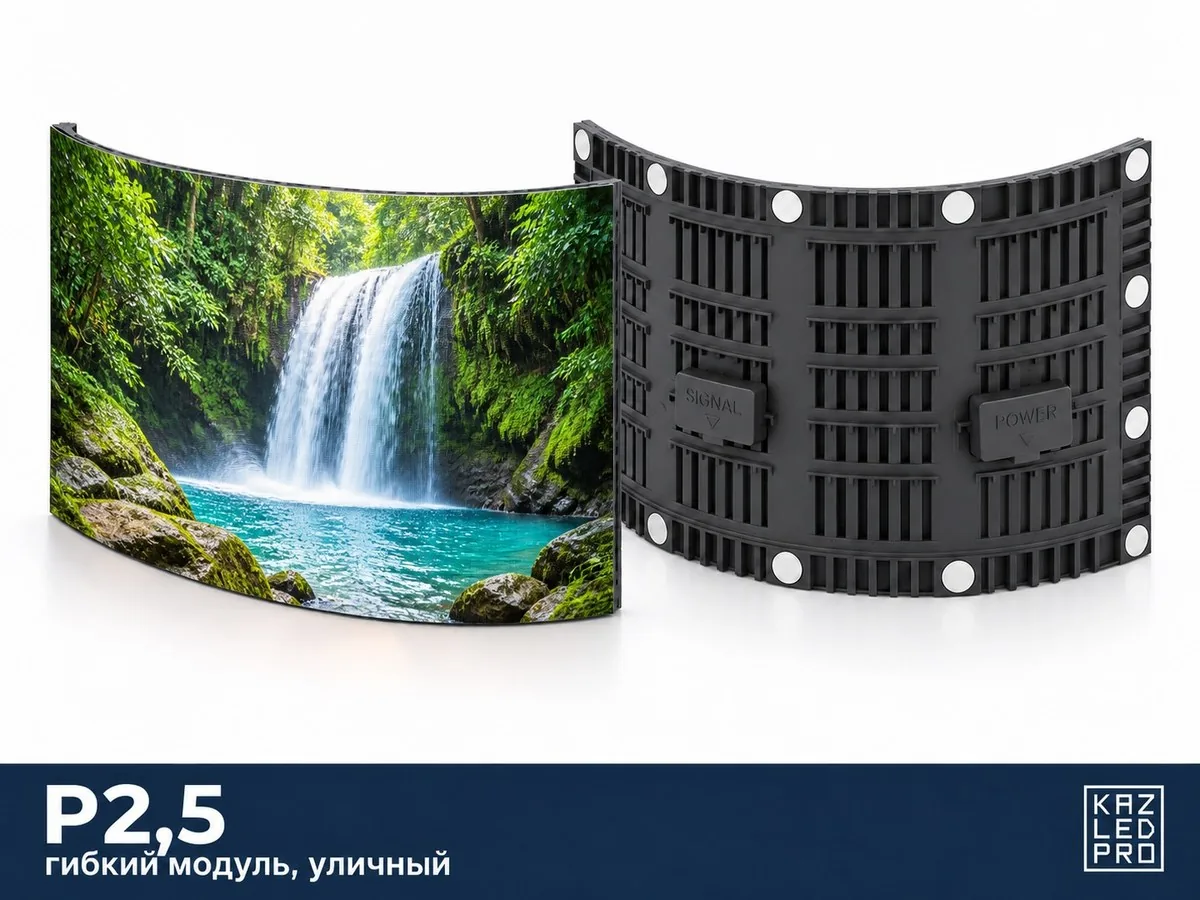 P2.5
P2.5Flexible displays
Flexible LED screen P2.5 for outdoor use
Flexible module P2.5 for outdoor use: bends to a radius, holds on magnets. Columns, waves and rounded façades.
- Brightness
- 5500–7800 cd/m²
- Density
- 160 000 dots/m²
- Protection
- IP 68
Details →
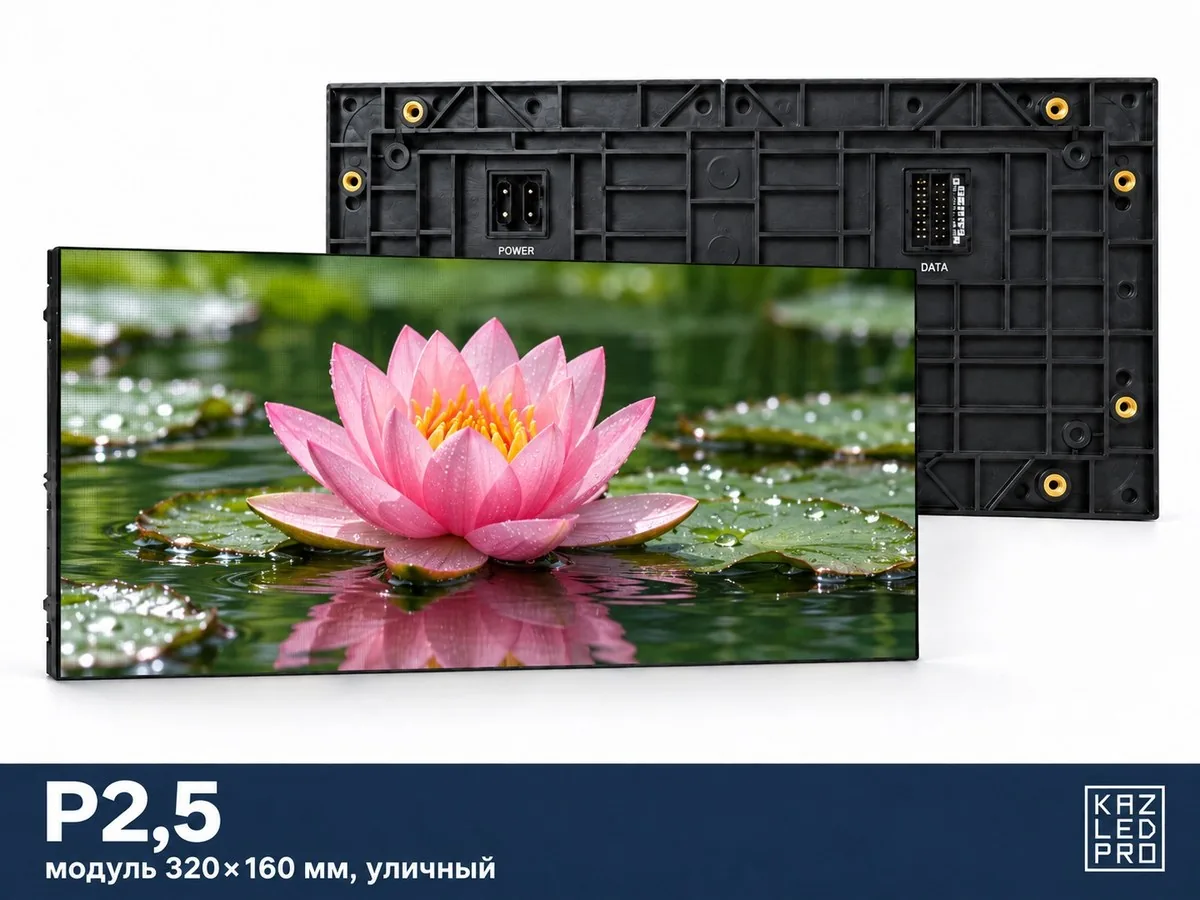 P2.5
P2.5Outdoor displays
LED screen P2.5 for outdoor use — 320×160 mm module
Outdoor screen P2.5 (320×160 mm module), brightness 5500–7800 cd/m², IP 68. Comfortable viewing from 2 m.
- Brightness
- 5500–7800 cd/m²
- Density
- 160 000 dots/m²
- Protection
- IP 68
Details →
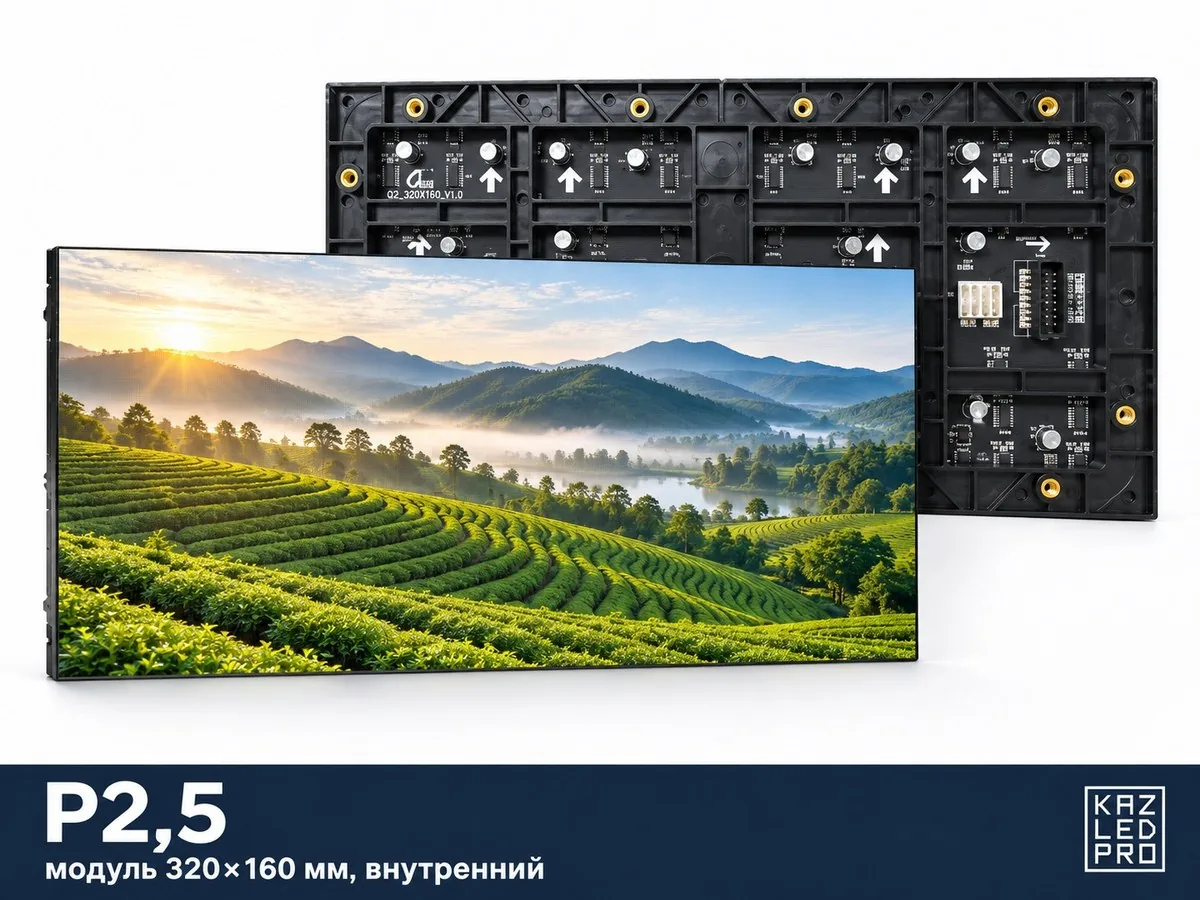 P2.5
P2.5Indoor displays
LED screen P2.5 for indoor use — 320×160 mm module
Indoor screen P2.5 (320×160 mm module), pixel density 160 000 dots/m². Comfortable viewing from 2 m.
- Brightness
- 350–550 cd/m²
- Density
- 160 000 dots/m²
- Protection
- IP 31
Details →
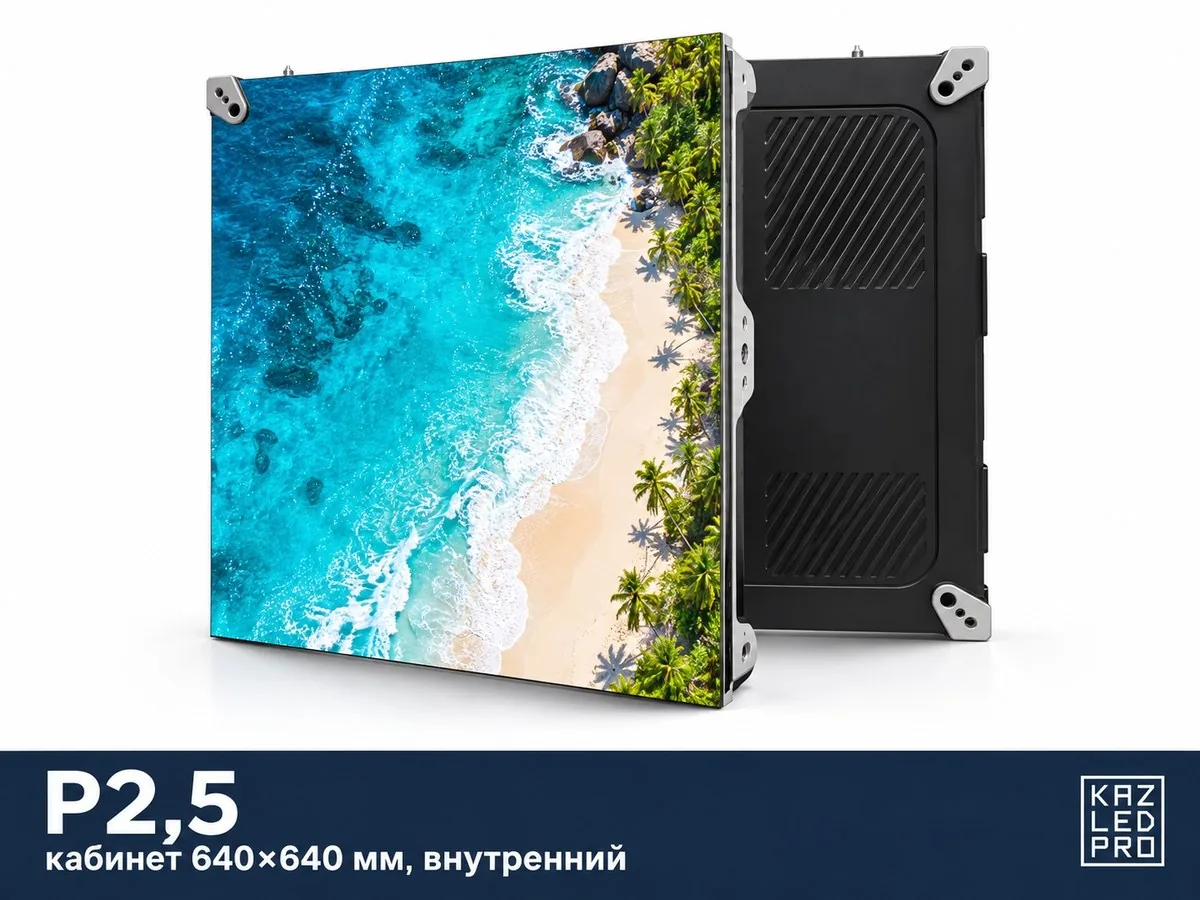 P2.5
P2.5Indoor displays
LED screen P2.5 for indoor use — 640×640 mm cabinet
Indoor screen P2.5 (640×640 mm cabinet), pixel density 160 000 dots/m². Comfortable viewing from 2 m.
- Brightness
- 350–550 cd/m²
- Density
- 160 000 dots/m²
- Protection
- IP 31
Details →
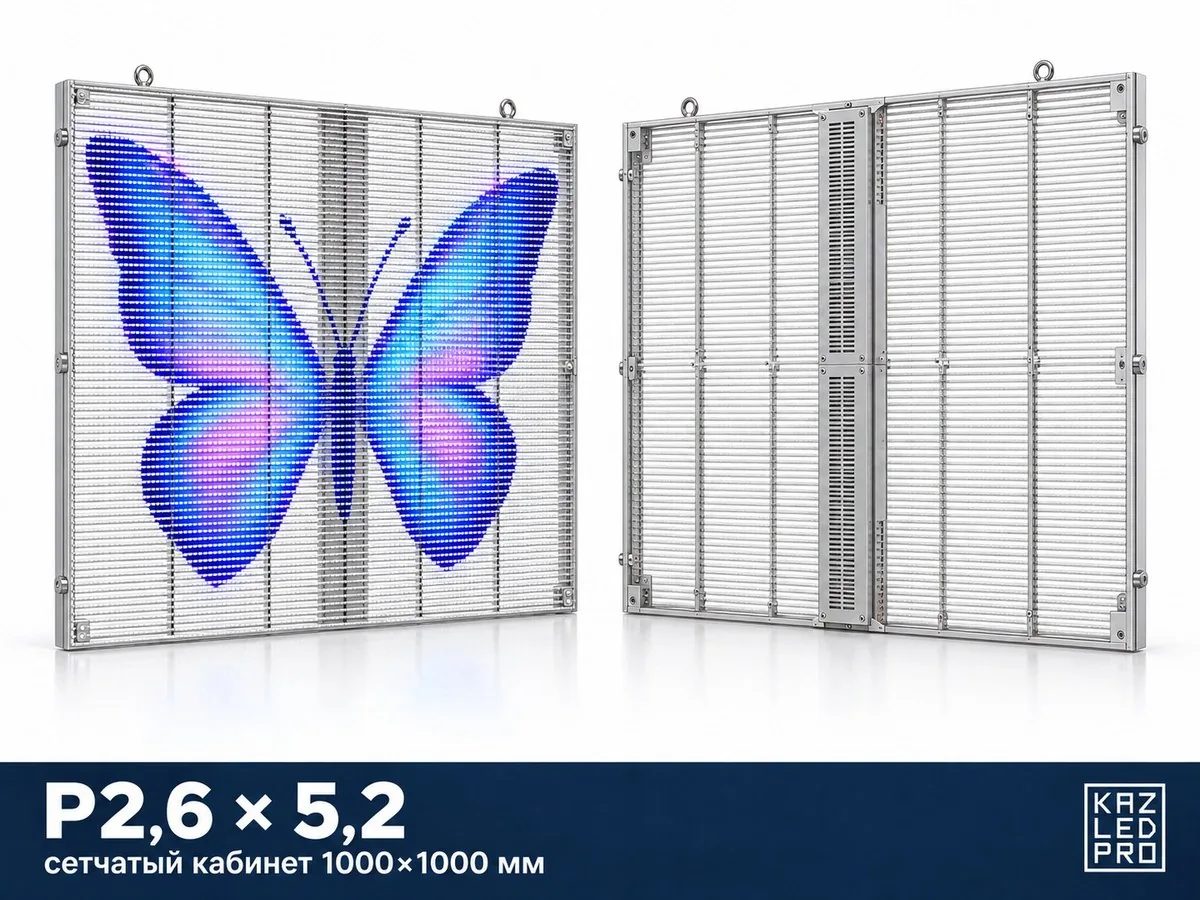 P2.6 × 5,2
Mesh displays
Mesh screen P2.6 × 5.2 — 70 % transparency
Transparent mesh screen P2.6 × 5.2 for glazing and façades: 70 % of the light passes through, weight 7.5 kg (cabinet 1000×1000 mm).
- Transparency
- 70 %
- Brightness
- 2000–4500 cd/m2
- Protection
- IP33
Details →
 P2.6
P2.6Indoor displays
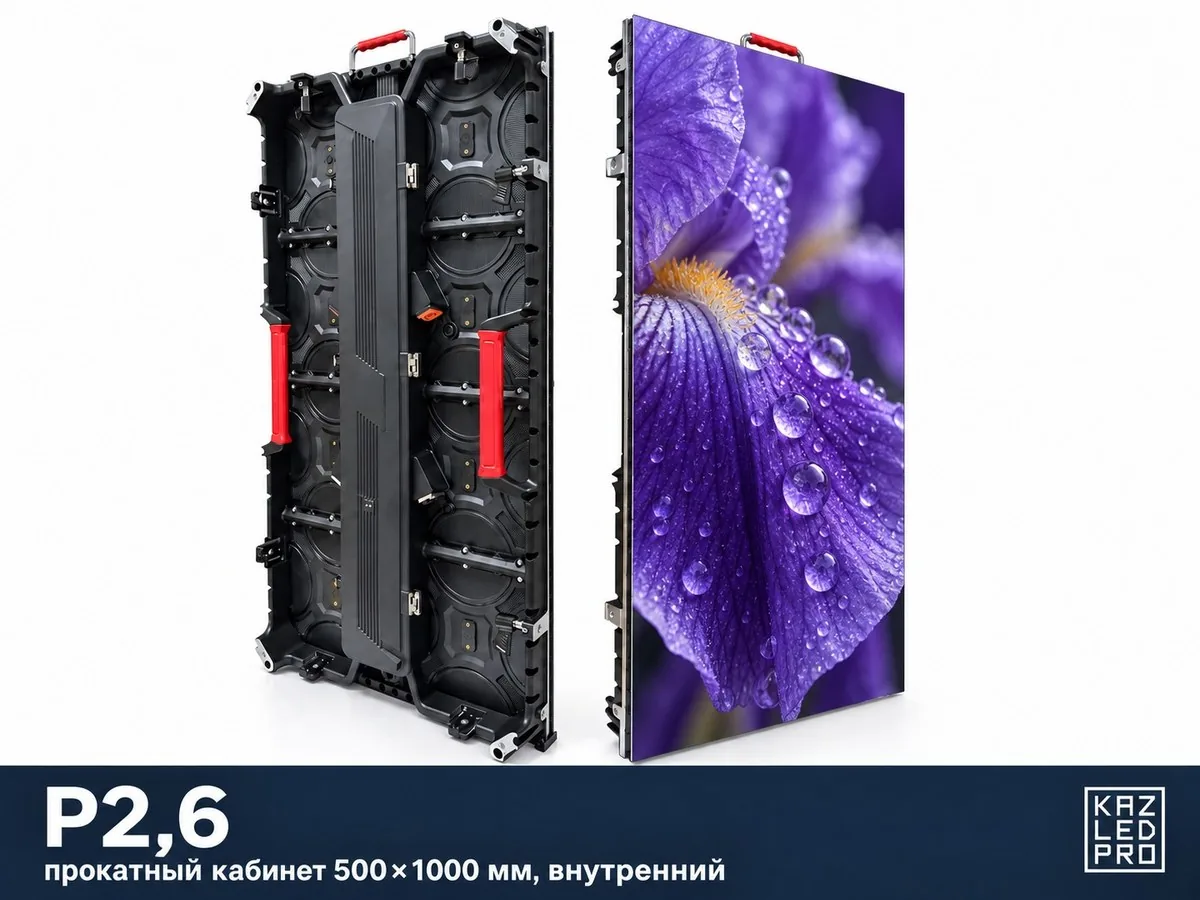
LED screen P2.6 for indoor use — 500×1000 mm cabinet
Indoor screen P2.6 (500×1000 mm cabinet), pixel density 147 456 dots/m². Comfortable viewing from 3 m.
- Brightness
- 1000 cd/m2
- Density
- 147 456 dots/m²
- Protection
- IP40
Details →
 P2.9
P2.9Indoor displays
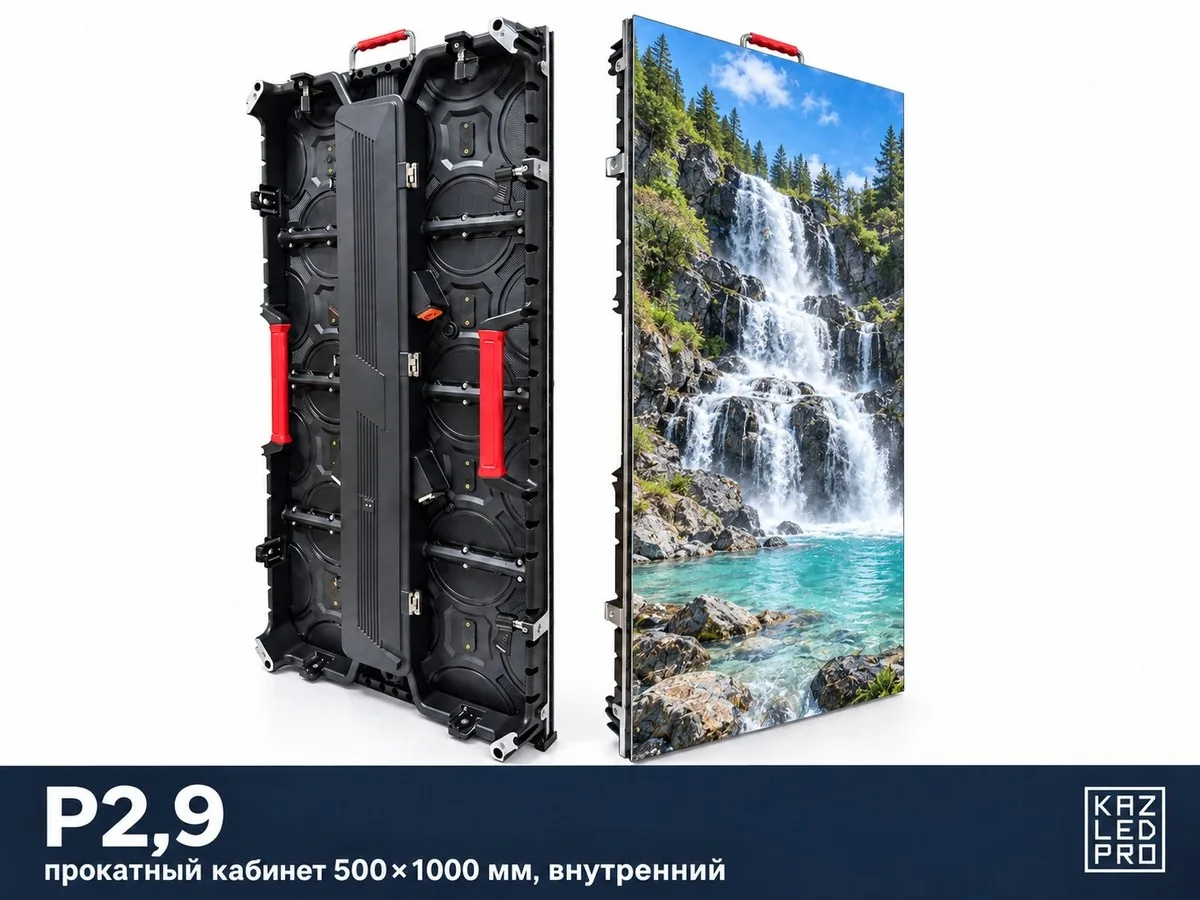
LED screen P2.9 for indoor use — 500×1000 mm cabinet
Indoor screen P2.9 (500×1000 mm cabinet), pixel density 118 336 dots/m². Comfortable viewing from 3 m.
- Brightness
- 1000 cd/m2
- Density
- 118 336 dots/m²
- Protection
- IP40
Details →
 P3
P3Flexible displays
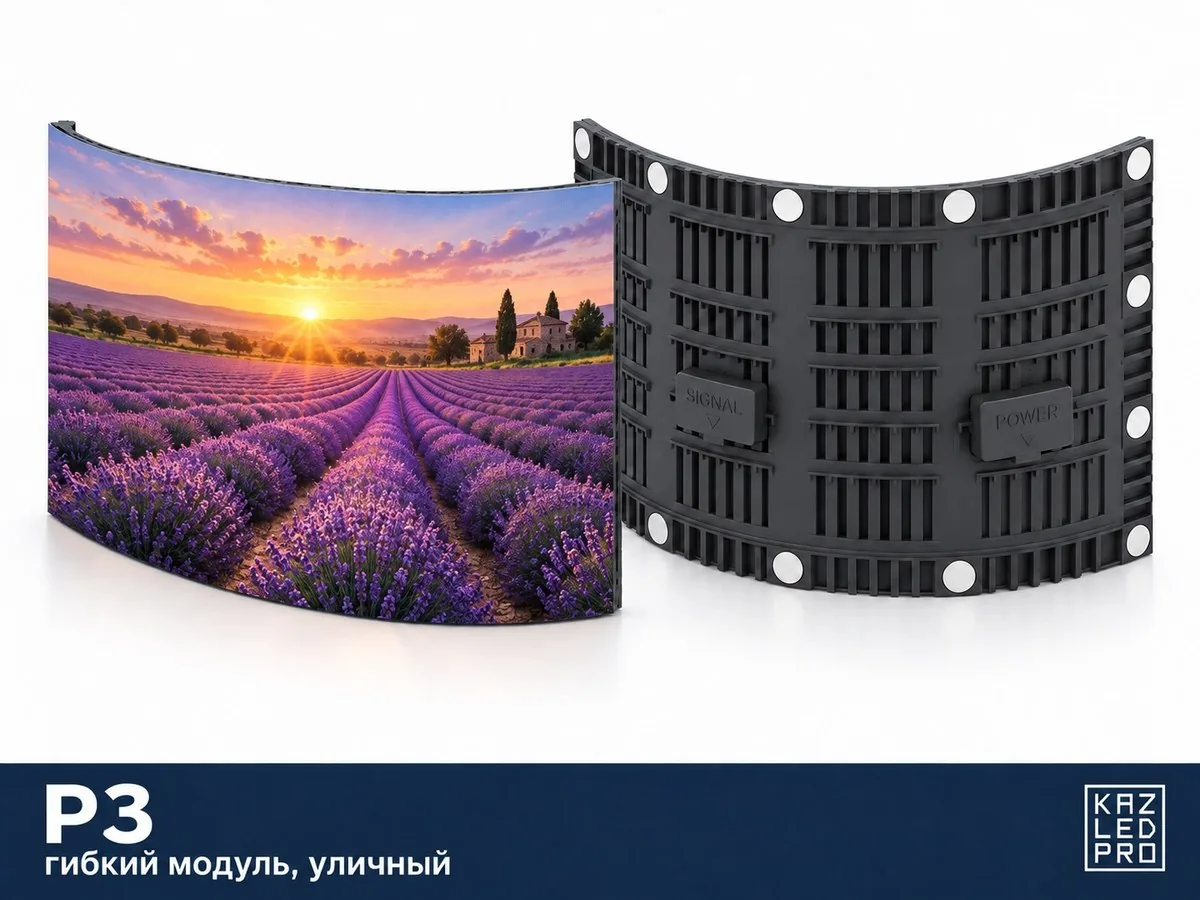
Flexible LED screen P3 for outdoor use
Flexible module P3 for outdoor use: bends to a radius, holds on magnets. Columns, waves and rounded façades.
- Brightness
- 5500–7800 cd/m²
- Density
- 105 625 dots/m²
- Protection
- IP 68
Details →
 P3
P3Outdoor displays
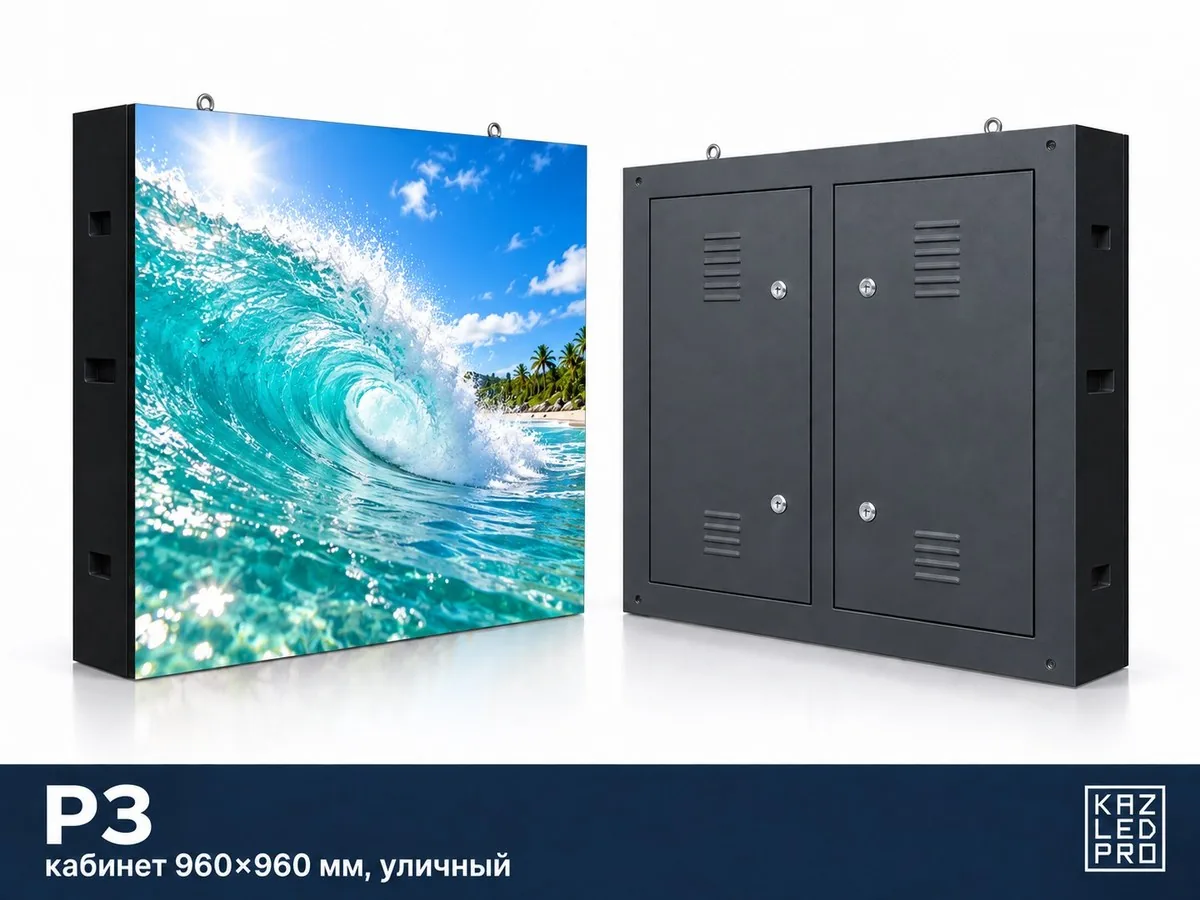
LED screen P3 for outdoor use — 960×960 mm cabinet
Outdoor screen P3 (960×960 mm cabinet), brightness 5500–7800 cd/m², IP 68. Comfortable viewing from 3 m.
- Brightness
- 5500–7800 cd/m²
- Density
- 105 625 dots/m²
- Protection
- IP 68
Details →
 P3
P3Outdoor displays
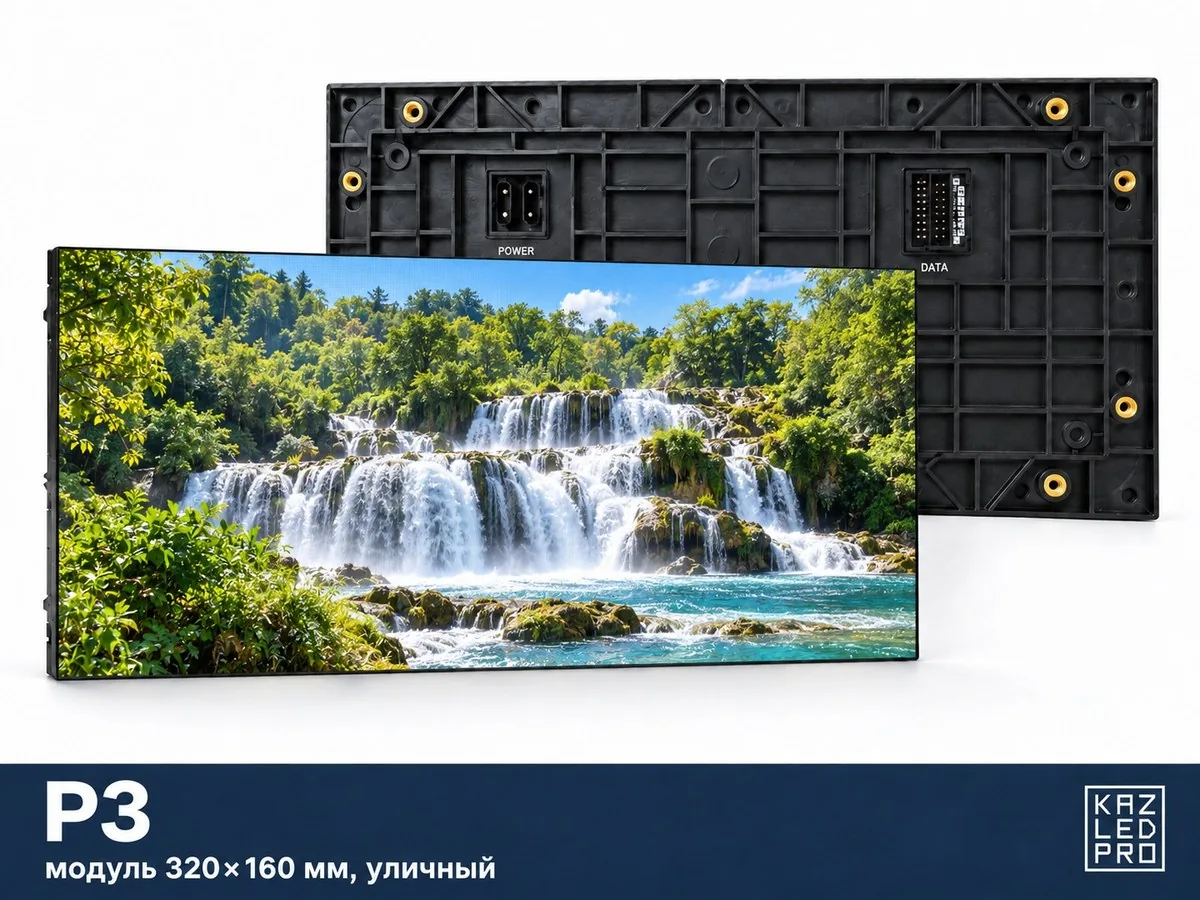
LED screen P3 for outdoor use — 320×160 mm module
Outdoor screen P3 (320×160 mm module), brightness 5500–7800 cd/m², IP 68. Comfortable viewing from 3 m.
- Brightness
- 5500–7800 cd/m²
- Density
- 105 625 dots/m²
- Protection
- IP 68
Details →
 P3
P3Indoor displays
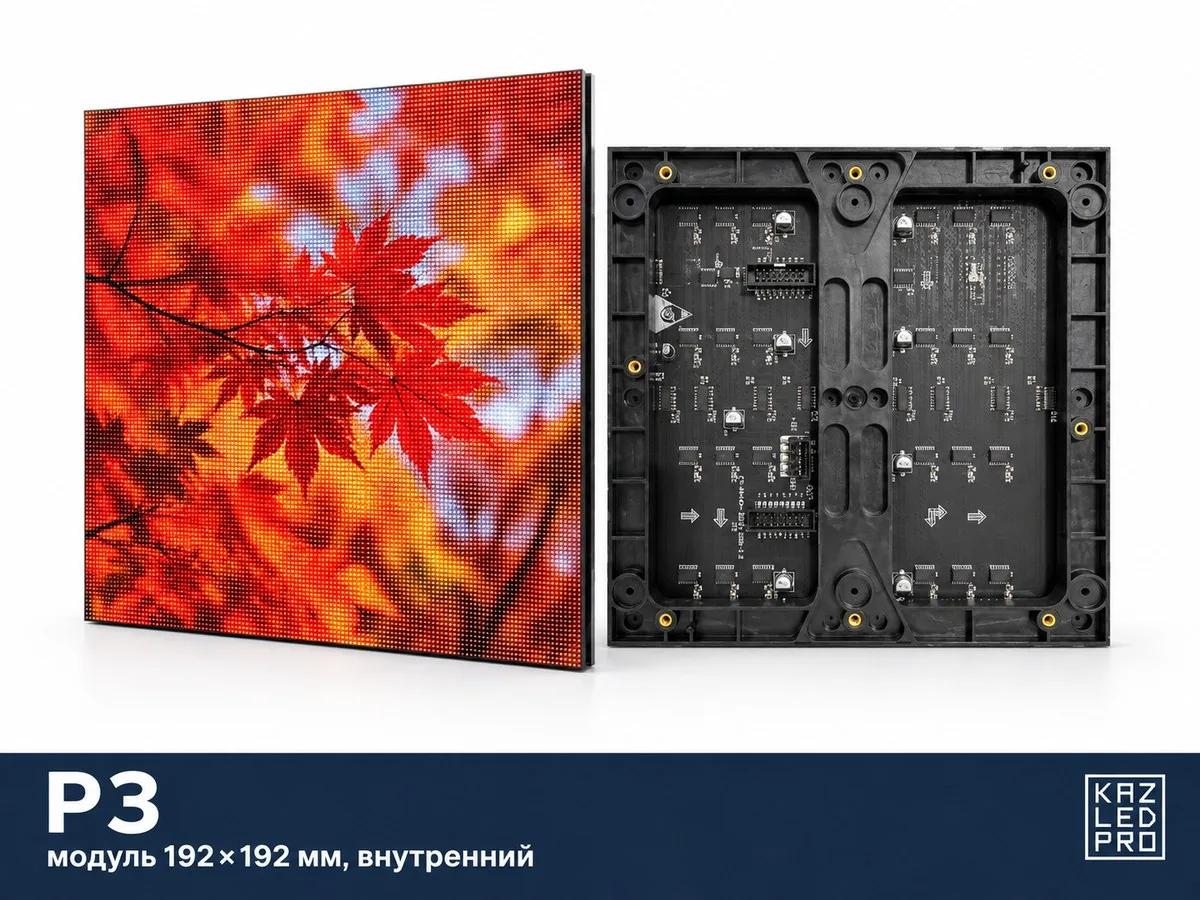
LED screen P3 for indoor use — 192×192 mm module
Indoor screen P3 (192×192 mm module), pixel density 111 111 dots/m². Comfortable viewing from 3 m.
- Brightness
- 500–550 cd/m²
- Density
- 111 111 dots/m²
- Protection
- IP 24
Details →
 P3
P3Indoor displays
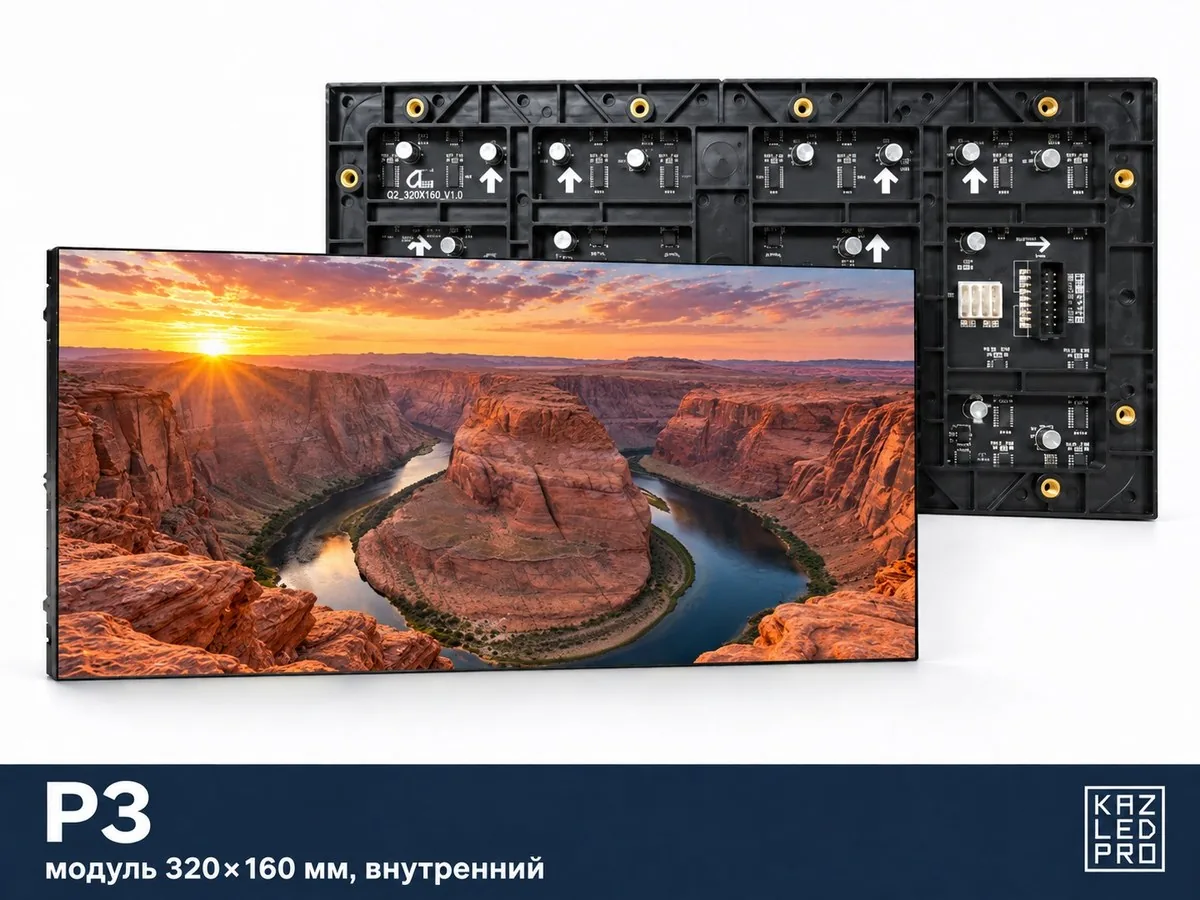
LED screen P3 for indoor use — 320×160 mm module
Indoor screen P3 (320×160 mm module), pixel density 105 625 dots/m². Comfortable viewing from 3 m.
- Brightness
- 350–550 cd/m²
- Density
- 105 625 dots/m²
- Protection
- IP 24
Details →
 P3.91 × 7,82
Mesh displays
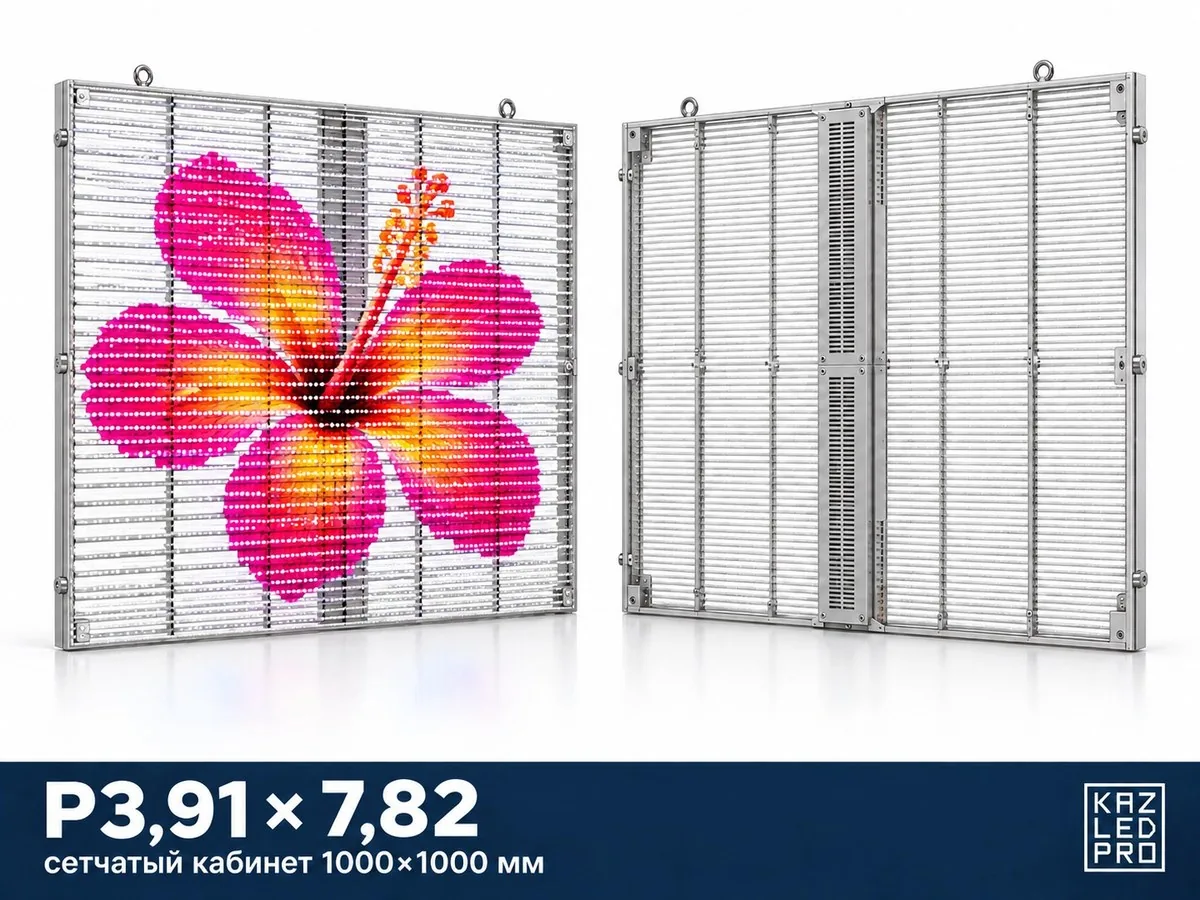
Mesh screen P3.91 × 7.82 — 65 % transparency
Transparent mesh screen P3.91 × 7.82 for glazing and façades: 65 % of the light passes through, weight 7.5 kg (cabinet 1000×1000 mm).
- Transparency
- 65 %
- Brightness
- 2000–4500 cd/m2
- Protection
- IP33
Details →
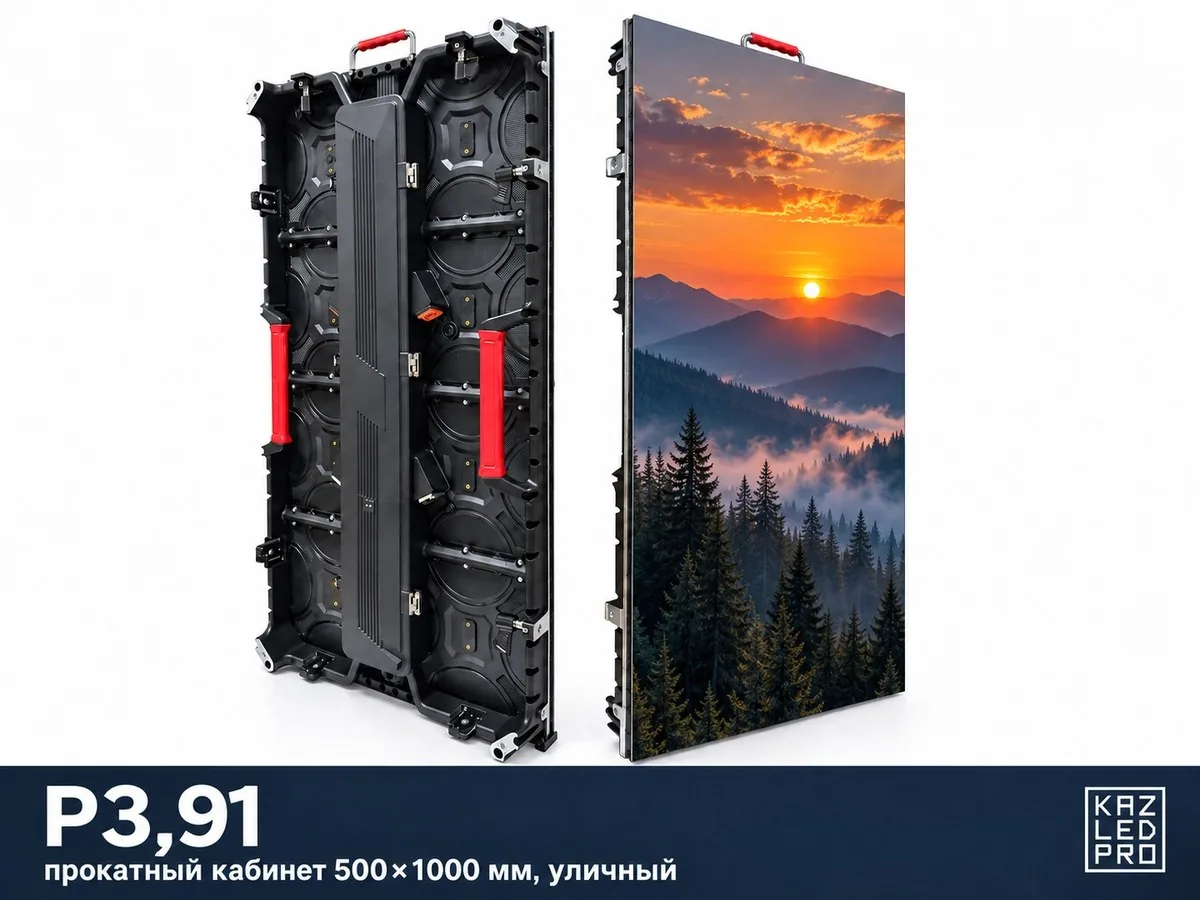 P3.91
P3.91Outdoor displays
LED screen P3.91 for outdoor use — 500×1000 mm cabinet
Outdoor screen P3.91 (500×1000 mm cabinet), brightness 5500–7800 cd/m², IP 68. Comfortable viewing from 4 m.
- Brightness
- 5500–7800 cd/m²
- Density
- 65 536 dots/m²
- Protection
- IP 68
Details →
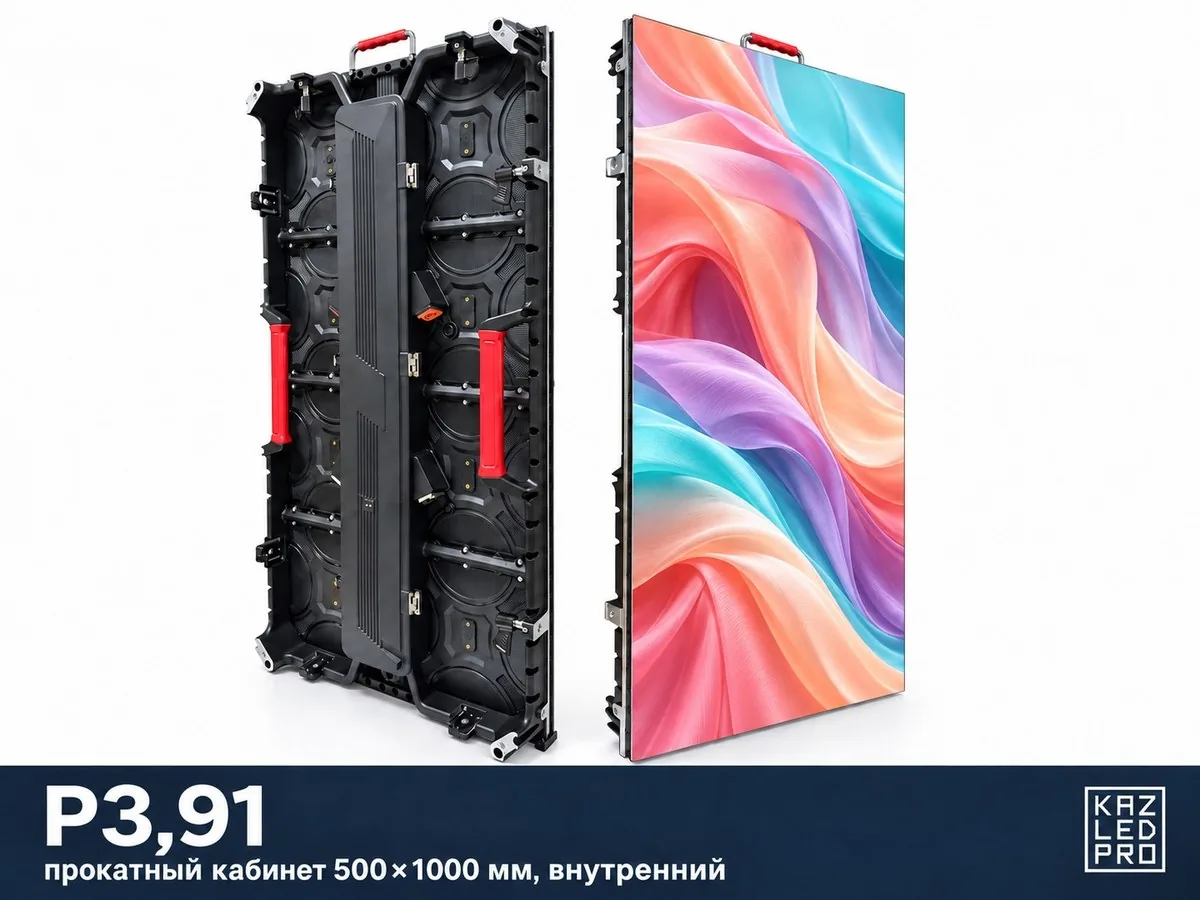 P3.91
P3.91Indoor displays
LED screen P3.91 for indoor use — 500×1000 mm cabinet
Indoor screen P3.91 (500×1000 mm cabinet), pixel density 65 536 dots/m². Comfortable viewing from 4 m.
- Brightness
- 500 cd/m²
- Density
- 65 536 dots/m²
- Protection
- IP40
Details →
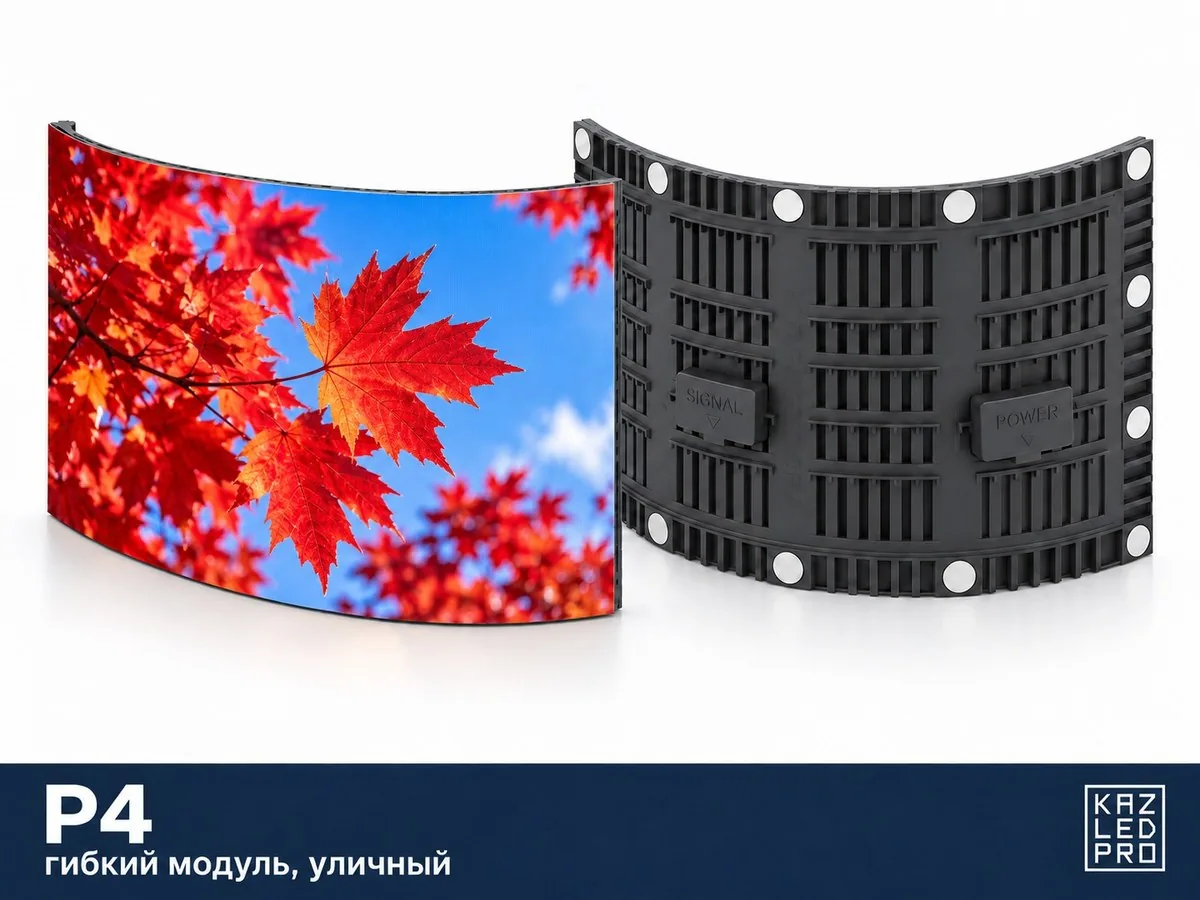 P4
P4Flexible displays
Flexible LED screen P4 for outdoor use
Flexible module P4 for outdoor use: bends to a radius, holds on magnets. Columns, waves and rounded façades.
- Brightness
- 5500–7800 cd/m²
- Density
- 62 500 dots/m²
- Protection
- IP 68
Details →
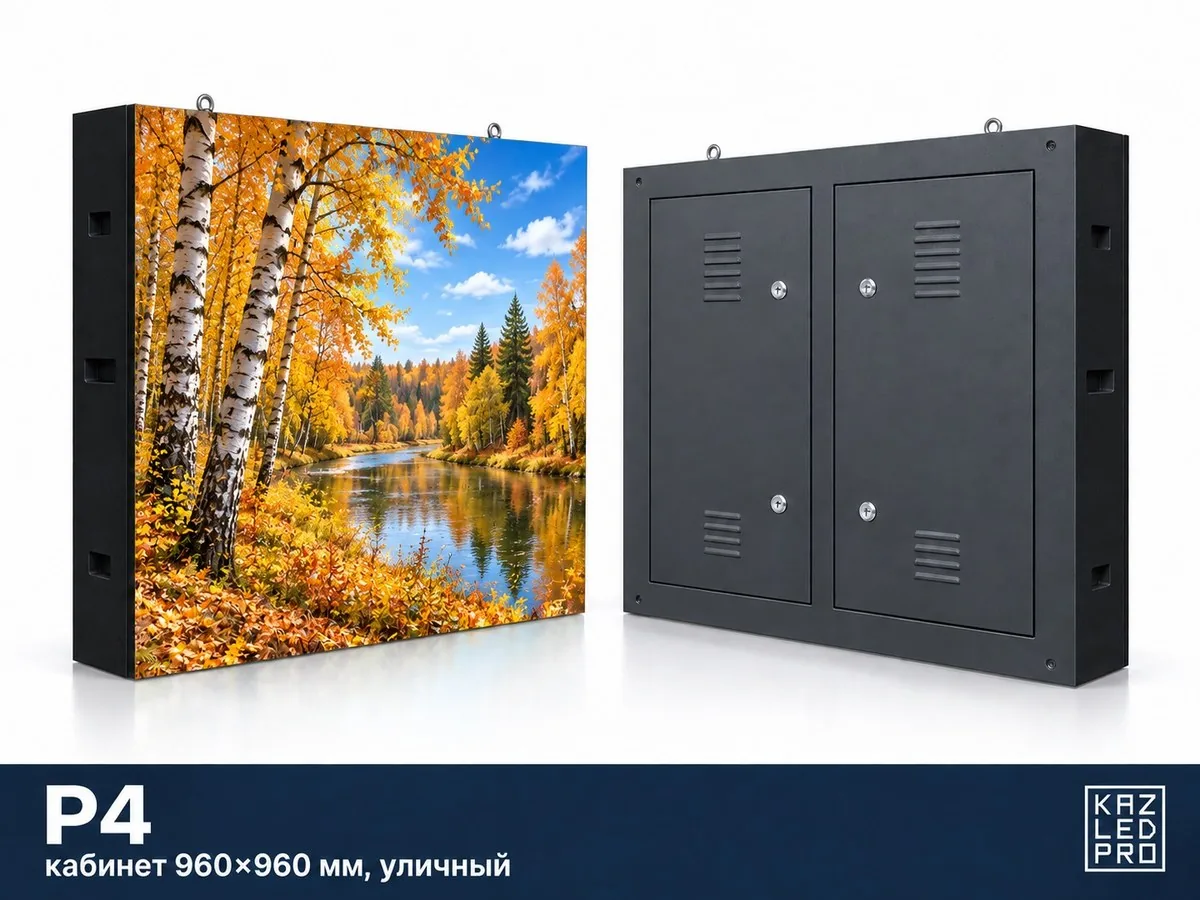 P4
P4Outdoor displays
LED screen P4 for outdoor use — 960×960 mm cabinet
Outdoor screen P4 (960×960 mm cabinet), brightness 5500–7800 cd/m², IP 68. Comfortable viewing from 4 m.
- Brightness
- 5500–7800 cd/m²
- Density
- 62 500 dots/m²
- Protection
- IP 68
Details →
 P4
P4Outdoor displays
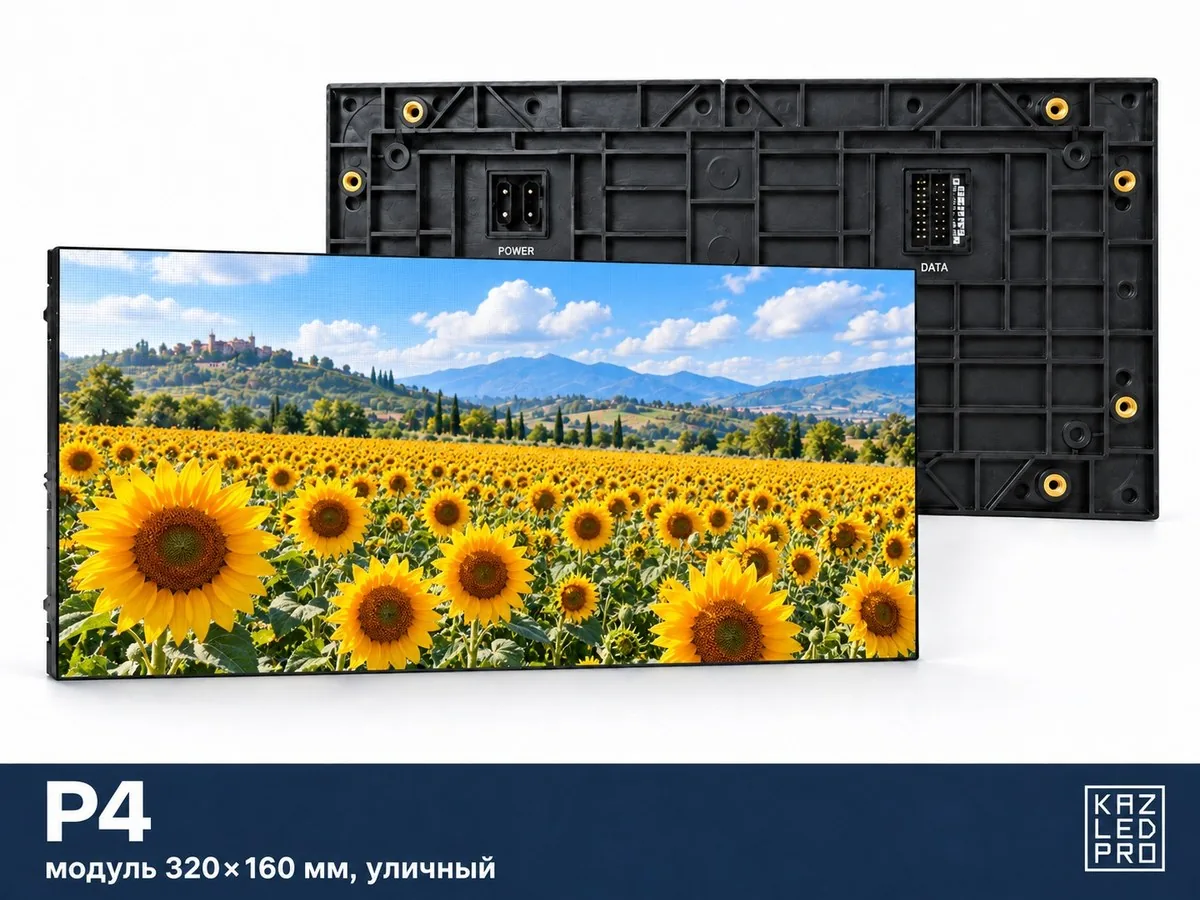
LED screen P4 for outdoor use — 320×160 mm module
Outdoor screen P4 (320×160 mm module), brightness 5500–7800 cd/m², IP 68. Comfortable viewing from 4 m.
- Brightness
- 5500–7800 cd/m²
- Density
- 62 500 dots/m²
- Protection
- IP 68
Details →
 P4
P4Indoor displays
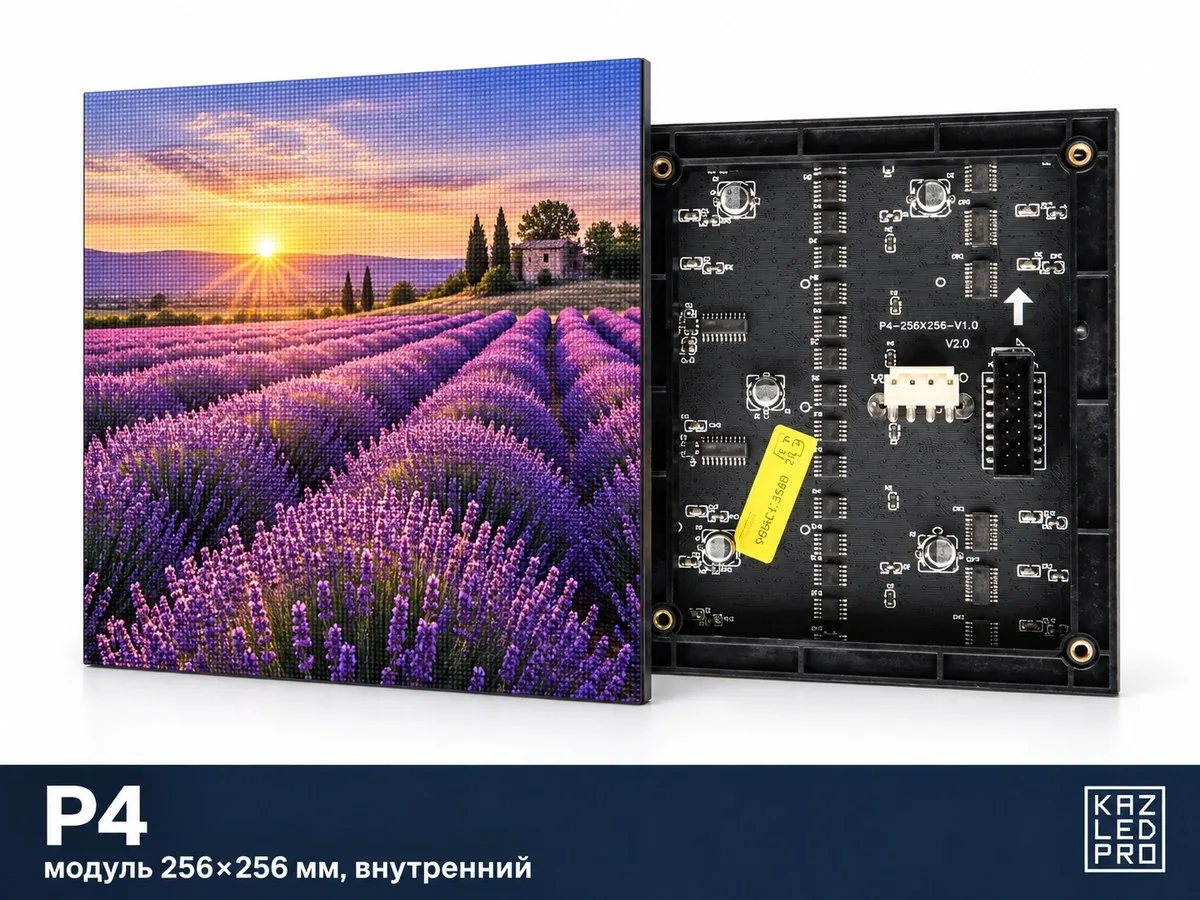
LED screen P4 for indoor use — 256×256 mm module
Indoor screen P4 (256×256 mm module), pixel density 62 500 dots/m². Comfortable viewing from 4 m.
- Brightness
- 350–400 cd/m²
- Density
- 62 500 dots/m²
- Protection
- IP40 / IP31
Details →
 P5
P5Flexible displays
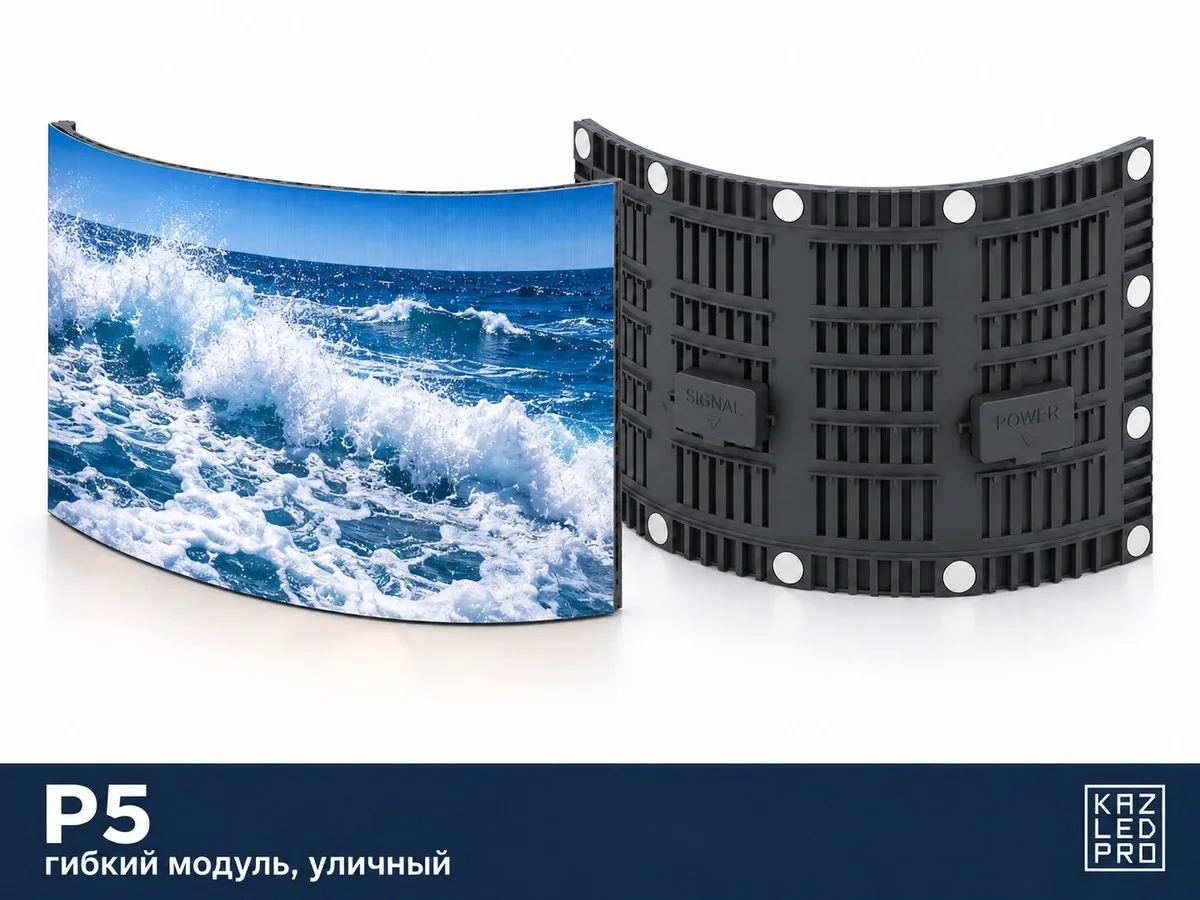
Flexible LED screen P5 for outdoor use
Flexible module P5 for outdoor use: bends to a radius, holds on magnets. Columns, waves and rounded façades.
- Brightness
- 5500–7800 cd/m²
- Density
- 40 000 dots/m²
- Protection
- IP 68
Details →
 P5
P5Outdoor displays
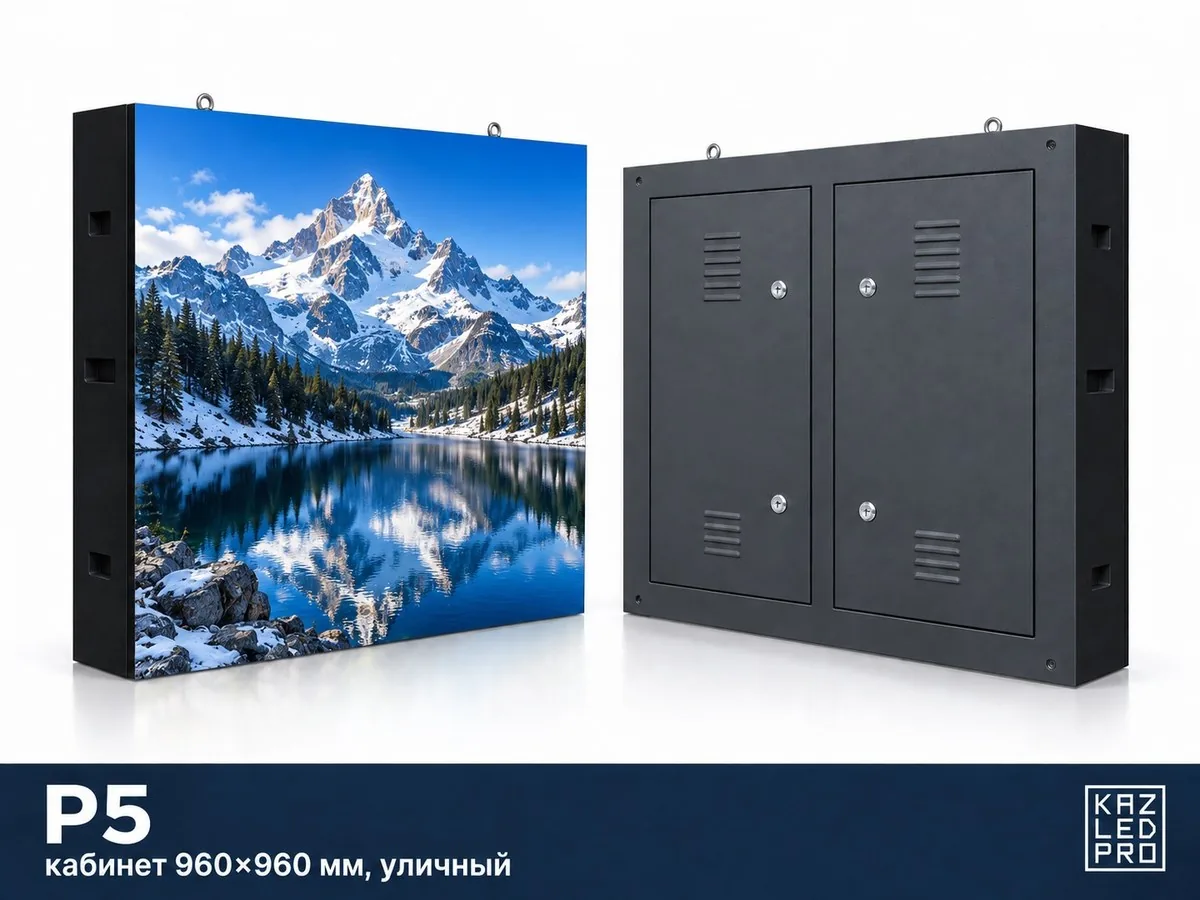
LED screen P5 for outdoor use — 960×960 mm cabinet
Outdoor screen P5 (960×960 mm cabinet), brightness 5500–7800 cd/m², IP 68. Comfortable viewing from 5 m.
- Brightness
- 5500–7800 cd/m²
- Density
- 40 000 dots/m²
- Protection
- IP 68
Details →
 P5
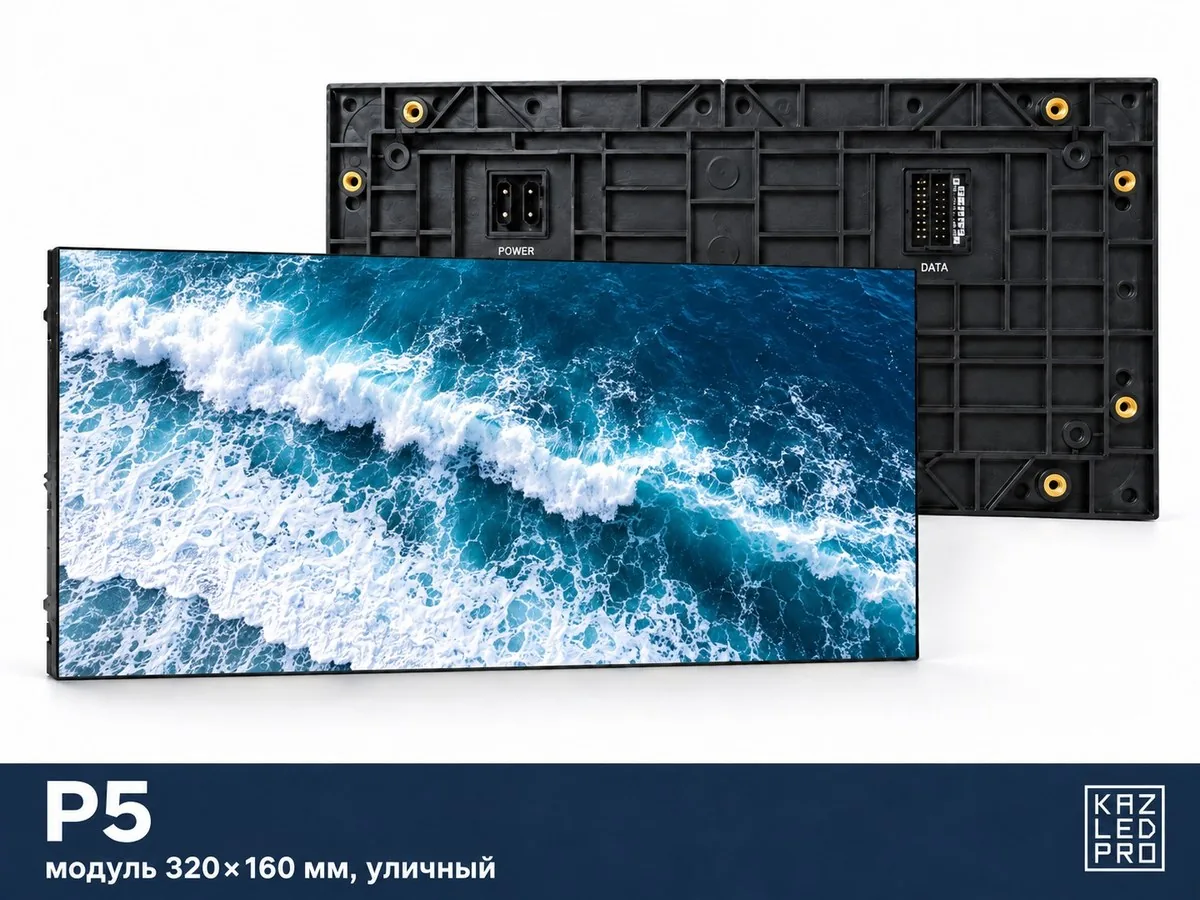
P5Outdoor displays
LED screen P5 for outdoor use — 320×160 mm module
Outdoor screen P5 (320×160 mm module), brightness 5500–7800 cd/m², IP 68. Comfortable viewing from 5 m.
- Brightness
- 5500–7800 cd/m²
- Density
- 40 000 dots/m²
- Protection
- IP 68
Details →
 P6
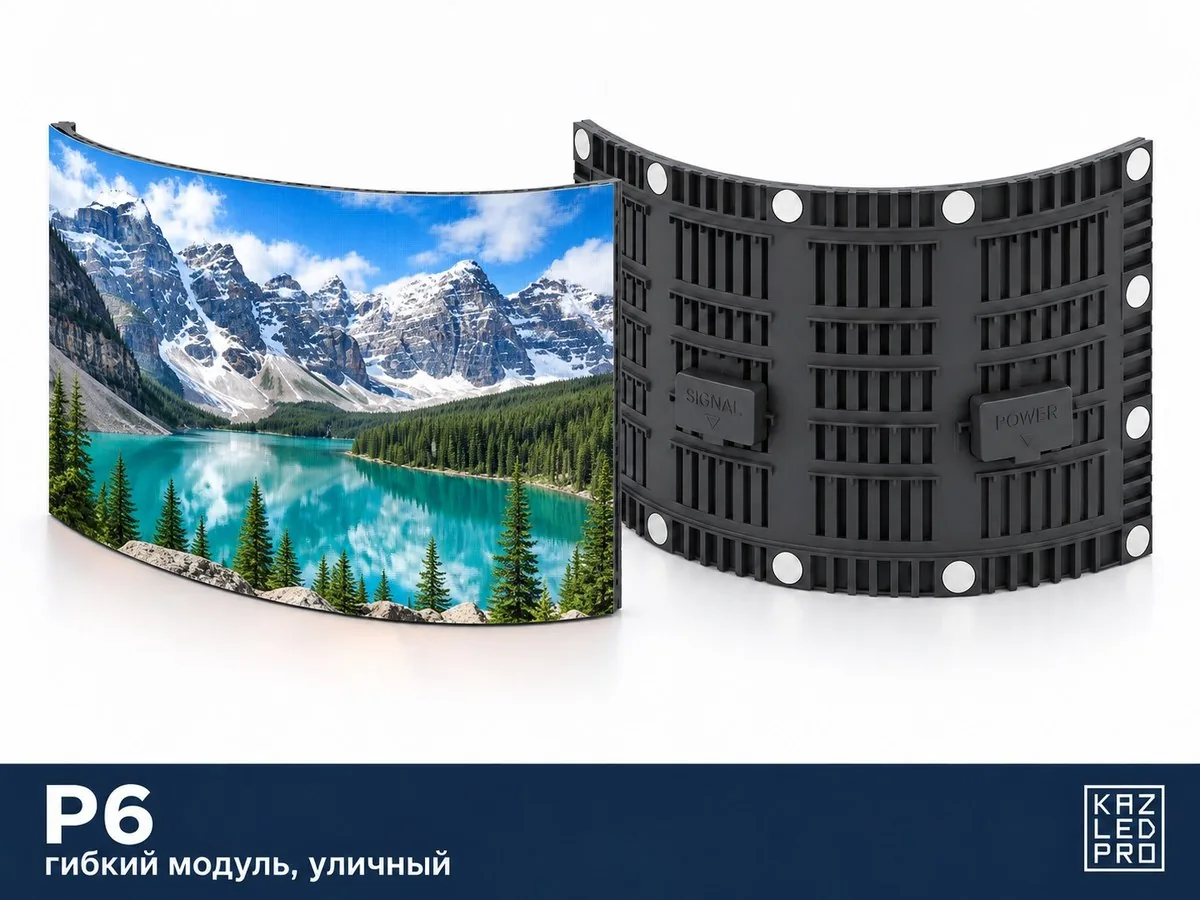
P6Flexible displays
Flexible LED screen P6 for outdoor use
Flexible module P6 for outdoor use: bends to a radius, holds on magnets. Columns, waves and rounded façades.
- Brightness
- 5500–7800 cd/m²
- Density
- 22 500 dots/m²
- Protection
- IP 68
Details →
 P6
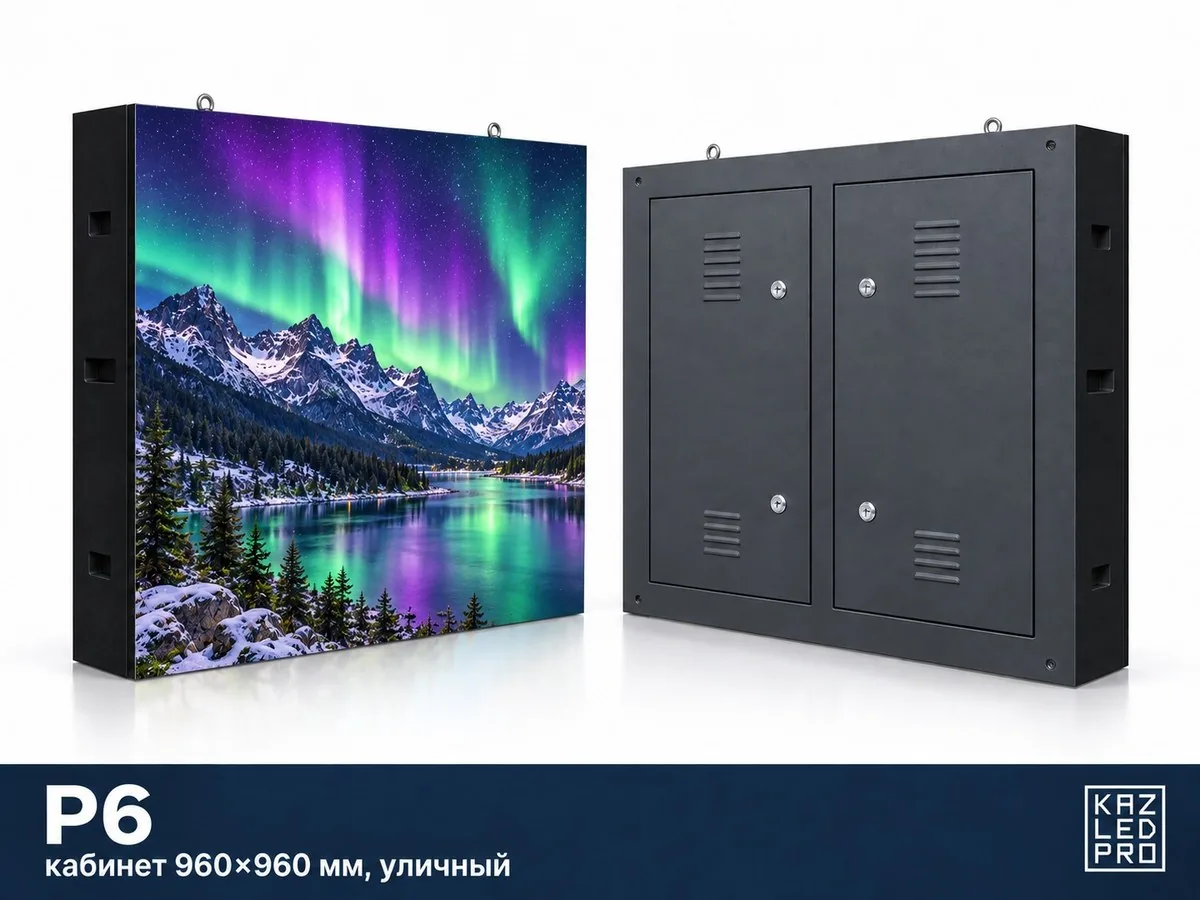
P6Outdoor displays
LED screen P6 for outdoor use — 960×960 mm cabinet
Outdoor screen P6 (960×960 mm cabinet), brightness 5500–7800 cd/m², IP 68. Comfortable viewing from 6 m.
- Brightness
- 5500–7800 cd/m²
- Density
- 22 500 dots/m²
- Protection
- IP 68
Details →
 P6
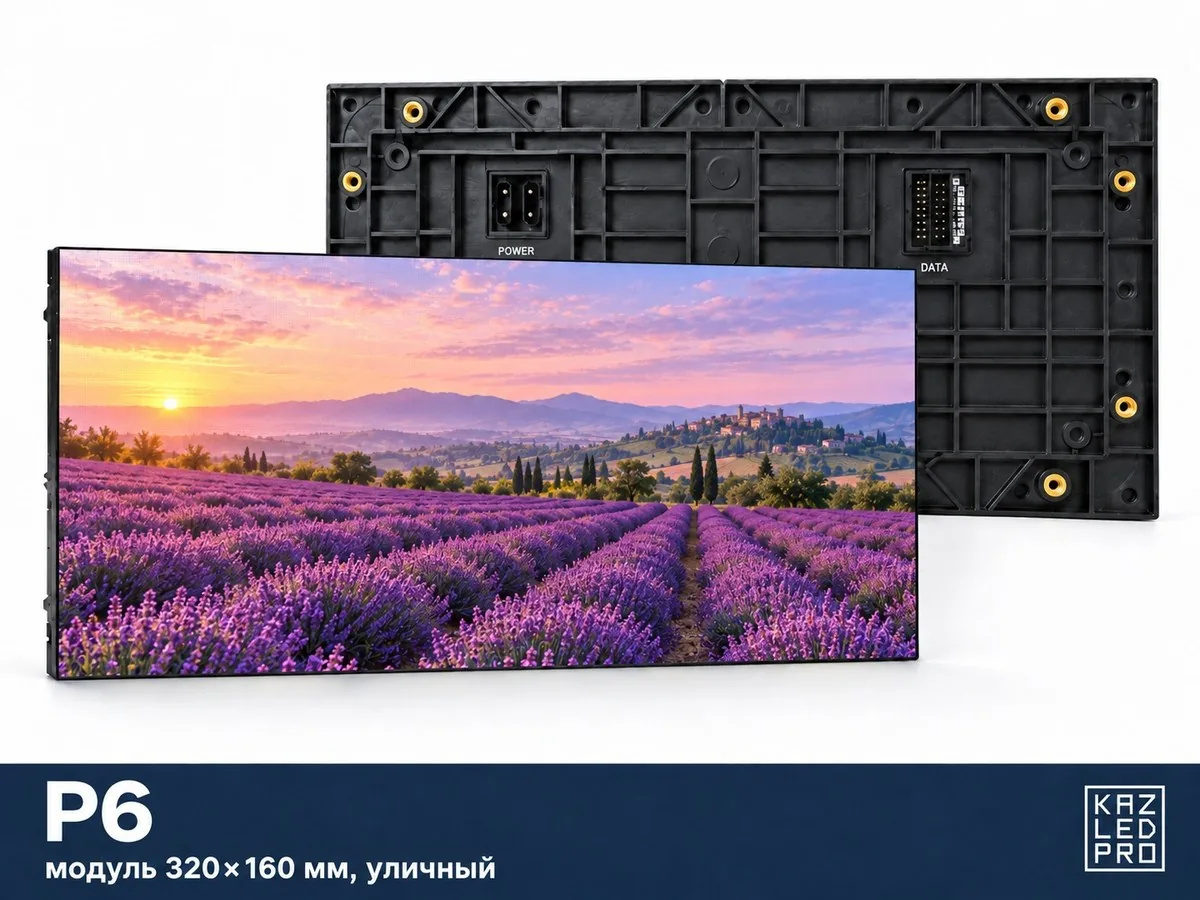
P6Outdoor displays
LED screen P6 for outdoor use — 320×160 mm module
Outdoor screen P6 (320×160 mm module), brightness 5500–7800 cd/m², IP 68. Comfortable viewing from 6 m.
- Brightness
- 5500–7800 cd/m²
- Density
- 22 500 dots/m²
- Protection
- IP 68
Details →
 P8
P8Flexible displays
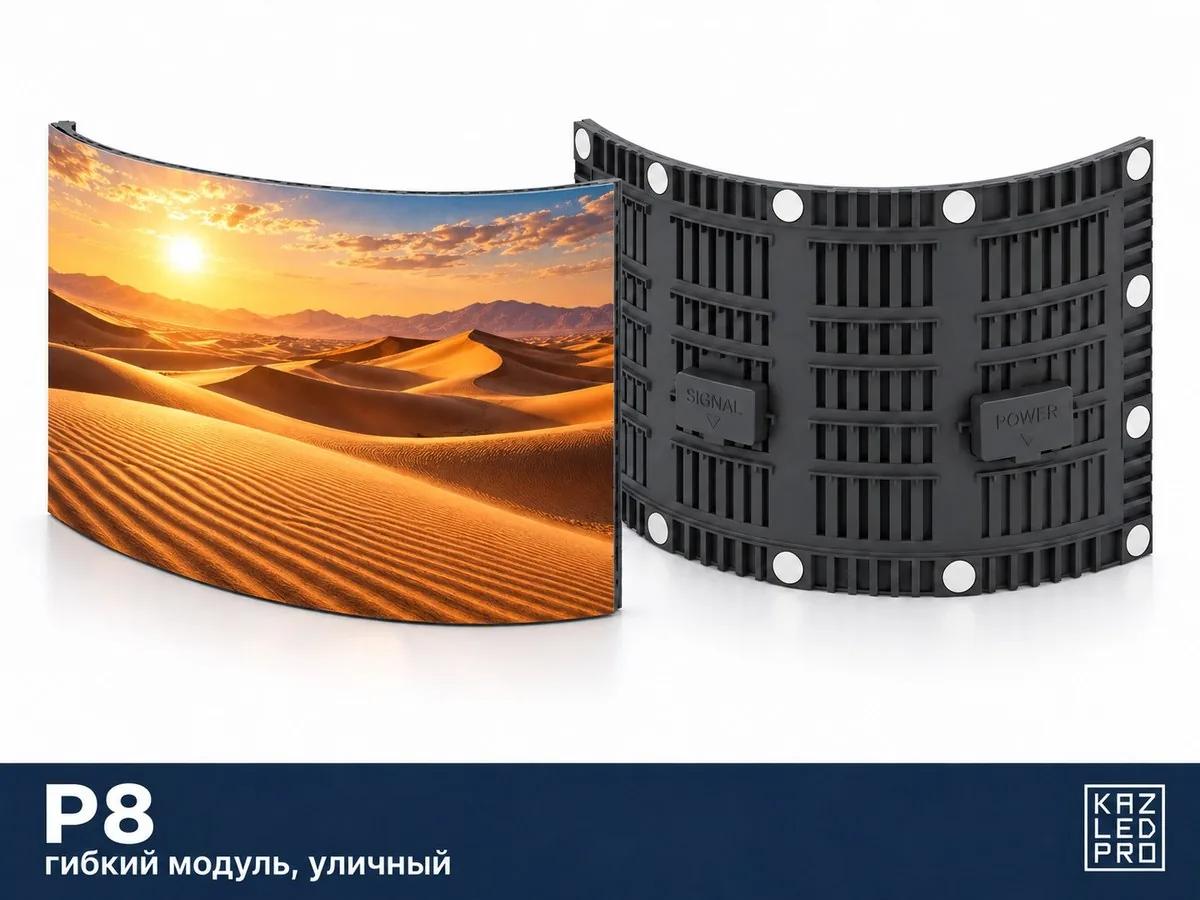
Flexible LED screen P8 for outdoor use
Flexible module P8 for outdoor use: bends to a radius, holds on magnets. Columns, waves and rounded façades.
- Brightness
- 5500–7800 cd/m²
- Density
- 15 625 dots/m²
- Protection
- IP 68
Details →
 P8
P8Outdoor displays
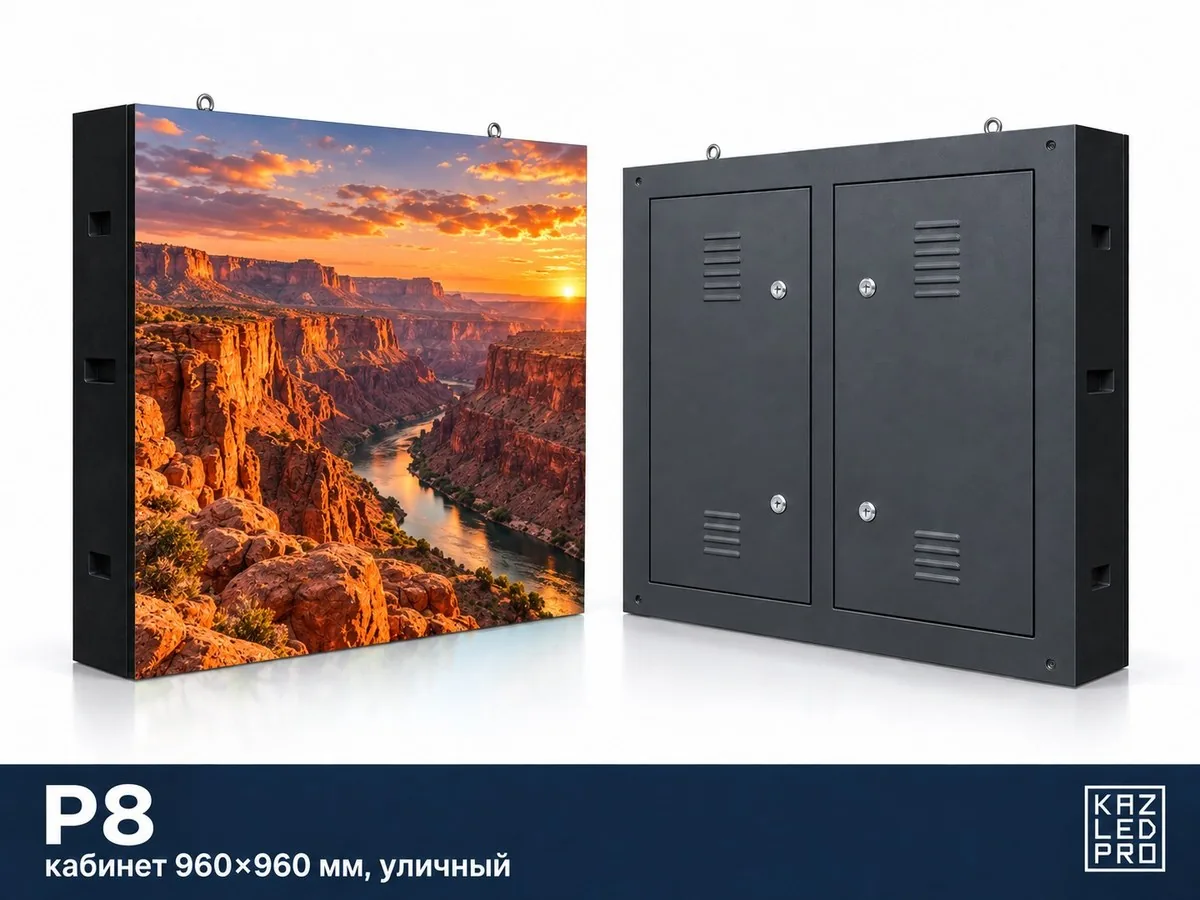
LED screen P8 for outdoor use — 960×960 mm cabinet
Outdoor screen P8 (960×960 mm cabinet), brightness 5500–7800 cd/m², IP 68. Comfortable viewing from 8 m.
- Brightness
- 5500–7800 cd/m²
- Density
- 15 625 dots/m²
- Protection
- IP 68
Details →
 P8
P8Outdoor displays
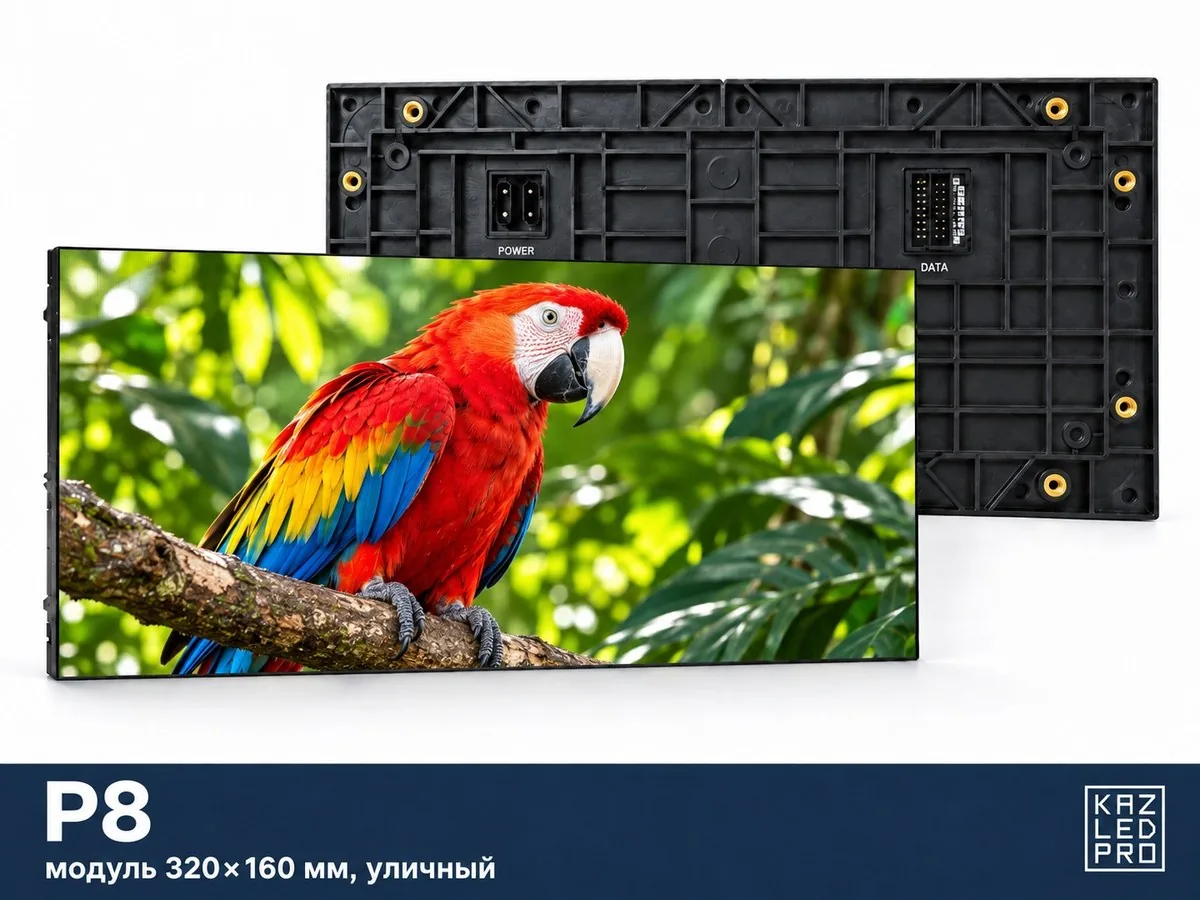
LED screen P8 for outdoor use — 320×160 mm module
Outdoor screen P8 (320×160 mm module), brightness 5500–7800 cd/m², IP 68. Comfortable viewing from 8 m.
- Brightness
- 5500–7800 cd/m²
- Density
- 15 625 dots/m²
- Protection
- IP 68
Details →
 P15
P15Media facades
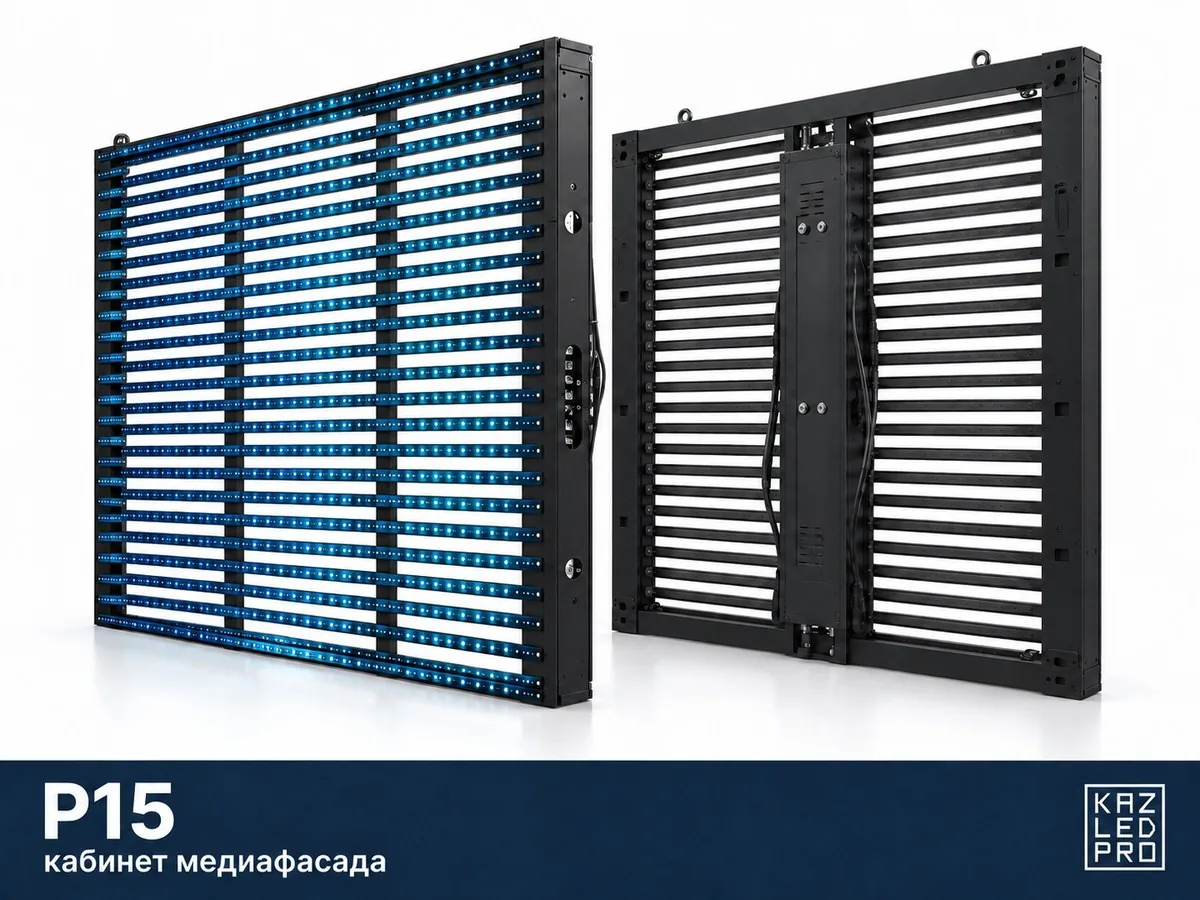
Media façade P15
Large-format media façade P15 for an entire building. Brightness 900 nit, IP65, viewing distance from 30 m.
- Brightness
- 900 nit
- Density
- 4 444 dots/m²
- Protection
- IP65
Details →
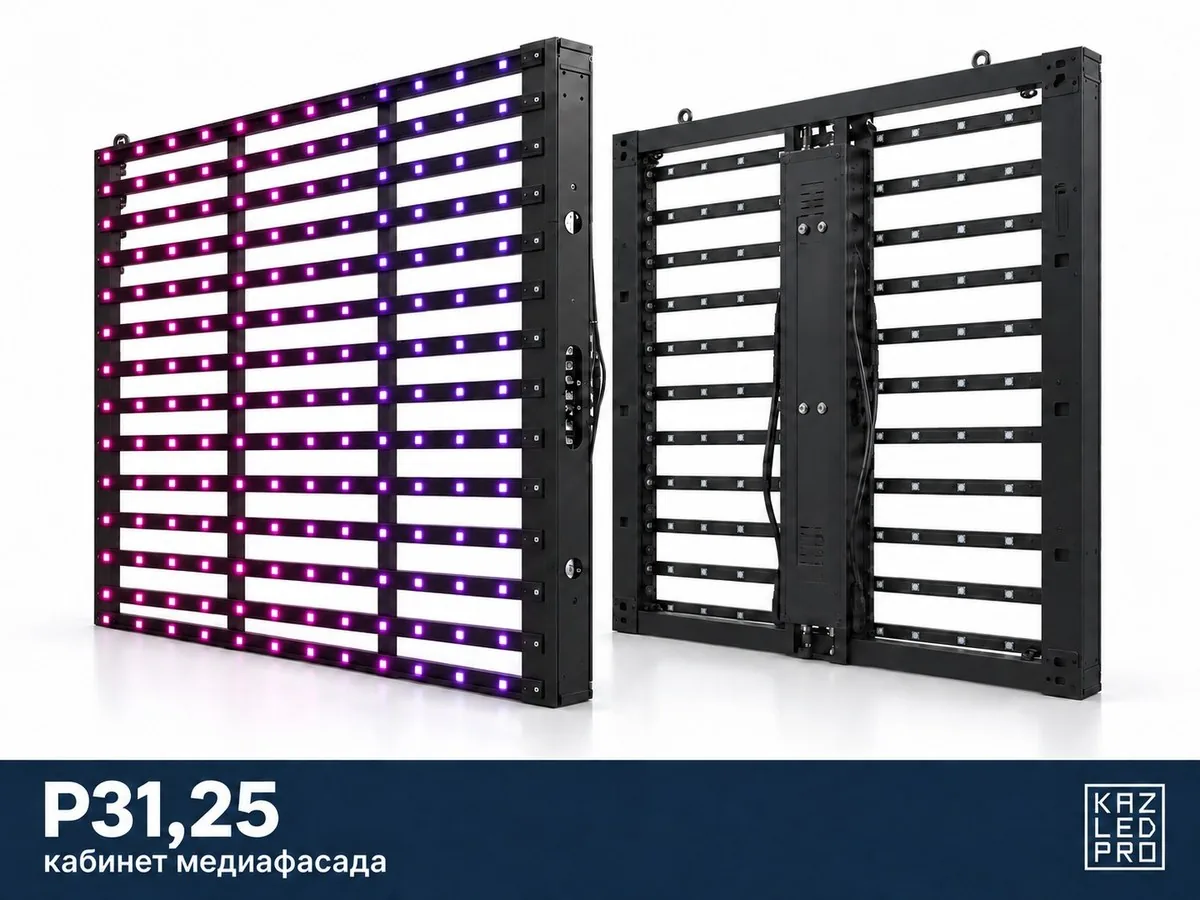 P31.25
Media facades
Media façade P31.25
Large-format media façade P31.25 for an entire building. Brightness up to 6 000 nit, IP67, viewing distance from 62 m.
- Transparency
- 30–90 % — the façade behind the screen stays visible
- Brightness
- up to 6 000 nit
- Protection
- IP67
Details →
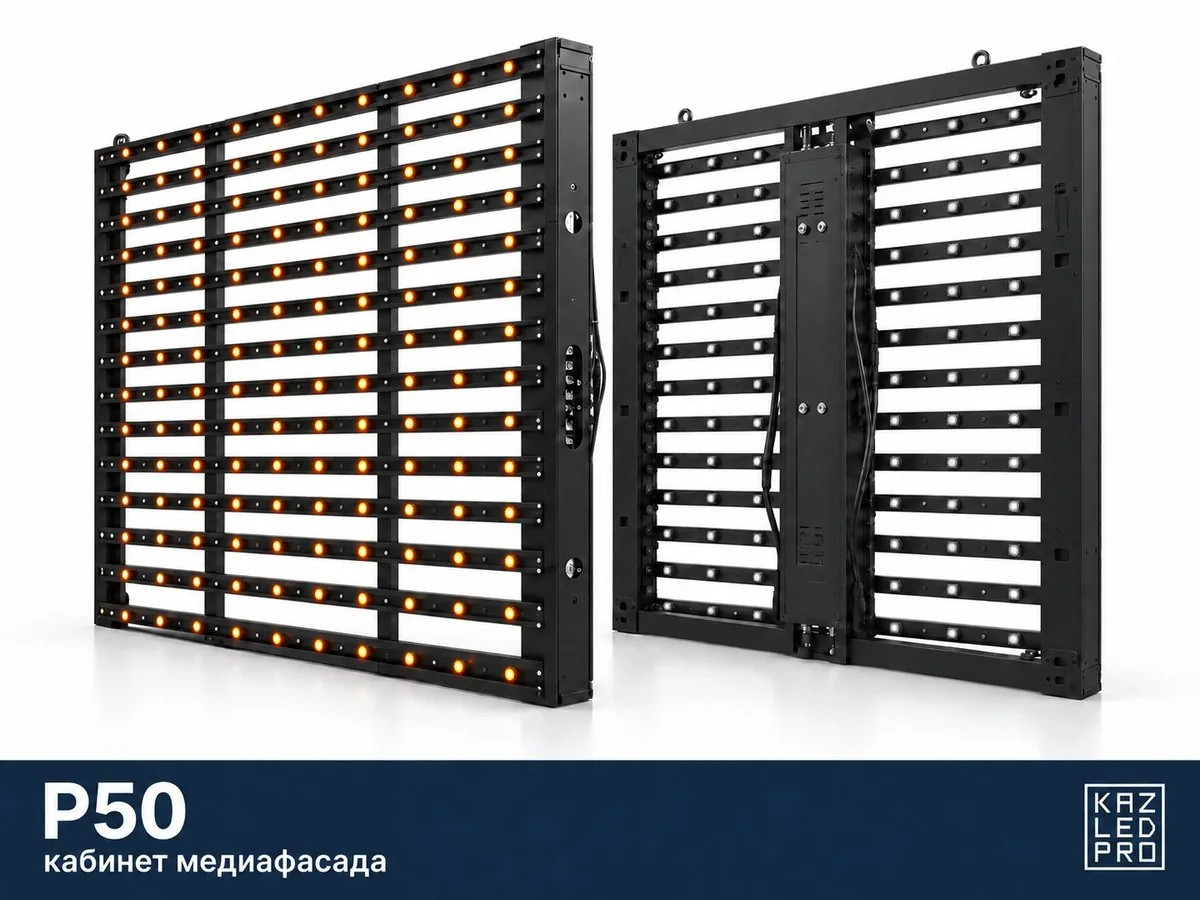 P50
P50Media facades
Media façade P50
Large-format media façade P50 for an entire building. Brightness up to 6 000 nit, IP67, viewing distance from 100 m.
- Transparency
- 30–90 % — the façade behind the screen stays visible
- Brightness
- up to 6 000 nit
- Protection
- IP67
Details →
The KazLedPro catalogue holds 42 LED display models with pixel pitch from P0.93 to P50: indoor and outdoor screens, flexible modules, transparent mesh screens, media facades and rental cabinets. We assemble screens in Almaty, install them across Kazakhstan with our own crew, and keep a warehouse of modules and spare parts in the city. Since 2012 we have completed more than 1,000 projects; 62 of them are published in the portfolio with photos and descriptions.
This page is for anyone who wants to buy an LED screen and does not yet know which one. Below, in brief: how the screen types differ, how to read pixel pitch, when to choose a cabinet and when a module, and where to find the specifications. Every model in the catalogue has a datasheet with brightness, dimensions and power draw, and the calculator on the site shows resolution and a quote for your dimensions.
Types of LED screens
The type of screen is defined by where it will stand and from what distance it is viewed. Indoors, models with 350–1,000 cd/m² brightness and pitch P0.93–P4 do the job; outdoors you need 5,500–7,800 cd/m², sealed modules and pitch P2–P8. Then come formats for special tasks: flexible modules for columns and waves, mesh screens with 65–70% transparency for shop windows, P15–P50 media facades covering a whole building, and 500×1000 mm rental cabinets with quick locks for events.
- Indoor screens P0.93–P4: meeting rooms, assembly halls, studios, retail floors.
- Outdoor screens P2–P8: facades, pylons, squares, mall entrances.
- Flexible screens P1.53–P8: columns, cylinders, curved walls.
- Mesh screens P2.6 and P3.91: glazing and shop windows, light passes through.
- Media facades P15, P31.25 and P50: a screen the size of a building, viewed from 20–30 m.
- Rental cabinets P1.95–P3.91: fast assembly for conferences and concerts.
Pixel pitch and viewing distance
Pixel pitch is the distance between the centres of neighbouring LEDs in millimetres, written with the letter P. A simple rule: the comfortable viewing distance in metres roughly equals the pitch in millimetres. A P2.5 screen is viewed from two to three metres, P4 from four, a P31.25 media facade from twenty and beyond. The finer the pitch, the higher the pixel density and the price per square metre: P0.93 packs 1,137,778 pixels per m², P4 has 62,500.
So buying a fine pitch «just in case» does not pay: a viewer standing five metres away will not see the difference between P2 and P3 but will pay noticeably more. Screen resolution is the size divided by the pitch: a 4×2.25 m screen at pitch P2.5 gives 1600×900 pixels, enough for video and presentations. The calculator on the site shows these figures straight away.
Cabinet or module
A module is a board with LEDs measuring 320×160, 256×256 or 192×192 mm. A cabinet is an aluminium frame that already holds the modules, power supplies and receiving card. Our catalogue has 640×640 mm cabinets (indoor P1.53–P2.5), 500×1000 mm cabinets (P1.95–P3.91, also used for rental) and 960×960 mm cabinets (outdoor P2–P8, 25 kg each).
A cabinet screen is assembled faster on site and gives even seams, but the size comes out in multiples of the cabinet. A modular screen fits an opening more precisely — for example a 3.2×1.6 m recess built from 320×160 mm modules. Indoor 640×640 cabinets are front-serviced: a module comes off the front on magnets, so the screen can sit flush against the wall. Outdoors a cabinet is preferable: it is sealed and carries wind load together with the frame.
Where to find the specifications
Each model page carries a table from the datasheet: pitch, brightness, cabinet and module size, pixel density, refresh rate, ingress protection, maximum and average power draw, weight, viewing angle, operating temperature. The figures come from the documentation, not rounded «approximately». Next to it are completed projects on this or a similar model: for example P3 screens of 48 m² at Almaty ТРК FORUM (Almaty, 2023) and 64 m² at Moll Aport mall (Almaty, 2023), and P2.5 screens in the Vivo zone of the Sulpak store at Dostyk Plaza (2023). Module samples can be seen at our office in Almaty, and for your opening we prepare a quote with cabinet layout and power figures.
How the project goes
- 1
Enquiry and survey
You describe the task: where the screen goes, the viewing distance, the content. In Almaty we come to measure ourselves; in other cities we work from photos and drawings of the room.
- 2
Model selection and quote
We propose one or two options for pitch and construction, calculate resolution, power and layout. A commercial proposal with specification and lead time is sent within a day.
- 3
Contract and kitting
We fix the specification, timing and warranty. Modules come from the Almaty warehouse, the frame is welded for your site, the processor and cards are configured in advance.
- 4
Installation and commissioning
Our own crew mounts the structure, cabinets, power and signal, calibrates brightness and colour, connects the sources and trains your staff to manage content.
- 5
Handover and warranty
Acceptance act, screen passport with serial numbers, video report. Warranty of 2–5 years depending on the model; spare modules for your screen are kept in stock.
What the price depends on
At KazLedPro indoor screens start from 260,000 ₸ per m² and outdoor screens from 300,000 ₸ per m². On the Kazakhstan market a square metre of LED screen costs roughly between 180,000 and 1,500,000 ₸: the lower end is a coarse pitch for outdoor use, the upper end a fine-pitch screen for a studio or meeting room. This is a market reference, not our price list: the exact figure is calculated from your dimensions and scope of work. The cost of an LED screen is not a single figure per square metre but the sum of several decisions made at the selection stage. We calculate an exact quote for your dimensions: the calculator on the site gives layout and resolution, and the commercial proposal is ready within a day.
Pixel pitch
The main factor. The finer the pitch, the more LEDs per square metre and the more expensive the screen. Pitch is chosen by viewing distance, not by the idea that finer is always safer.
Area and resolution
Area multiplies everything else: modules, frame, installation, power. Resolution sets the requirements for the processor and signal source — a large screen needs a processor with several outputs.
Cabinet or module
A cabinet screen costs more per metre but assembles faster and is easier to service. A modular screen is more economical and fits the opening more precisely, but needs more installation hours.
Outdoor or indoor build
Outdoor models are ten times brighter, sealed and rated for −40…+50 °C — a different component base and a different housing. An indoor screen does not need that protection.
Steel structure and mounting height
A wall frame, a free-standing support or the roof of a building mean different steel and different work. Heights above three metres add a lift or scaffolding; a facade adds wind-load calculation.
Power, control and service
Power lines, processor, control software, staff training and warranty service. All of this appears in our proposal as separate lines so that nothing comes as a surprise after installation.
Questions and answers
Which pixel pitch should I choose?
Start from the distance to the nearest viewer: pitch in millimetres roughly equals distance in metres. A meeting room at three metres — P1.5–P2; an assembly hall — P2.5–P3; a roadside outdoor screen — P4–P8; a media facade — P15 and coarser. If you hesitate between two neighbouring pitches, take the coarser one and check the resolution in the calculator.
How does an LED screen differ from a panel video wall?
An LED screen has no seams between cabinets and no bezels around the picture, any size and shape, higher brightness, and a 100,000-hour LED lifespan on outdoor models. A module is replaced on site in minutes without dismantling the whole canvas. The indoor screens in the catalogue run without fans, so nothing hums in the meeting room.
How long does a screen take after ordering?
Common modules and cabinets are in stock in Almaty, so a small indoor screen is assembled and commissioned in one to two weeks. Large outdoor projects with a frame and media facades take longer: fabrication of the steel structure and approvals are added. The lead time is fixed in the contract after the survey.
What is the warranty and what happens if something fails?
The warranty is 2–5 years depending on the model. A warranty case is closed by replacing a module, power supply or receiving card: we keep a reserve for every delivery in the Almaty warehouse. Screen status can be monitored remotely, and most faults show up on a single module and are fixed without stopping the whole screen.
How much electricity does a screen use?
Each model's datasheet lists two figures: maximum and average power per square metre. For indoor models it is 600–800 and 240–320 W/m², for outdoor models 650–800 and 220–320 W/m². The average figure is closer to the real bill: normal content does not flood the screen with white, and brightness drops automatically at night.
Can we buy a screen through public procurement?
Yes. KazLedPro is listed in the registry of domestic manufacturers (KTP certificate), which gives the customer price preferences in procurement. We prepare the technical assignment, specification, certificates of conformity and warranty obligations for the tender. This is how screens were delivered to schools, universities, akimats and houses of culture in different cities of Kazakhstan.
Do you work outside Almaty?
Yes, across all of Kazakhstan. Our travelling crew has installed screens in Astana, Karaganda, Aktobe, Aktau, Taraz, Taldykorgan, Turkestan, Kokshetau and Semey. In another city we survey from photos and drawings, carry out installation and commissioning on site, and ship spare modules from the Almaty warehouse.
A turnkey screen: quote, installation, launch.
Send us the dimensions and location — a quote today. WhatsApp around the clock.