
Solutions
LED screens for restaurants and banquet halls
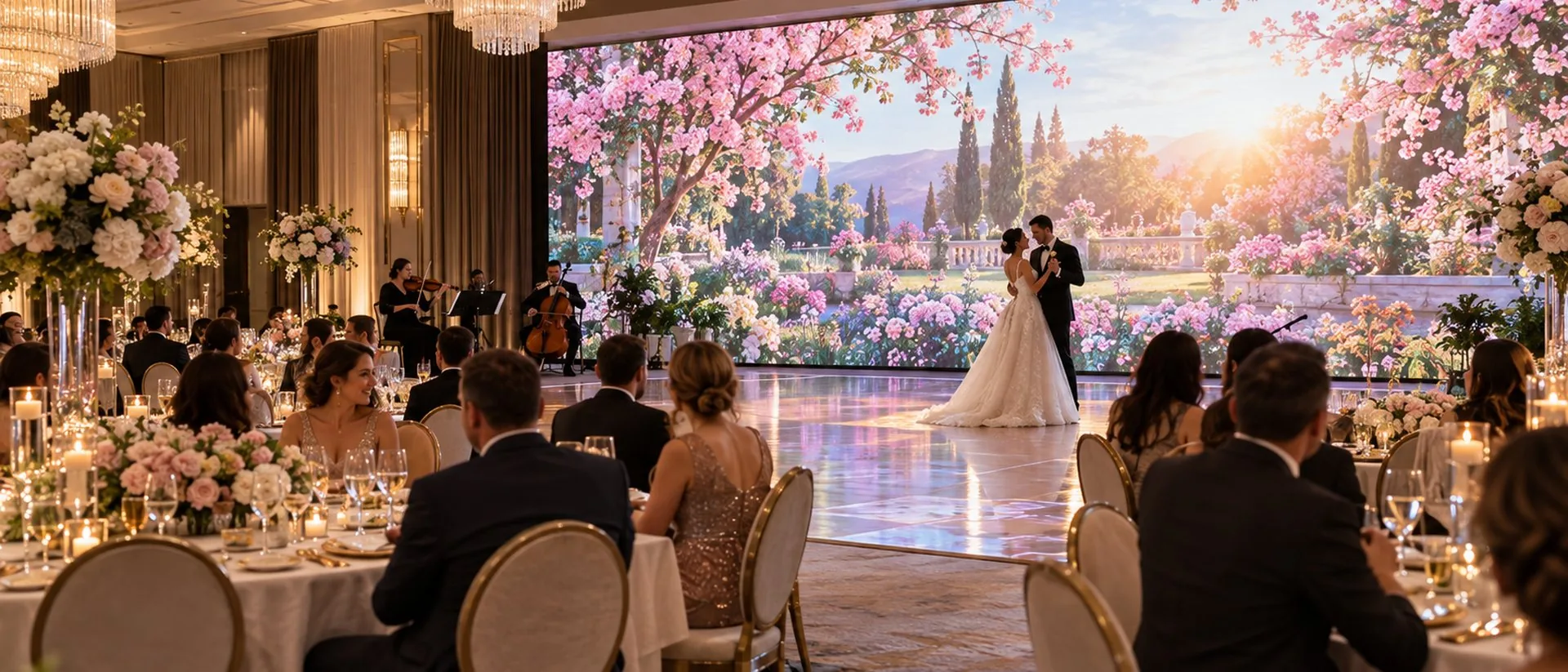
A screen for weddings, broadcasts and atmosphere — instead of a projector invisible with the lights on.
In a banquet hall the screen shows the couple's photos, videos and a live camera feed; in a restaurant — matches and slow video art.
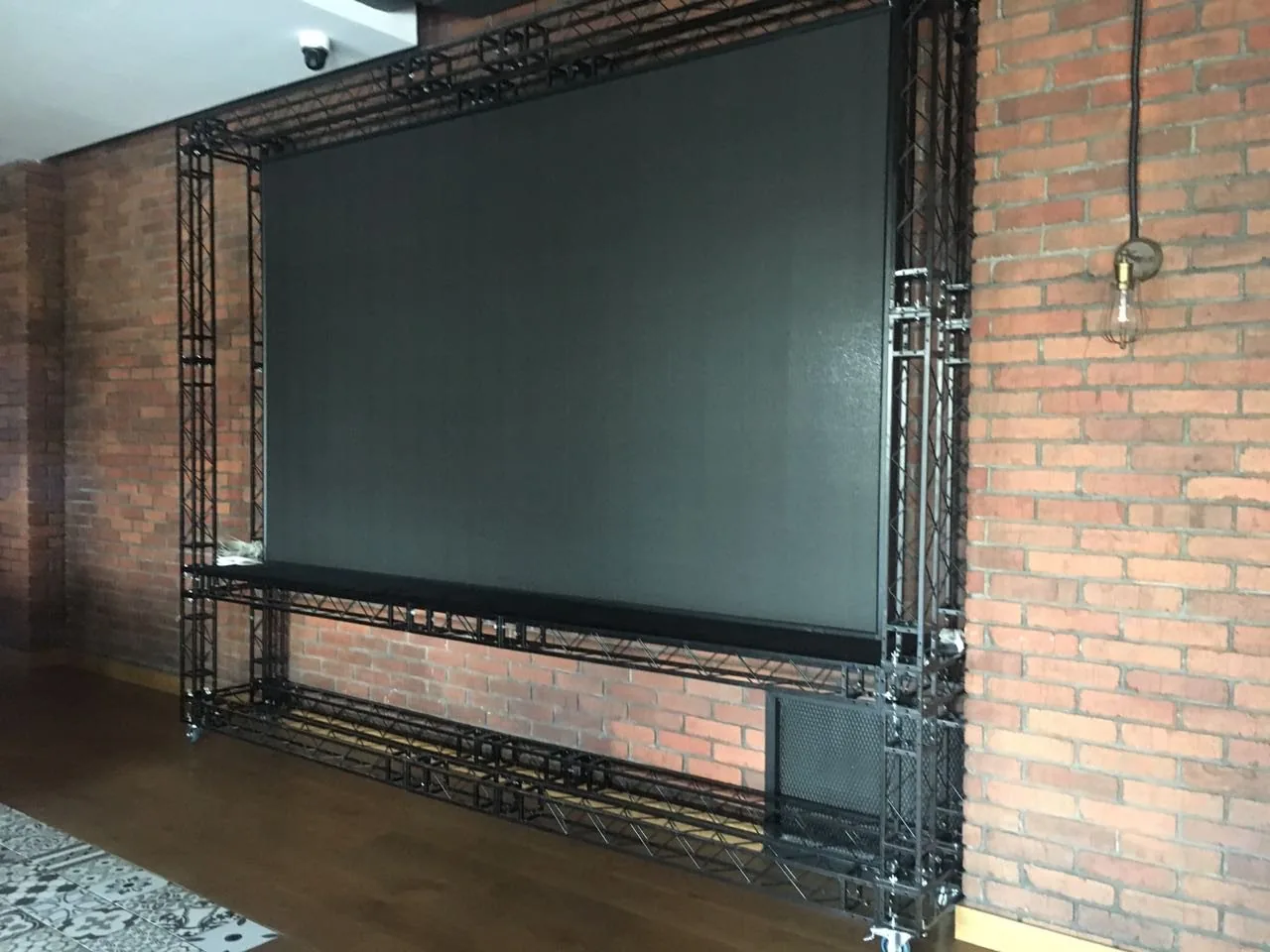
We installed screens in the Tulpar, Yasy and Tumar banquet halls, Eleven Hotel, Astana Plaza and restaurants across Kazakhstan.
The scene visualisation is generated; the project photos below are real.
What matters here
- 1
Visible with the lights on
800–1,200 cd/m², no dimming the hall.
- 2
Playlist from a tablet
Prepared in advance, switched by the manager.
- 3
Sized to the stage
640×640 cabinets — any format.
Which screens fit
Projects with such screens
Models from the price list
 P2.5
P2.5Indoor displays
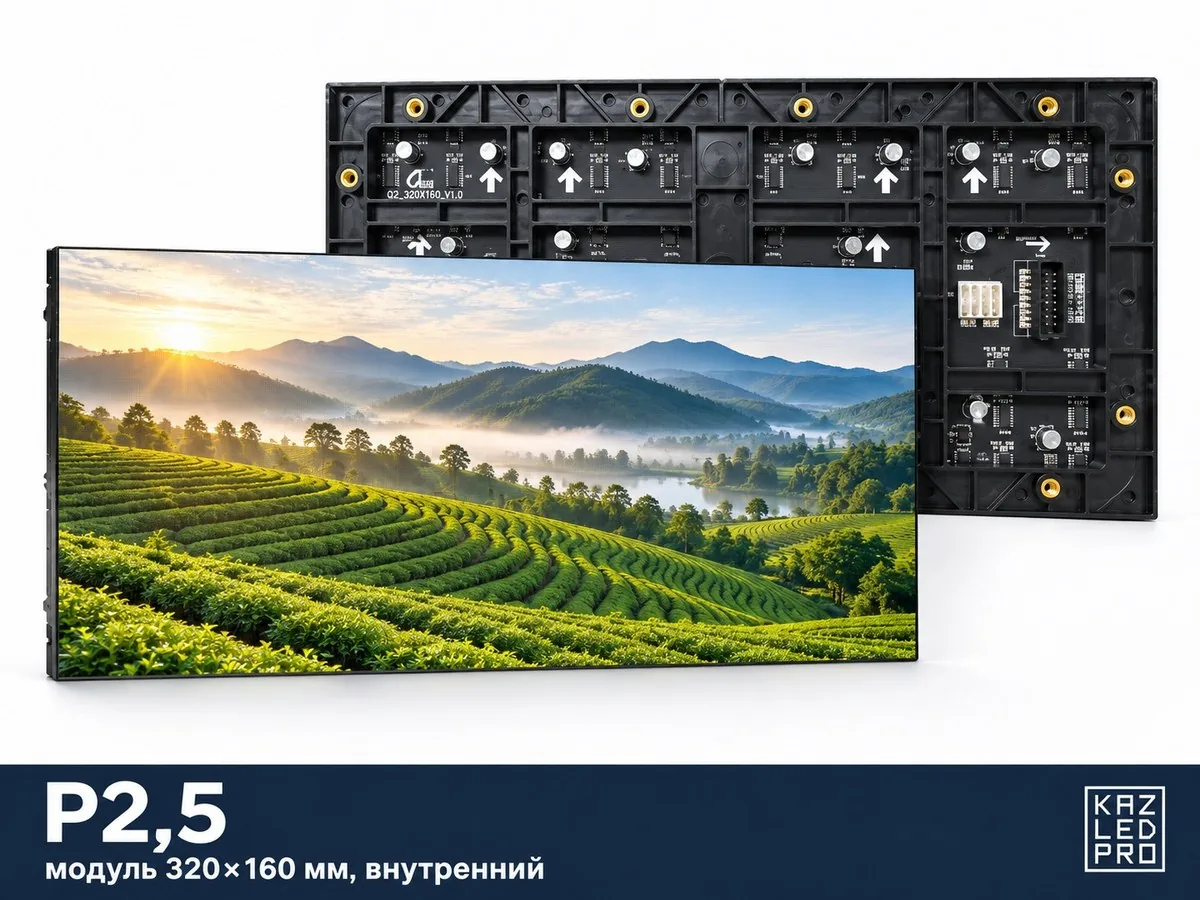
LED screen P2.5 for indoor use — 320×160 mm module
Indoor screen P2.5 (320×160 mm module), pixel density 160 000 dots/m². Comfortable viewing from 2 m.
- Brightness
- 350–550 cd/m²
- Density
- 160 000 dots/m²
- Protection
- IP 31
Details →
 P0.93
P0.93Indoor displays
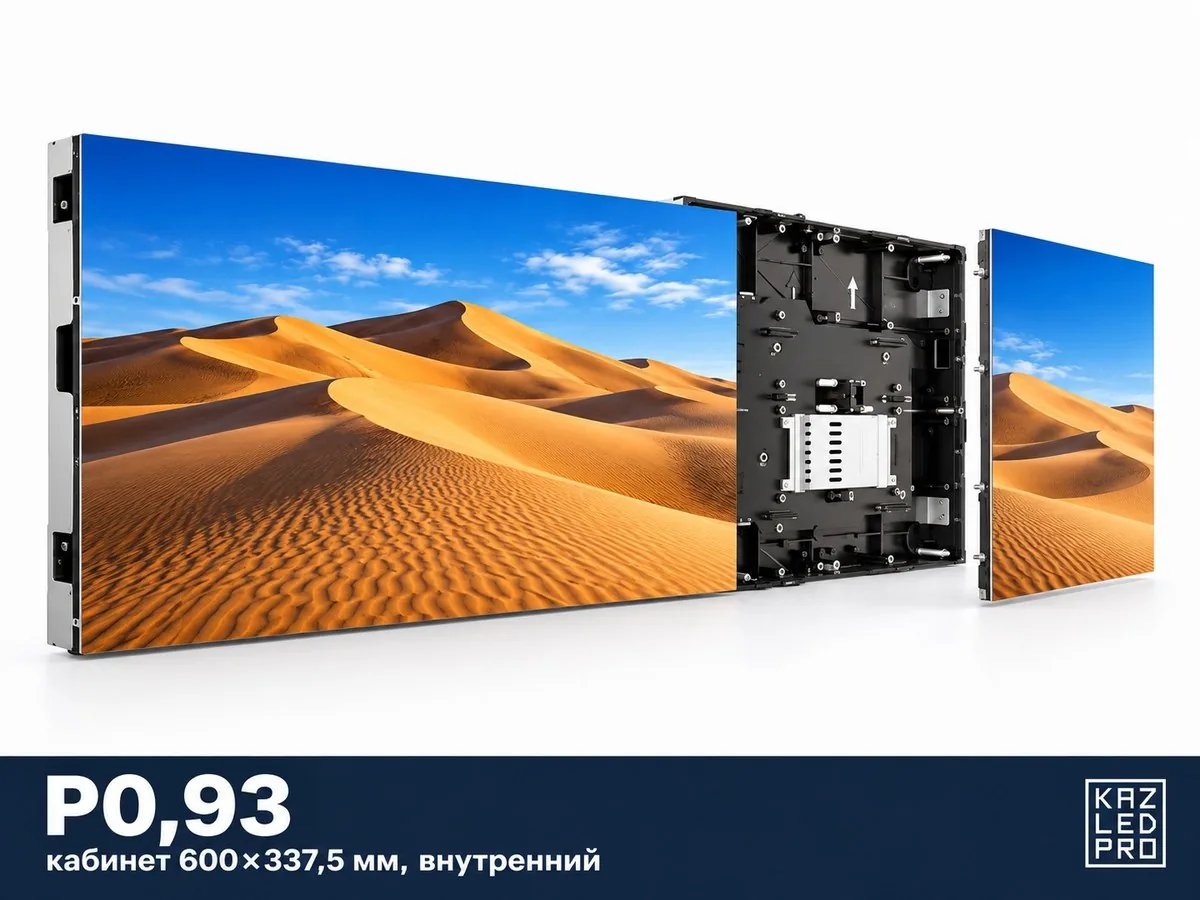
LED screen P0.93 for indoor use — 600×337.5 mm cabinet
Indoor screen P0.93 (600×337.5 mm cabinet), pixel density 1 137 778 dots/m². Comfortable viewing from 1 m.
- Brightness
- 600 cd/m²
- Density
- 1 137 778 dots/m²
- Protection
- IP40 (indoor version)
Details →
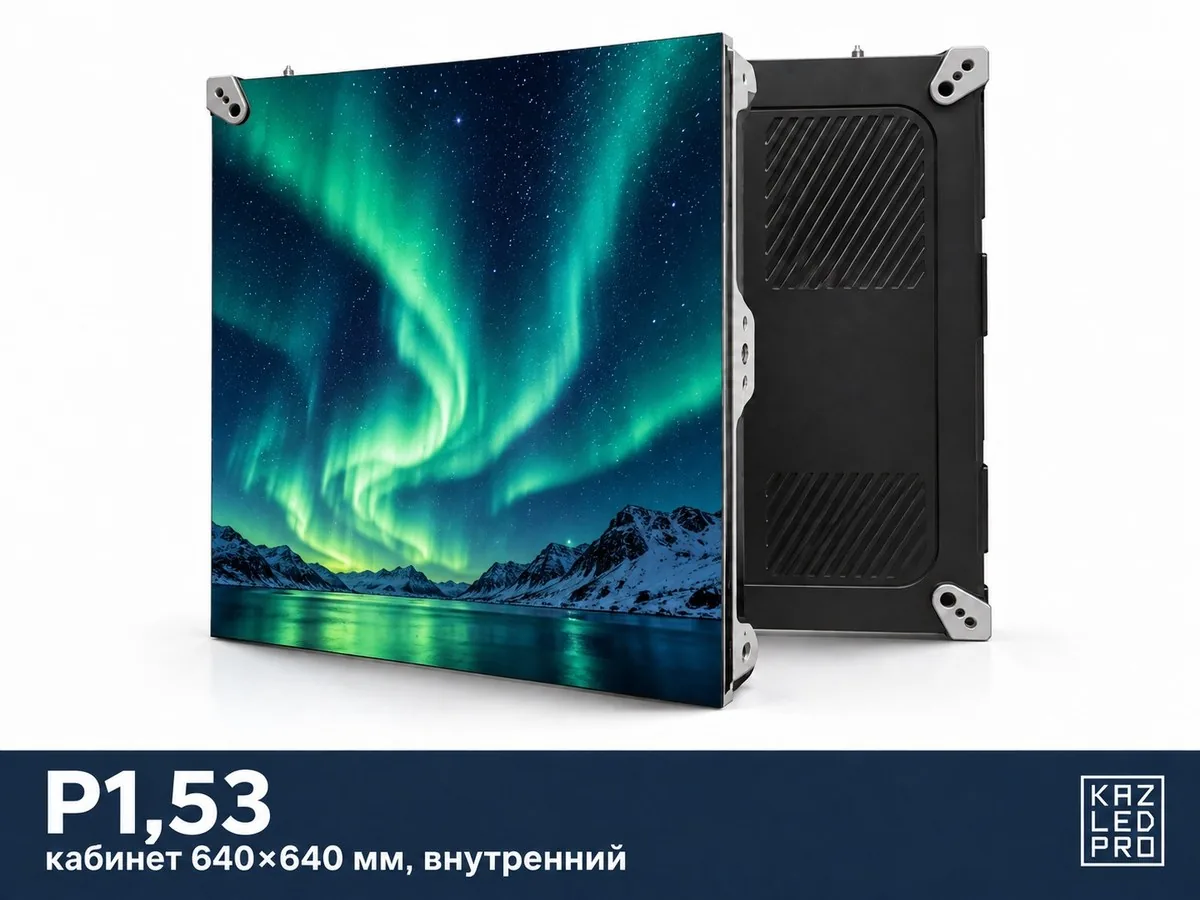 P1.53
P1.53Indoor displays
LED screen P1.53 for indoor use — 640×640 mm cabinet
Indoor screen P1.53 (640×640 mm cabinet), pixel density 422 500 dots/m². Comfortable viewing from 2 m.
- Brightness
- 350–400 cd/m²
- Density
- 422 500 dots/m²
- Protection
- IP 24
Details →
An LED screen in a restaurant or banquet hall works where a projector gives up: the picture survives the lights being on, it reads from the far tables, and the evening does not have to be spent in semi-darkness. The screen carries the couple's photos and video, greetings, a live camera feed from the hall, a client's logo at a corporate party or a match in a sports bar. KazLedPro has been installing such screens since 2012 in Almaty and across Kazakhstan.
We have worked in the Tulpar, Tumar and Yasy banquet halls, at Eleven Hotel & Hall and Astana Plaza, in the Klub T, Saudabay and 888 restaurants and at the Kazakhstan hotel. Several halls took the screen together with stage lighting on truss, under one contract and one crew. Installation is done by our own crew and the module warehouse is in Almaty, so a replacement module does not wait for an overseas shipment.
This page covers the pixel pitch and brightness suited to a wedding hall, a restaurant and a hotel lobby, how the screen connects to a camera and a laptop, who operates it during a banquet, and how long installation takes in a venue that keeps working. The site calculator estimates the cost from your dimensions, and a quotation is ready within a day.
Pixel pitch and brightness for a hall
Everything follows the distance to the nearest table. In a large banquet hall the front guests sit three to four metres from the stage, where P2.5–P3 is enough, and a wide backdrop can go to P3.91. In a small hall or a lobby, where people walk up to within two or three metres, use P1.86–P2.5: at that pitch the fine print of a greeting stays readable and faces in photos do not break into dots. One of our projects, the Klub T restaurant in Almaty, uses 500×500 mm cabinets with a viewing distance from 2.5 metres.
Indoor modules at 350–550 cd/m² are bright enough under normal banquet lighting: there is no need to dim the room as you would for a projector. If the hall has panoramic windows and daytime events, take a 500×1000 mm cabinet, P2.6 or P2.9, rated at 1,000 cd/m². A refresh rate above 3,840 Hz matters beyond filming: the videographer shoots the first dance against the screen, and there should be no banding in the frame.
- Large banquet hall, front tables at 3–4 m: P2.5–P3
- Small hall and lobby, distance 2–3 m: P1.86–P2.5
- Bright hall with windows: 500×1000 mm cabinet at 1,000 cd/m²
- Filming the first dance and live feed: refresh rate from 3,840 Hz
- Screen and stage lighting on truss under one contract
Banquet halls, restaurants and hotels we have equipped
In Almaty these are the Tulpar banquet hall (320×160 mm modules, June 2020), Tumar with a P4 screen and stage lighting on truss (May 2021), Astana Plaza (March 2020, viewing distance from four metres) and Eleven Hotel & Hall, where the screen became the stage backdrop for celebrations, live feeds and video greetings (October 2019). At the Kazakhstan hotel a P4 screen serves conferences, banquets and presentations alike (July 2021).
Restaurants: Klub T in Almaty with 500×500 mm cabinets (November 2021), Saudabay in Almaty (August 2020), the 888 restaurant in Chundzha (January 2022) and a hall in Semey (April 2019), installed by a travelling crew. Outside Almaty we built a banquet hall in Kokshetau with a viewing distance from three metres (June 2020) and the Yasy hall in Turkestan, where the screen came together with stage lighting (February 2022).
Running the evening, installation and maintenance
Content is prepared in advance: the evening's playlist is assembled from the client's photos and clips, and the manager switches scenes from a laptop or tablet. A camera in the hall connects through the video processor, so a close-up of a toast or the first dance reaches the screen without lag and without a black frame. If the hall also takes stage lighting, the fixtures are combined over DMX-512 into one console and scenes are programmed to the running order.
Installation fits into the gap between banquets: frame, cabinets, cabling and setup happen at night or on a weekday, with cable hidden in trunking. 640×640 mm cabinets are serviced from the front — a module comes off on magnets, so no one needs to reach the wall behind the screen, which matters when it sits in a stage recess. Warranty is 2–5 years depending on the model, with spare modules at the Almaty warehouse. If you need a screen for a single event rather than forever, see the rental section.
How the project goes
- 1
Enquiry and survey
Send photos of the hall and stage, the wall or proscenium dimensions and the type of events you host. In Almaty an engineer comes to measure; elsewhere we work from drawings, photos and the hall plan.
- 2
Selection and estimate
We match pixel pitch to the distance to the front tables and calculate resolution, weight and power. Within a day you receive a quotation with the model, area and the full scope of work.
- 3
Contract and preparation
We agree the installation schedule between banquets, the power and rigging points and the cable routes, then prepare the steel drawing and specification, adding lighting and truss if needed.
- 4
Installation and connection
We build the frame and canvas and connect the video processor, the camera and the manager's laptop. Cable goes into trunking, and the hall is handed back clean and ready for the evening.
- 5
Launch and training
We set brightness and colour for the hall lighting, assemble the first playlist and train the manager. After that: warranty, service and the module warehouse in Almaty for any replacement.
What the price depends on
The cost of an LED screen for a restaurant or banquet hall depends on pixel pitch, canvas area, the stage structure and whether stage lighting comes with it. We calculate the exact figure from your dimensions: the site calculator gives an estimate at once and a quotation is ready within a day.
Pixel pitch
The finer the pitch, the more LEDs per square metre and the dearer the canvas. A large hall with tables four metres away is fine at P3; a small hall or lobby needs P1.86–P2.5.
Area and resolution
Price grows with area, while resolution sets the number of receiving cards and the class of video processor. A full-stage backdrop is priced differently from a screen above the bar.
Type of construction
320×160 mm modules fit a non-standard wall precisely; 640×640 mm cabinets assemble faster and are serviced from the front. 500×1000 mm cabinets suit a screen that is occasionally dismantled.
Steel structure and rigging
A wall frame, a truss above the stage or a recess in the proscenium are each priced separately: canvas weight, rigging, work at height and a night build window all affect the estimate.
Stage lighting and sound
Fixtures, truss, a DMX console and speakers are separate items. Many halls take them with the screen so that one crew hangs and tunes everything.
Control and electrics
A video processor, a camera input, power lines from the switchboard and UTP to the screen are always needed. The more elaborate the evening, the larger the share of control in the estimate.
Questions and answers
Which pixel pitch should I choose for a banquet hall?
A simple guide: viewing distance in metres roughly equals pitch in millimetres. If the front tables are three to four metres from the stage, take P2.5–P3. In a small hall where guests come within two metres, P1.86–P2.5 is better: the fine print of a greeting stays readable and faces in photos do not break into dots.
Is the screen visible with the hall lights on?
Yes, and that is its main advantage over a projector. Indoor modules deliver 350–550 cd/m², which is enough under normal banquet lighting. For a bright hall with panoramic windows and daytime events, take a 500×1000 mm cabinet rated at 1,000 cd/m². In neither case does the room have to be darkened.
Can we show a live camera feed and the couple's photos?
Yes. The camera connects to the video processor, so a close-up of a toast, the first dance or the ceremony reaches the screen without lag. A playlist of the couple's photos and clips is prepared in advance and switched from the manager's laptop or tablet, with no black frame between scenes.
Who operates the screen during a banquet?
The hall manager or the host. We build the first playlist together with them and show how to change clips, switch to the camera and bring up a still. A typical evening needs no dedicated operator; for a complex show with stage lighting a technician can be booked for the event.
How long does installation take, and will the hall have to close?
Installation usually fits the gap between banquets: frame, canvas, cabling and setup happen at night or on a weekday. A 10–20 m² screen is installed and commissioned in one or two shifts. The schedule is agreed in advance so that booked evenings are not moved.
Do you install light and sound along with the screen?
Yes, many halls do exactly that. We installed stage lighting on truss together with the screen at the Tumar hall in Almaty and the Yasy hall in Turkestan. Fixtures are combined over DMX-512 into one console, scenes are programmed in advance, and one crew rigs and tunes it all under one contract.
How is the screen maintained and what about warranty?
640×640 mm cabinets and modules are serviced from the front: a module comes off on magnets in a minute, with no need to reach the wall behind the screen. Warranty is 2–5 years depending on the model, and spare modules are kept at the Almaty warehouse, so a replacement does not wait for an overseas shipment.
Do you work outside Almaty?
Yes, the travelling crew works across Kazakhstan. We have equipped banquet halls and restaurants in Kokshetau, Turkestan, Semey and Chundzha, surveying from drawings and photos. Equipment ships from the Almaty warehouse and our crew handles installation and commissioning on site.

A turnkey screen: quote, installation, launch.
Send us the dimensions and location — a quote today. WhatsApp around the clock.