
Solutions
LED screens for shopping malls and stores
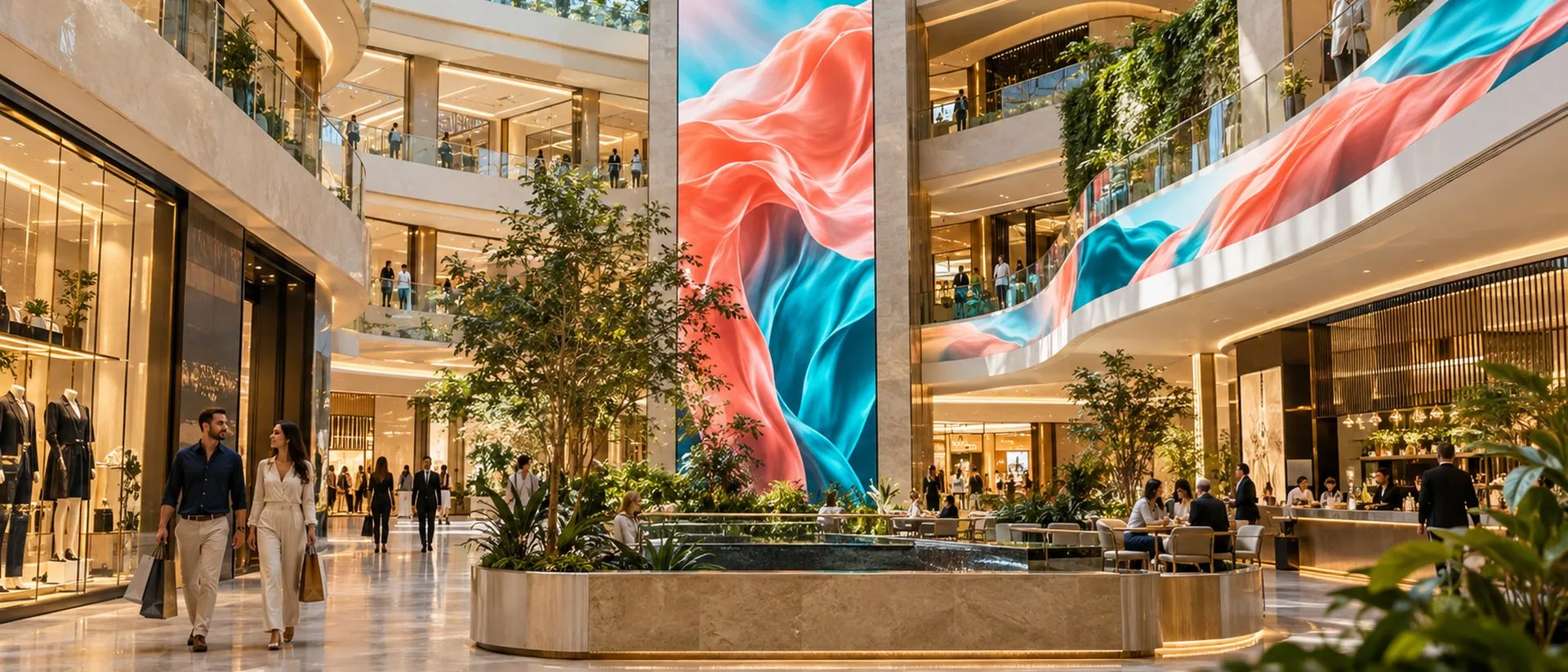
Atrium, facade, columns, tenant windows — screens that sell advertising and gather people.
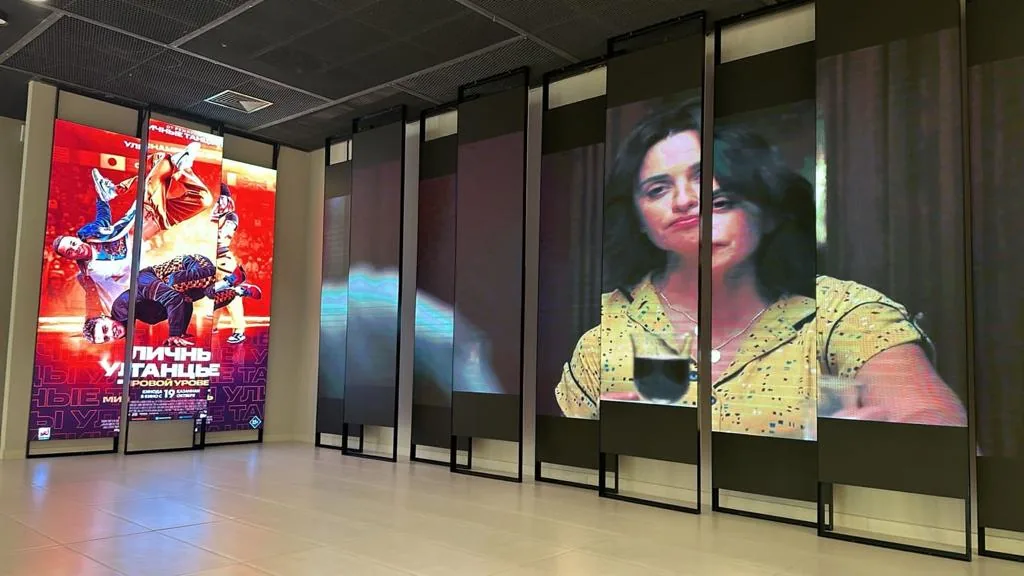
In the atrium a large P2.5–P4 screen spans several floors — visible from escalators and galleries. Flexible modules on columns, transparent mesh on windows, an outdoor screen at the entrance.
We installed screens in Mega Almaty, Dostyk Plaza, Atakent Mall, Aport and Forum.
The scene visualisation is generated; the project photos below are real.
What matters here
- 1
A screen across floors
Atrium P2.5–P4, visible from galleries.
- 2
Cubes and columns
Hanging cubes and flexible screens on supports.
- 3
Airtime sales
One schedule, slots for tenants.
Which screens fit
Models from the price list
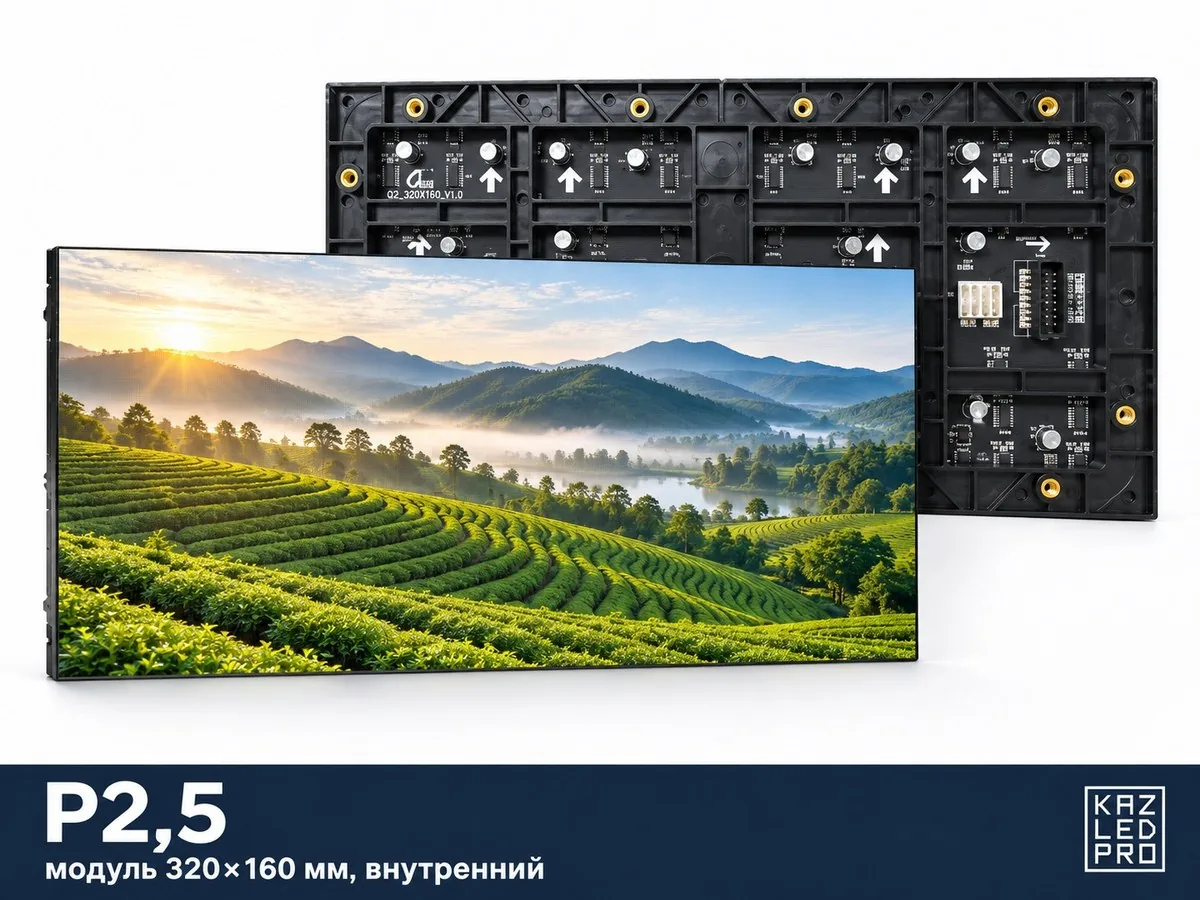 P2.5
P2.5Indoor displays
LED screen P2.5 for indoor use — 320×160 mm module
Indoor screen P2.5 (320×160 mm module), pixel density 160 000 dots/m². Comfortable viewing from 2 m.
- Brightness
- 350–550 cd/m²
- Density
- 160 000 dots/m²
- Protection
- IP 31
Details →
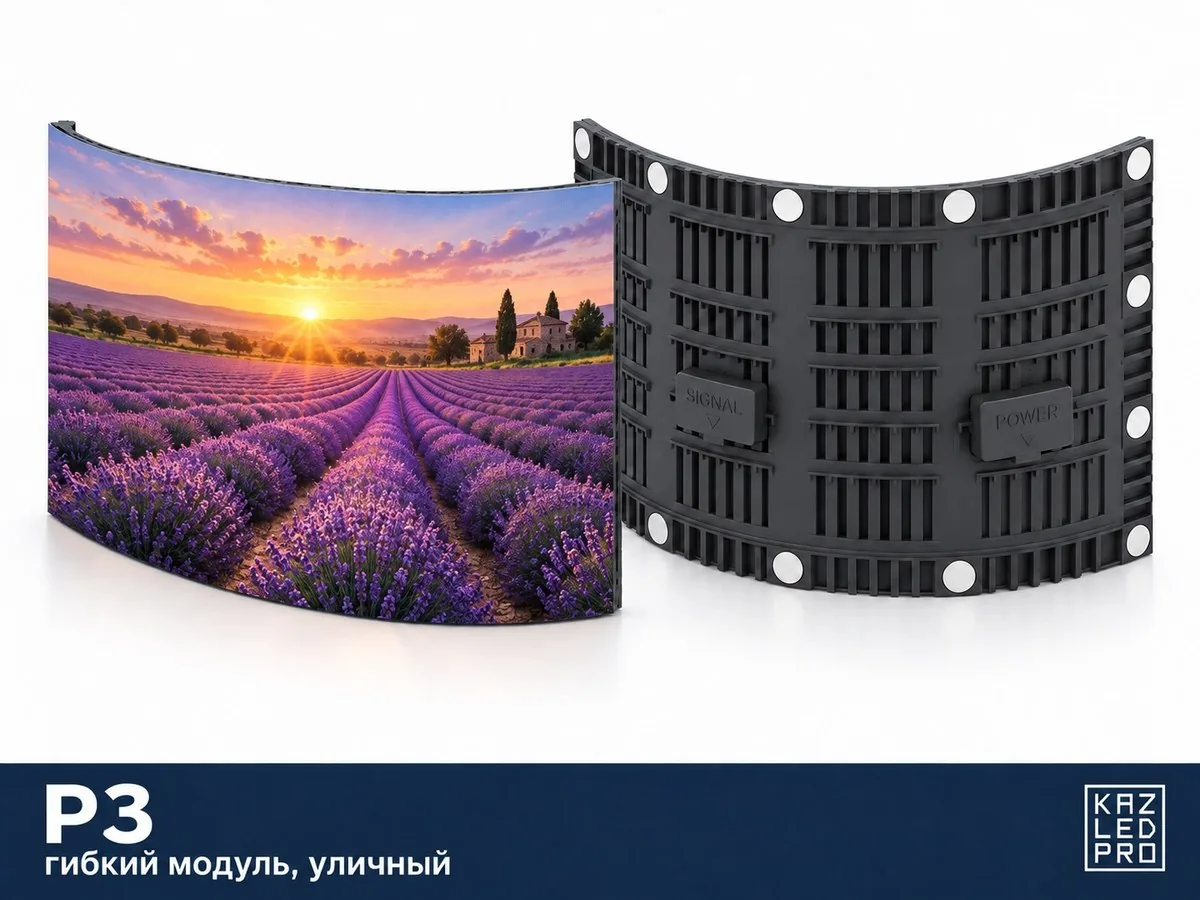 P3
P3Flexible displays
Flexible LED screen P3 for outdoor use
Flexible module P3 for outdoor use: bends to a radius, holds on magnets. Columns, waves and rounded façades.
- Brightness
- 5500–7800 cd/m²
- Density
- 105 625 dots/m²
- Protection
- IP 68
Details →
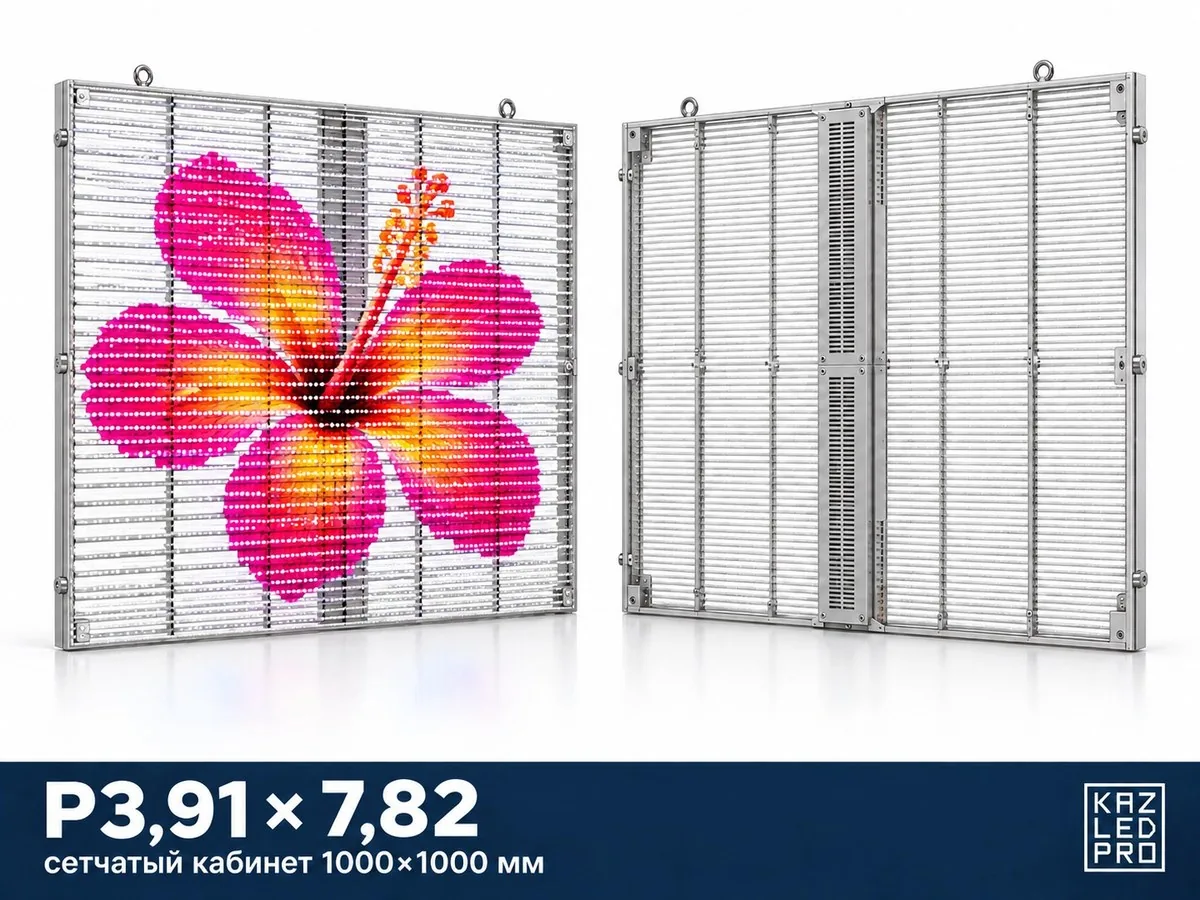 P3.91 × 7,82
Mesh displays
Mesh screen P3.91 × 7.82 — 65 % transparency
Transparent mesh screen P3.91 × 7.82 for glazing and façades: 65 % of the light passes through, weight 7.5 kg (cabinet 1000×1000 mm).
- Transparency
- 65 %
- Brightness
- 2000–4500 cd/m2
- Protection
- IP33
Details →
An LED screen for a shopping mall or a store is advertising seen from the escalators and galleries, a shopfront people stop at, and airtime you can sell to tenants. Since 2012 KazLedPro has supplied and installed LED screens in malls and stores in Almaty and across Kazakhstan: from suspended atrium screens to brand-store signage and outdoor screens at the entrance.
We have worked in Mega Almaty, Dostyk Plaza, Atakent Mall, Aport and Forum, and fitted screens in Adidas, Lacoste, SuperStep and Sulpak stores. Installation is done by our own crew, and the module warehouse is in Almaty, so a replacement module or an extension does not wait for a shipment. The website has a calculator: enter the opening size and get an estimate with resolution and power.
This page covers which pixel pitch and brightness suit an atrium, a shop window and a sales floor, how screens are networked, and what to plan for when installing in an operating mall. If you need to buy an LED screen for a store in Almaty or another city, the main questions are answered here before you call.
Which screen suits an atrium, a shop window and a sales floor
In an atrium the screen is viewed from galleries and escalators, from four to twenty metres away. Indoor P2.5–P4 models work here: they give a sharp picture and the cost per square metre is lower than fine pitch. 640×640 mm cabinets assemble into a canvas several floors high, while 320×160 mm modules fit a non-standard opening exactly.
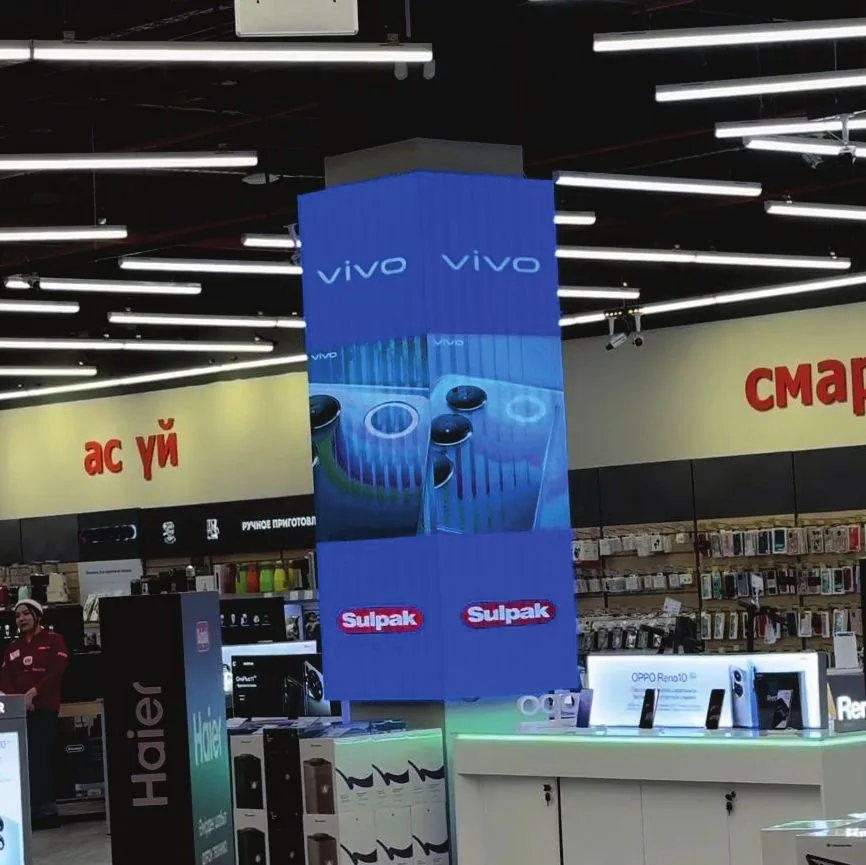
In a store the viewer is closer, one to three metres. A brand zone or the back wall of a sales floor takes P1.86–P2.5: the Sulpak screen in Dostyk Plaza is built this way, 14 m² at pitch P2.5. A shop window gets transparent mesh P2.6×5.2 or P3.91×7.82 with 65–70% transparency: advertising outside, daylight and goods visible from inside. Columns are wrapped in flexible modules so the screen is seen from every side of the flow.
- Atrium and food court: P2.5–P4, 640×640 mm cabinets
- Sales floor and brand zone: P1.86–P2.5
- Shop window: mesh screen with 65–70% transparency
- Columns: flexible 320×160 mm modules on magnets
- Entrance and facade: outdoor P3–P6 models at 5,500–7,800 cd/m²
Our mall projects
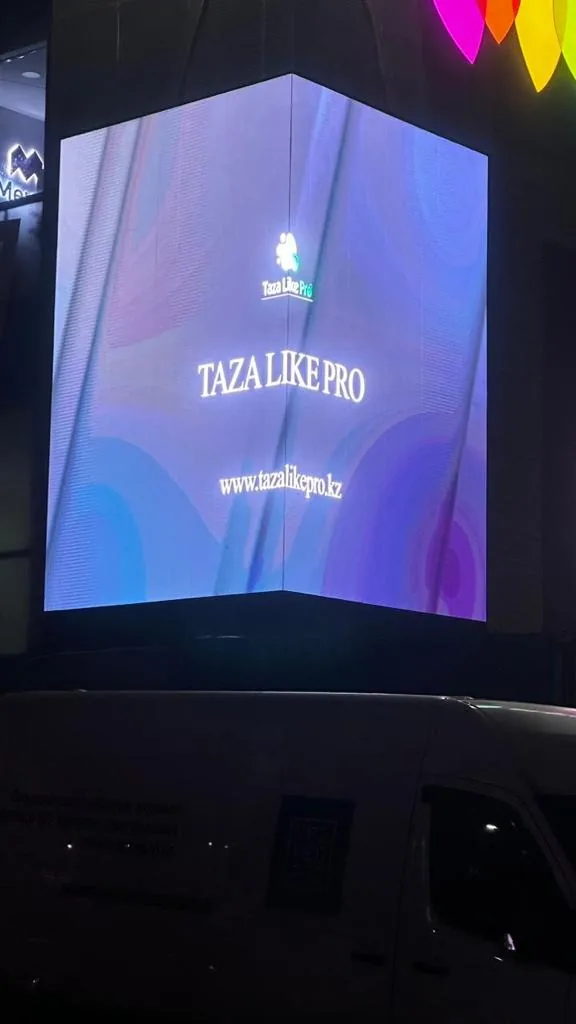
At Forum mall in Almaty we supplied and installed screens with a total area of 48 m² at pitch P3 (July 2023). At Aport Mall, a 64 m² screen, also P3 (June 2023). On the facade of Atakent Mall stands an outdoor corner screen, P5, 48 m² (September 2023): it wraps the corner of the building and is visible from two streets.
For stores: screens in the Vivo brand zone of the Sulpak store in Dostyk Plaza (P2.5, 14 m², 2023), Adidas stores in Almaty, Lacoste and SuperStep in Mega Almaty (2025, with video testimonials on the case pages). Outside Kazakhstan, the screens of the V Perfumes boutique in Al Wahda Mall, Abu Dhabi (2023). All projects with photos are in the portfolio.
Control, installation and operation in a working mall
All the mall's screens connect to one video processor or player and are managed from one workstation: a single schedule, slots for tenants, content changes without a site visit. Auto-brightness dims the screen in the evening and saves power; the average consumption of indoor P2.5–P4 models is 300–320 W/m² per datasheet.
Installation in a mall happens at night or before opening: the crew follows the management's schedule, cable runs in trunking, suspended screens hang on truss with a calculated load. Indoor cabinets are serviced from the front and a module comes off on magnets, so there is no need to reach the back of a screen in a recess. Warranty on screens is 2–5 years depending on the model.
How the project goes
- 1
Enquiry and survey
Send a plan or photos of the location: atrium, window or sales floor. In Almaty an engineer visits for a survey; in other cities we work from drawings and photos.
- 2
Selection and estimate
We match pixel pitch to viewing distance and calculate resolution, power and weight. Within a day you get a quotation with the model, area and scope of work.
- 3
Contract and approvals
We agree the installation schedule, power and rigging points and cable routes with mall management, and prepare the steel structure drawing and the specification for the contract.
- 4
Delivery and installation
We assemble the screen: frame, cabinets, cabling, video processor. Work is done at night or before opening so visitors and tenants are not disturbed. Clean-up after installation is on us.
- 5
Launch and training
We set brightness, calibrate colour and load content, then show the administrator how to change clips and the schedule. After that: warranty and service backed by the module warehouse in Almaty.
What the price depends on
The cost of an LED screen for a shopping mall depends on pixel pitch, area and where it stands: window, atrium or facade. We calculate the exact price from your dimensions: the calculator on the site gives an estimate at once, and a quotation is ready within a day.
Pixel pitch
The finer the pitch, the more LEDs per square metre and the higher the cost of the canvas. P3–P4 is enough for an atrium; a store brand zone needs P1.86–P2.5.
Area and resolution
Price grows in proportion to area, and resolution sets the number of receiving cards and the class of video processor. A large screen with a coarse pitch is often cheaper than a small one with a fine pitch.
Type of construction
640×640 mm cabinets assemble faster; 320×160 mm modules fit an opening more precisely. Flexible modules for a column and transparent mesh for a window are priced separately.
Indoor or outdoor version
A screen at the entrance or on the facade is an outdoor model with 5,500–7,800 cd/m² and weather protection. Indoor models are lighter and use less power.
Steel structure and mounting height
A suspension over the food court, a truss in the atrium or a frame on the facade: each has its own load calculation and price. Work at height and night shifts add to the estimate.
Control and electrics
Video processor, player or a networked schedule, power lines from the switchboard, UTP to every screen. The more points in the mall, the larger the share of electrics.
Questions and answers
Which pixel pitch should I choose for an atrium screen?
A simple guide: viewing distance in metres roughly equals pitch in millimetres. From second- and third-floor galleries the screen is seen from four to ten metres, so P3–P4 gives a sharp picture without paying for fine pitch. If viewers come close, for example near a ground-floor stage, take P2.5.
Can a screen go on a shop window without hiding the goods?
Yes, that is what mesh screens P2.6×5.2 and P3.91×7.82 with 70% and 65% transparency are for. From outside it is a full screen at 2,000–4,500 cd/m²; from inside daylight passes through and the goods stay visible. A 1000×1000 mm cabinet weighs 7.5 kg and mounts to the glazing or a light frame without a heavy structure.
How long does installation take in an operating mall?
Installing a 20–50 m² screen usually takes two to five night shifts including the frame and cabling. Delivery time depends on the model and on stock at the Almaty warehouse. The exact schedule is agreed with mall management before the contract is signed.
How do we sell advertising to tenants on the mall's screens?
All screens connect to one player or video processor with a schedule. Airtime is split into slots, tenant clips are uploaded remotely and the software produces a report of plays. We set up the system and train the administrator, so no site visit is needed to change content.
What about maintenance when the screen is in a recess and the back is unreachable?
Indoor 640×640 mm cabinets and flexible modules are serviced from the front: a module comes off on magnets in a minute. Spare modules are kept at the Almaty warehouse, so a replacement does not wait for a shipment. Warranty on screens is 2–5 years depending on the model.
What power supply does a sales-floor screen need?
Average consumption of indoor P2.5–P4 models is 300–320 W/m² per datasheet, peak 700–800 W/m². A 10 m² screen draws about 3 kW on average and up to 8 kW at peak. We size the power lines from the peak, with a margin, and state this in the electrical specification.
Do you work with malls outside Almaty?
Yes. The crew travels to any city in Kazakhstan: we have projects in Astana, Karaganda, Aktobe, Turkestan and other cities. Survey from drawings and photos, delivery from the Almaty warehouse, installation by a travelling crew. We also built the mall screens in Abu Dhabi ourselves.
Is there a screen for the mall entrance and facade?
Yes, outdoor P3–P6 models at 5,500–7,800 cd/m² are readable against the sun, and auto-brightness dims them at night. An example is the 48 m² P5 corner screen on the facade of Atakent Mall in Almaty. We calculate and fabricate the facade frame ourselves.

A turnkey screen: quote, installation, launch.
Send us the dimensions and location — a quote today. WhatsApp around the clock.