
Screen brightness is measured in candelas per square metre (cd/m², listed as nits in datasheets). It is the first characteristic that separates an outdoor screen from an indoor one, and the one people most often get wrong — in both directions.
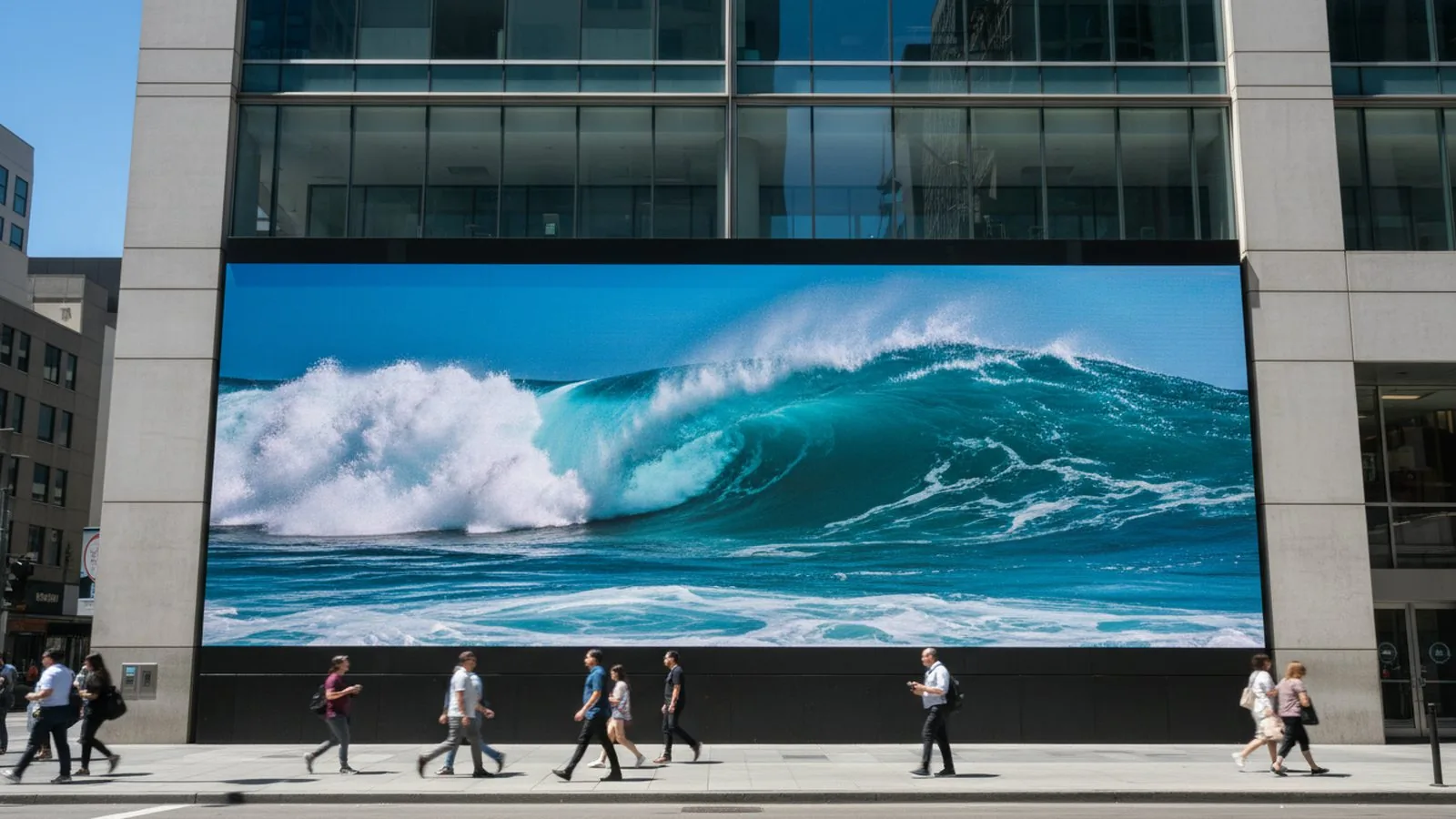 The street by day is the harshest condition: direct sun on the screen. Here you need 5,000 cd/m² and above, otherwise the picture looks grey.
How much you need
| Where the screen stands | Brightness | Why |
|---|---|---|
| Meeting room, conference hall, studio | 600–1,000 cd/m² | Indoor light is diffuse; brighter tires the eyes, and on camera the screen blows out |
| Retail floor, atrium, lobby with windows | 1,000–2,000 cd/m² | Daylight through windows, but no direct sun |
| Shop window behind glass | 2,500–4,000 cd/m² | The glass reflects the street; the screen has to cut through the reflection |
| Street, facade, pylon | 5,500–7,800 cd/m² | Direct sun. Below 5,000 the daytime picture goes grey |
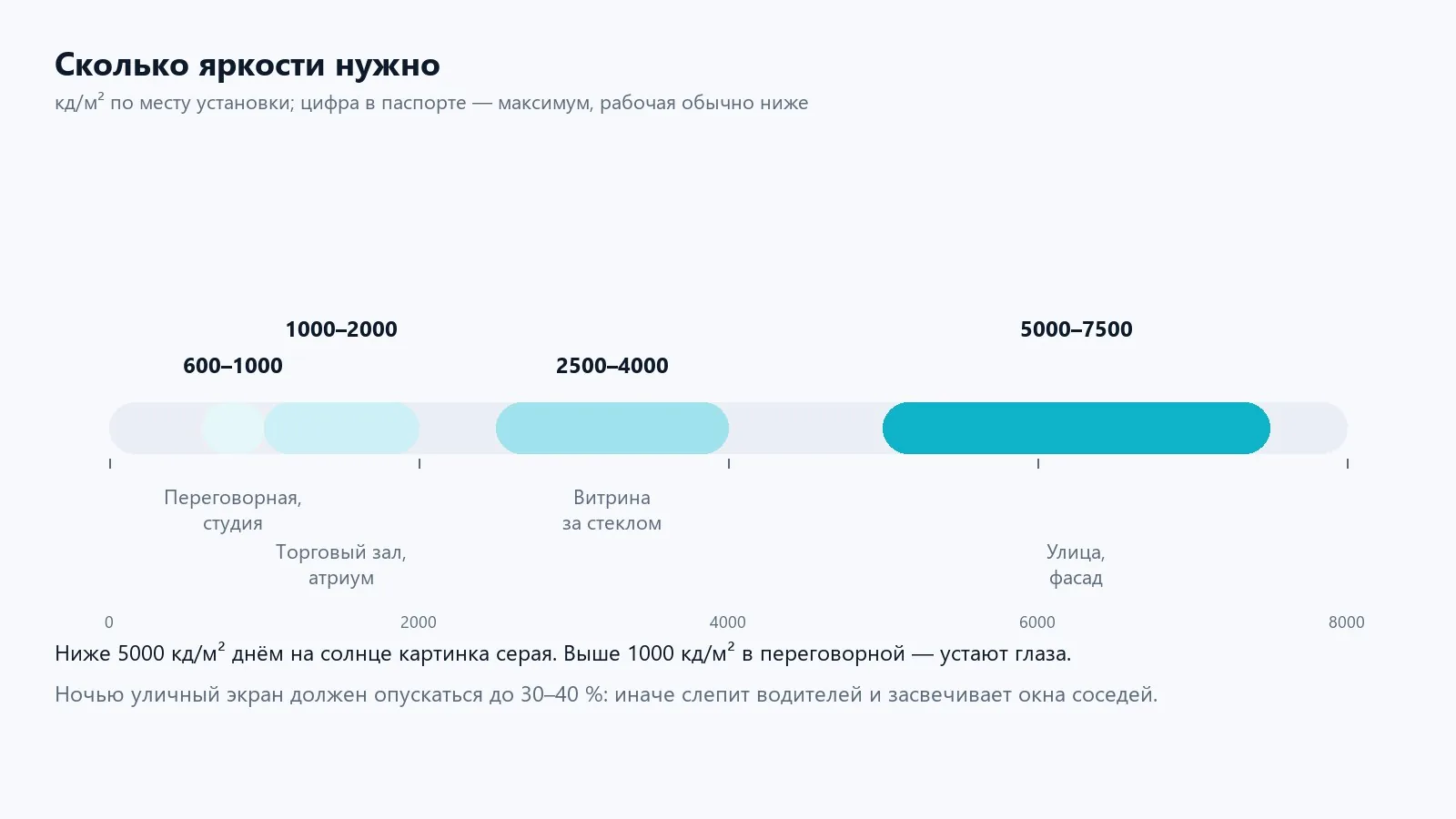 Four brightness classes for four types of location. Datasheet figures are the maximum; working brightness is usually lower.
Why buying “with headroom” is a bad idea
Screen brightness is current through the LED. The higher it is, the more:
- power draw and heat, and therefore the faster the LED degrades;
- cost — outdoor modules are dearer than indoor ones for more reasons than waterproofing;
- strain up close: a 5,000 cd/m² screen in a meeting room dazzles even at 30%.
An indoor screen outdoors will burn out in the sun within a season — both figuratively and literally: without a sealed housing, water gets in. An outdoor screen indoors will work, but you overpay by 30–50% and it runs at a fifth of its capability.
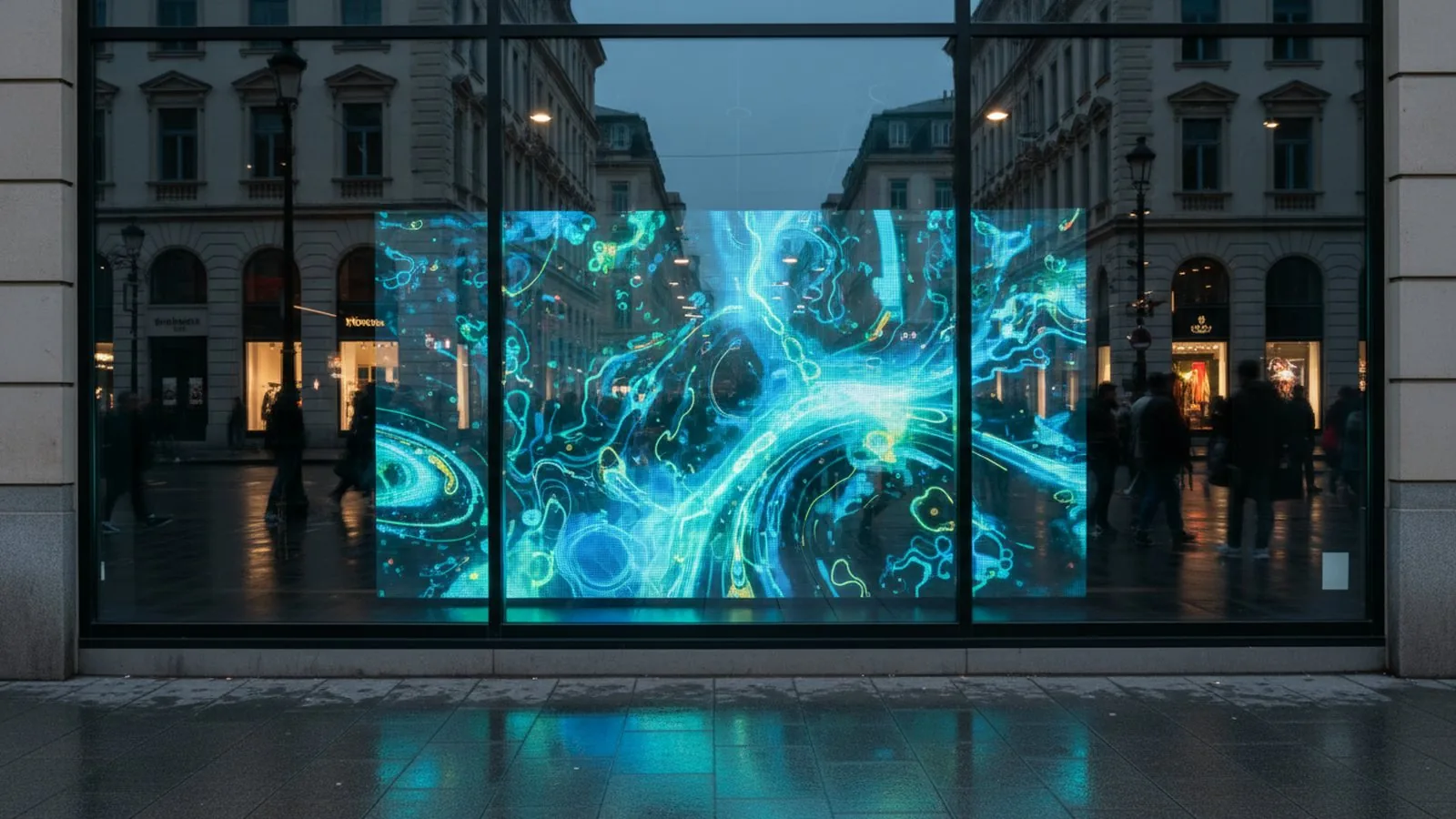 A shop window is a special case: the glass reflects the street, so the screen has to be noticeably brighter than the reflection. Hence 2,500–4,000 cd/m².
Auto-brightness
A light sensor on the housing and a schedule in the control software lower brightness as it gets dark. For an outdoor screen this is a must:
- at 100% at night it dazzles drivers and floods the windows of neighbouring flats — people complain, and rightly so;
- at 30–40% at night, power draw halves and LED life goes up.
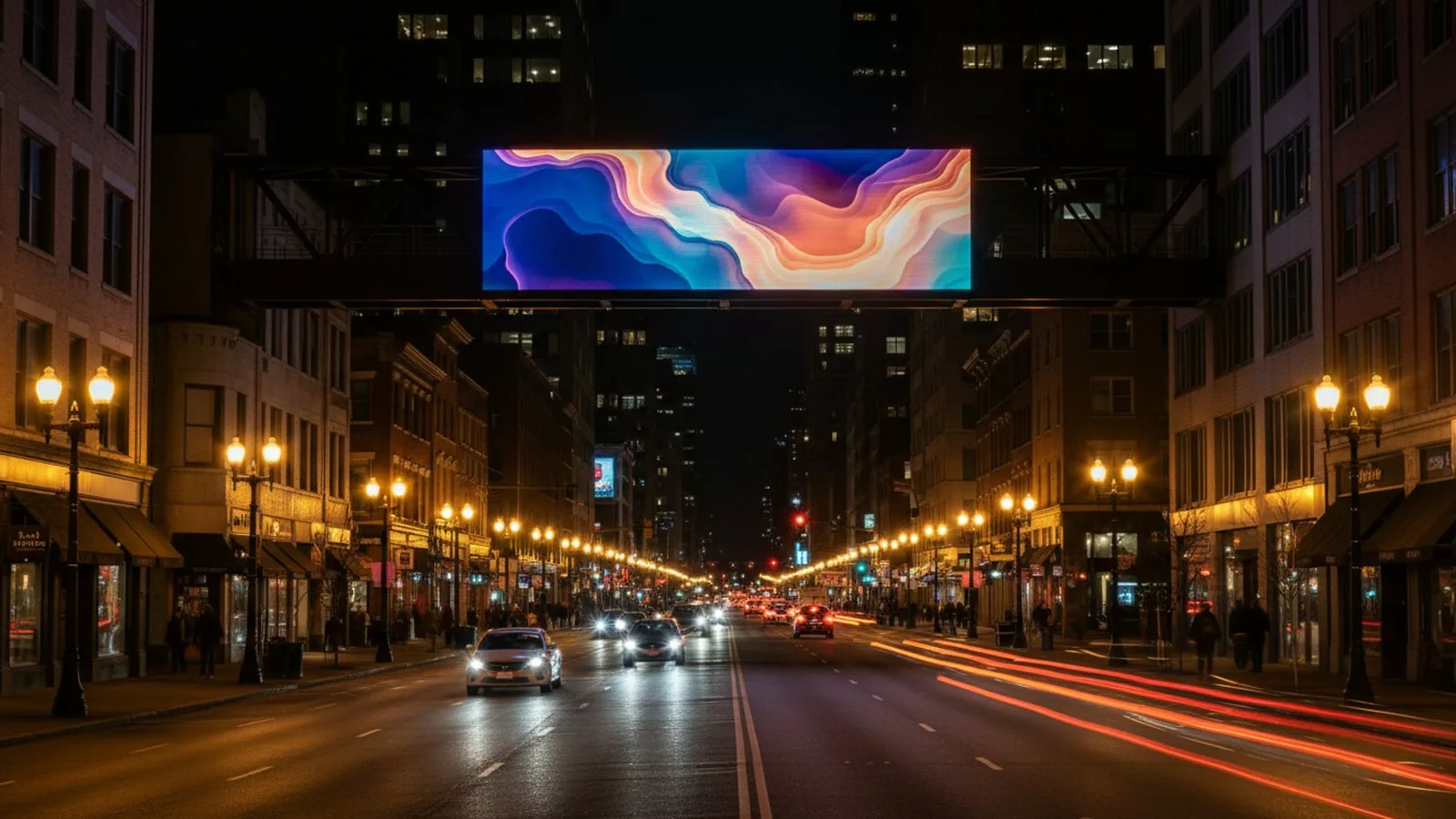 At night the same screen runs at 30–40%: visible from a distance, no dazzle for drivers, no light into windows.
We set up two modes — day and night — at commissioning; the sensor adds a smooth transition between them.
What to look at besides the number
- Contrast. A screen with black masks around the LEDs looks more contrasty at the same brightness — black on it really is black.
- Uniformity. On cheap modules brightness varies by 10–15% across the panel, and patches show on a flat fill. Ask about calibration.
- Viewing angle. Brightness falls off to the side. For a screen along a road, a horizontal angle of 140° or more matters.
Two different cases from our practice: the hall of Karaganda airport, an indoor screen in a public space with viewers four metres away, and the screen at the EXPO-2017 site, assembled for an exhibition brief. Brightness requirements by venue type are collected on the solution pages: airports and stations, shopping malls, stadiums.
If you are torn between two brightness classes, send us a photo of the installation site and tell us which way the windows face. That is usually enough for a precise answer.
A turnkey screen: quote, installation, launch.
Send us the dimensions and location — a quote today. WhatsApp around the clock.